
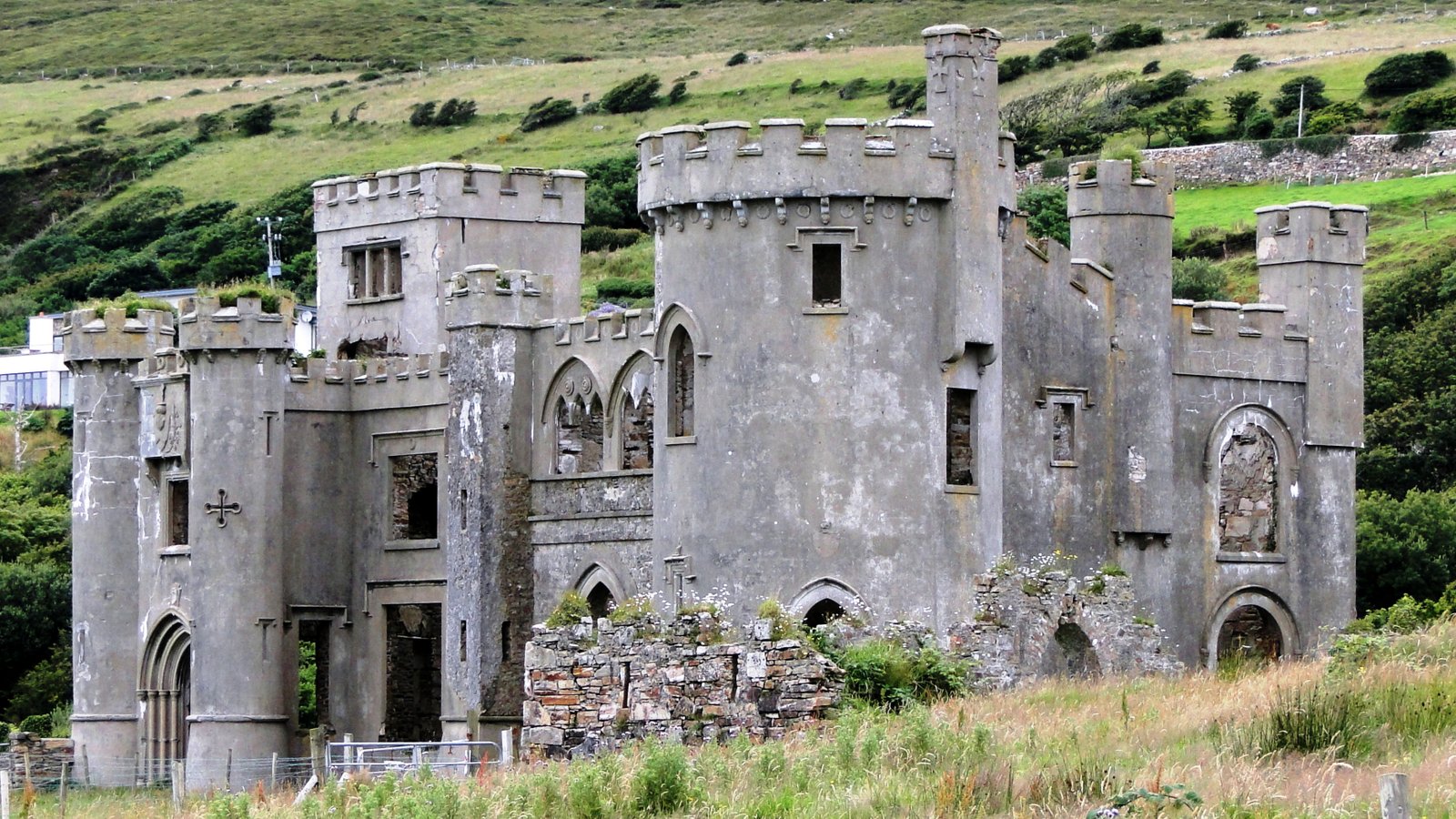
A Gothic Revival manor house built for a local landowner, now a romantic ruin on the Connemara coast.
At a glance
Clifden Castle stands west of Clifden in County Galway’s Connemara region. Built around 1818 in the Gothic Revival style, it remains one of the area’s most striking architectural remnants, though now substantially ruined.
History
The castle was constructed c. 1818 for John D’Arcy, the prominent local landowner whose vision shaped much of Clifden itself. The house remained inhabited through the nineteenth century but fell into disrepair after becoming uninhabited in 1894. In 1935, ownership transferred to a group of tenants who held it jointly. Without proper maintenance, it rapidly deteriorated into the ruin visible today.
What you see
The structure exemplifies the Gothic Revival idiom popular among Irish gentry in the early nineteenth century. Its architectural character, though now fragmentary, reflects the romantic sensibilities that shaped Connemara’s great houses during this period.
Cultural significance
Clifden Castle represents a pivotal moment in Connemara’s social and architectural history, embodying both the ambitions of the landed gentry and the passage of Irish rural life across two centuries. The ruin itself has become emblematic of the region’s complex heritage.
Key facts
- Country: Ireland
- County: Galway
- Town: Clifden
- Built: c. 1818
- Style: Gothic Revival
- Original owner: John D’Arcy
- Coordinates: 53.49178, -10.05673
Practical information & getting there
Clifden Castle lies west of Clifden town in the Connemara region. The site is accessible to visitors, though as a ruin it offers an unguided outdoor experience. Check local conditions before visiting.
Sources & resources
Find it on the map
See this place and what’s around it →📷 Become a Cultural Heritage Online photographer
Share your photos of places: they stay published under your name as the author. The more they're seen, the more you get noticed — and soon a contest will reward the most appreciated photos.
Log in or sign up free to add a photoIs this page about you?
This page is read by travellers and heritage enthusiasts who find it on Google. Tell us how you are connected to this place and we will take it from there.