
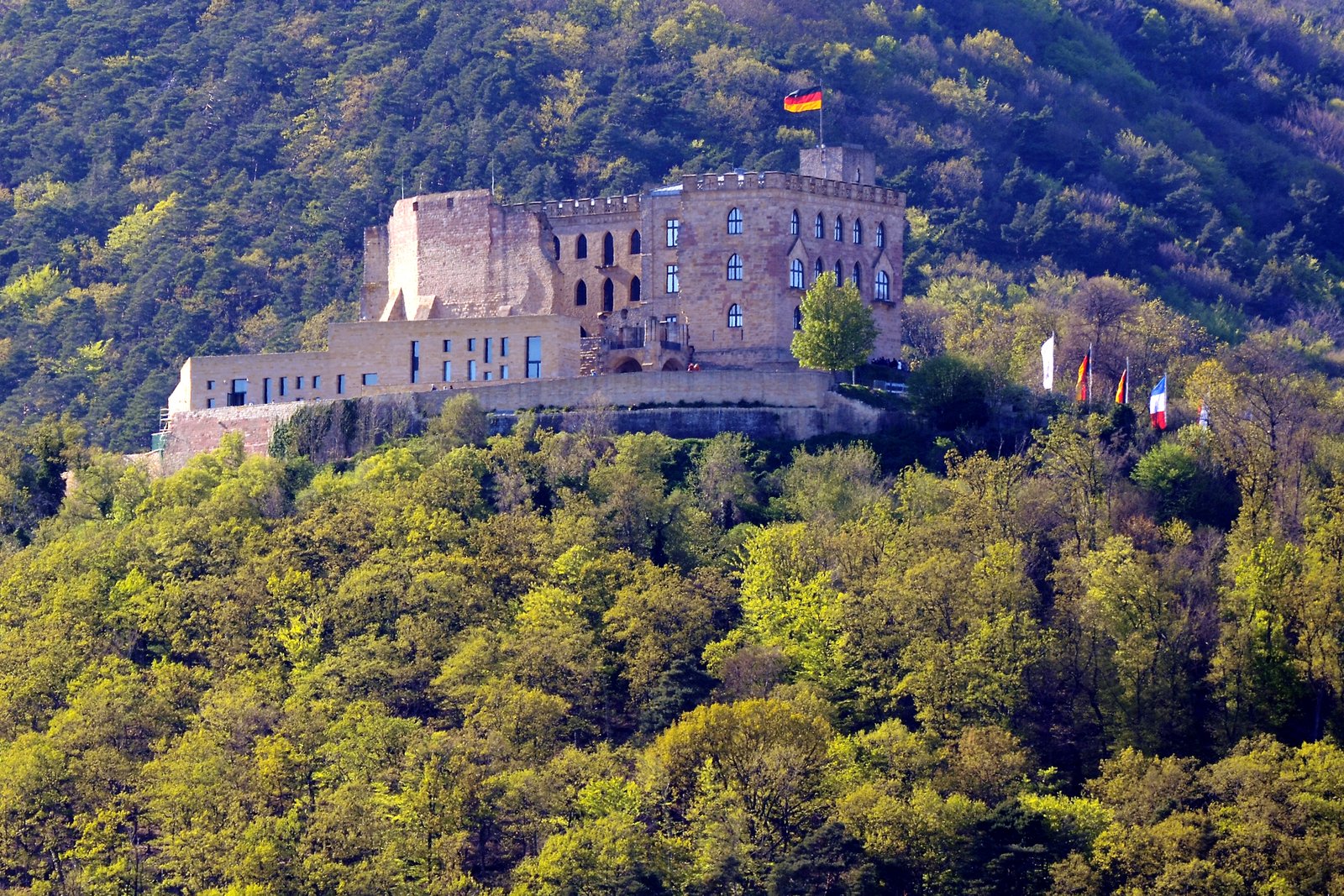
A fortress transformed into a symbol of German democracy. Hambach Castle gained enduring significance when it hosted the Hambacher Fest in 1832, a pivotal gathering of the early democratic movement.
At a glance
Perched above the Palatinate wine region, Hambach Castle stands as a monument to 19th-century political aspiration. The 1832 festival held within its walls drew thousands and became a defining moment in German liberal and democratic history.
History
The castle’s significance rests primarily on a single historic event. In 1832, the Hambacher Fest assembled supporters of German unification and democratic reform, making it an emblem of resistance to authoritarian rule during the pre-revolutionary period of the early 19th century.
What you see
The castle occupies a commanding hilltop position near Neustadt an der Weinstraße in Rhineland-Palatinate. Its structure reflects centuries of German fortress architecture, though the interior has been adapted to commemorate its political legacy.
Cultural significance
Hambach Castle transcends its role as a medieval fortress. It represents a crucial junction in German history—where citizens gathered to advocate for democratic principles, national unity, and constitutional governance. The castle now functions as both historical archive and symbol, drawing visitors interested in the roots of modern German democracy.
Key facts
- Location: Neustadt an der Weinstraße, Rhineland-Palatinate, Germany
- Coordinates: 49.32472222, 8.11833333
- Historic event: Hambacher Fest (1832)
Practical information & getting there
The castle is accessible from Neustadt an der Weinstraße in the German wine region of the Palatinate. Visitors can reach the site via regional transport and local roads. The castle grounds and museum are open to the public; check current hours and admission details before your visit.
Sources & resources
Find it on the map
See this place and what’s around it →📷 Become a Cultural Heritage Online photographer
Share your photos of places: they stay published under your name as the author. The more they're seen, the more you get noticed — and soon a contest will reward the most appreciated photos.
Log in or sign up free to add a photoIs this page about you?
This page is read by travellers and heritage enthusiasts who find it on Google. Tell us how you are connected to this place and we will take it from there.