
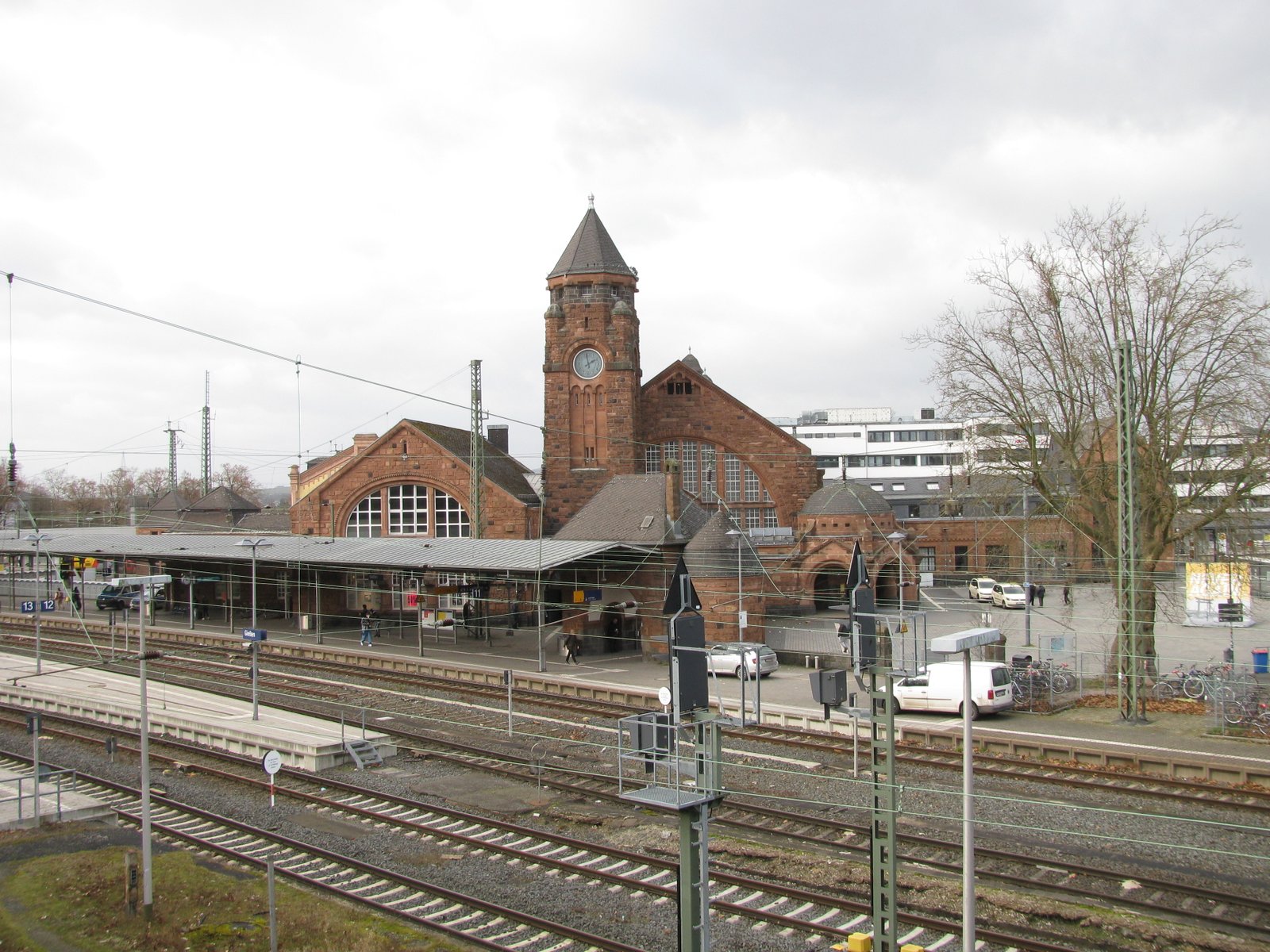
A major railway hub in central Germany, Gießen station has served passengers for nearly 175 years. Its Edwardian reception building, constructed in the early 20th century, anchors a transport interchange that processes 20,000 daily travelers.
At a glance
Gießen station is a Category 2 station serving the dual routes of the Main-Weser Railway and the Dill Railway. The site connects the industrial heart of central Germany with major urban centers along two essential national corridors.
History
The station opened on 25 August 1850 as part of the expanding German railway network. Its original building became a historic landmark, protected for its architectural significance. Between 1904 and 1911, a new reception building was constructed, reflecting the Belle Époque confidence of the railway age and the station’s growing importance as a regional transport hub.
What you see
The current reception building, completed in 1911, exemplifies early 20th-century German railway architecture. The structure remains a protected historic landmark. The station complex includes a modern bus station and taxi rank outside the main building, with convenient parking garages located nearby.
Cultural significance
Gießen station represents the critical role of railways in connecting Germany’s industrial regions. Its protected heritage building documents the confidence and ambition of the Edwardian era, when rail transport shaped urban development across Europe.
Key facts
- Country: Germany
- City: Gießen, Hesse
- Original opening: 25 August 1850
- Current building completed: 1911
- Classification: Category 2 station
- Daily passengers: 20,000
- Rail lines: Main-Weser Railway (Kassel–Frankfurt); Dill Railway (Siegen–Gießen)
- Coordinates: 50.57889°N, 8.66222°E
Practical information & getting there
Gießen station is centrally located and accessible by regional and long-distance trains. A bus station and taxi rank serve the complex. Parking garages are available nearby for those arriving by car. The station is open daily.
Sources & resources
Find it on the map
See this place and what’s around it →📷 Become a Cultural Heritage Online photographer
Share your photos of places: they stay published under your name as the author. The more they're seen, the more you get noticed — and soon a contest will reward the most appreciated photos.
Log in or sign up free to add a photoIs this page about you?
This page is read by travellers and heritage enthusiasts who find it on Google. Tell us how you are connected to this place and we will take it from there.