
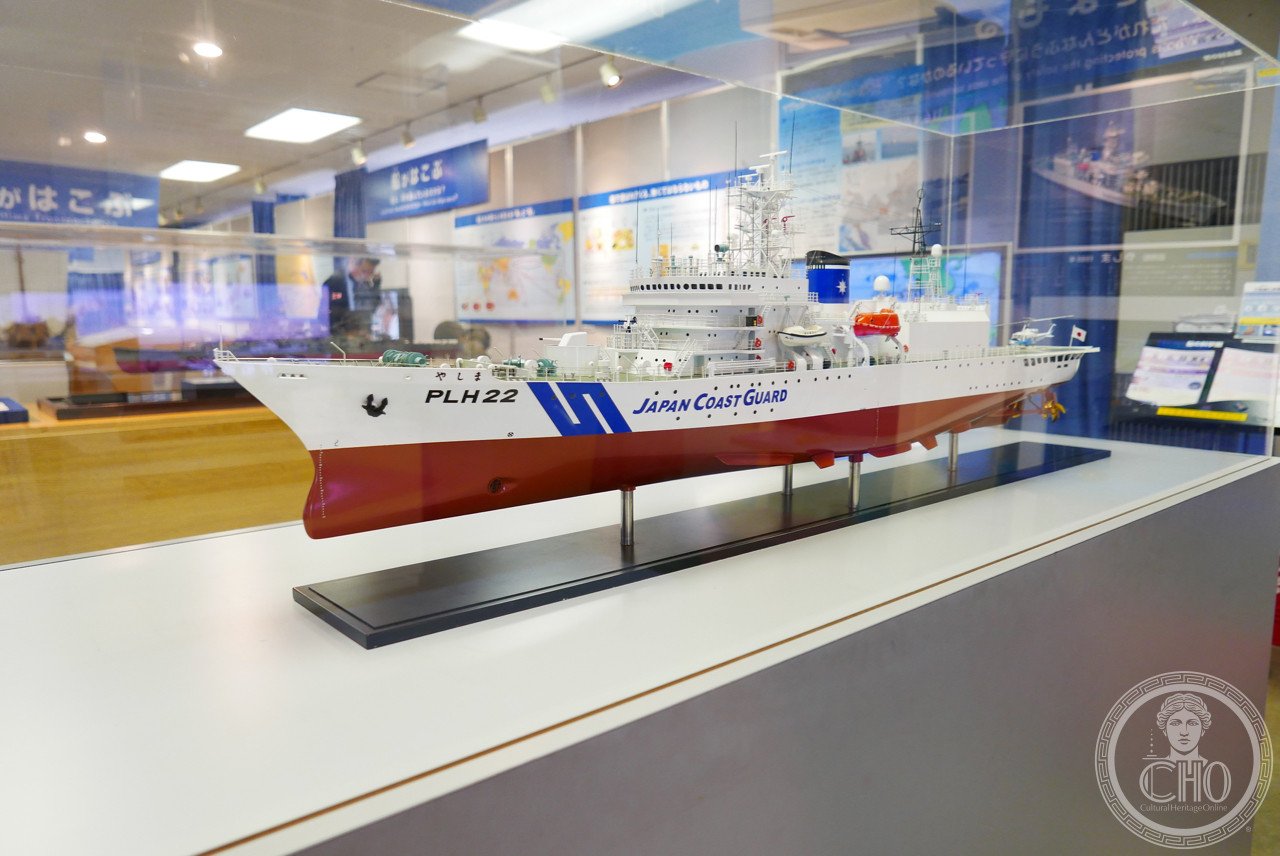
The Museum of Maritime Science was a marine science museum located in the Higashiyashio waterfront district on Odaiba island, Shinagawa, Tokyo. Opened in 1974 in a building shaped like a large passenger ship, the museum showcased Japan’s maritime heritage, shipbuilding technology, and ocean science through extensive collections of ship models, navigational instruments, and full-scale vessels moored alongside the building — including the historic icebreaker Sōya and the Antarctic research vessel Fuji.
At a glance
- Type
- Marine science and maritime heritage museum
- Period
- Opened 1974; main building closed 2011, outdoor exhibits continue
- Style
- Modernist ship-form architecture (building resembles a passenger liner)
- Location
- Higashiyashio, Shinagawa, Odaiba, Tokyo, Japan
- Coordinates
- 35.6202° N, 139.7723° E
Overview
The Museum of Maritime Science occupied a striking ship-shaped building on the Odaiba waterfront in Tokyo Bay, one of the most distinctive pieces of museum architecture in Japan. Founded in 1974 by the Ship Science Foundation, it served for decades as the primary institution documenting Japan’s relationship with the sea — from ancient fishing traditions to modern container shipping and Antarctic exploration. The indoor gallery building closed to the public in 2011, though the outdoor museum ships moored at the site remain accessible.
History
The museum was established in 1974 on the reclaimed land of the Odaiba area of Tokyo Bay, at that time undergoing major development as a waterfront district. The building, designed in the form of a large ferry, became an iconic element of the bay skyline. Over the following decades the museum accumulated ship models, navigational artefacts, and full-scale vessels including the icebreaker Sōya (retired 1978) and the Antarctic supply ship Fuji (retired 1984), both moored permanently at the site. The main building closed in 2011 for structural review and has not since fully reopened for indoor exhibitions.
What you see
The most visited element today is the outdoor collection of preserved vessels, above all the icebreaker Sōya, which visitors can board and explore. The ship-form museum building remains a visual landmark on the Odaiba waterfront, and the surrounding area is part of Tokyo’s modern waterfront park and entertainment precinct. The site offers panoramic views across Tokyo Bay toward the Rainbow Bridge and central Tokyo.
Cultural significance
The Museum of Maritime Science captures Japan’s transformation from an island nation dependent on coastal fishing and trade into a global maritime and technological power. Its collection of preserved Antarctic expedition vessels carries particular historical weight, representing Japan’s Cold War-era scientific ambitions and the logistical achievements of the Japanese Antarctic Research Expedition. The site remains a reference point in Tokyo’s cultural geography despite the partial closure of its main building.
Practical information
- Address
- 3-1 Higashiyashio, Shinagawa, Tokyo 135-8587, Japan
- Hours
- Check official website for current access to outdoor vessels and any open indoor areas
- Admission
- Check official website
Getting there
The museum is located on the Odaiba waterfront, accessible via the Yurikamome monorail (Fune-no-Kagakukan station) from Shimbashi station in central Tokyo. The journey takes approximately 20 minutes. The site is also reachable by water bus from Hinode Pier. Odaiba is connected to the mainland by the Rainbow Bridge and the Tokyo Teleport railway station (Rinkai Line).
Sources & resources
See the place
Find it on the map
See this place and what’s around it →📷 Become a Cultural Heritage Online photographer
Share your photos of places: they stay published under your name as the author. The more they're seen, the more you get noticed — and soon a contest will reward the most appreciated photos.
Log in or sign up free to add a photoIs this page about you?
This page is read by travellers and heritage enthusiasts who find it on Google. Tell us how you are connected to this place and we will take it from there.