

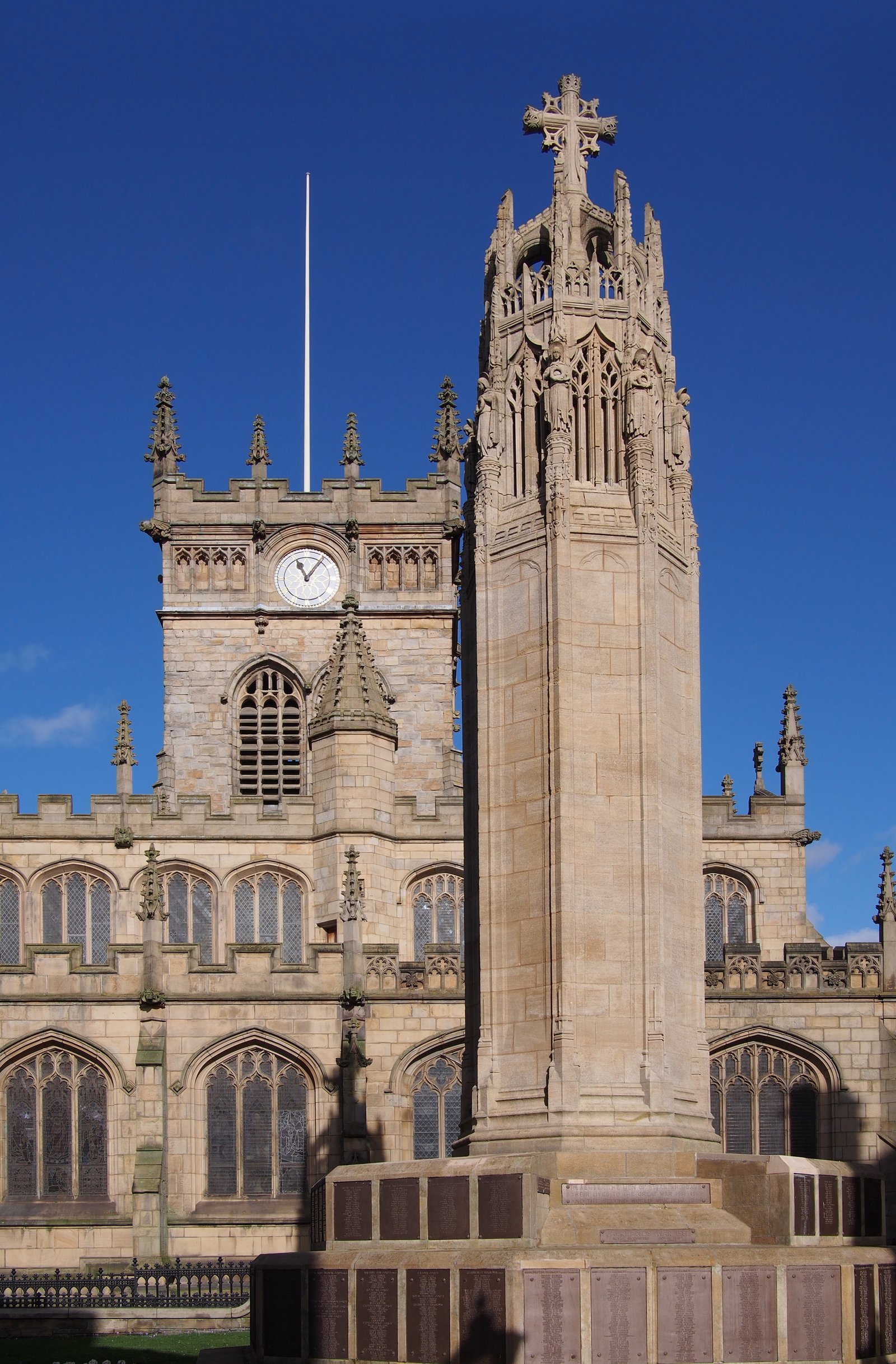
A Grade II* listed monument designed by Sir Giles Gilbert Scott, honouring the fallen of Wigan across two world wars.
At a glance
This austere monument occupies the churchyard of All Saints’ Church on Wallgate, standing as a permanent testament to sacrifice. Completed in 1925, it recalls the men of Wigan who died in the First World War and subsequent conflicts, notably the Second World War.
History
The memorial was constructed in 1925, following the end of the First World War and the national impulse to commemorate military losses. It was designed by Sir Giles Gilbert Scott, one of Britain’s most distinguished architects of the twentieth century. The monument honours not only those who fell in 1914–1918 but also extends remembrance to casualties of the Second World War and beyond.
What you see
The memorial is Grade II* listed, indicating architectural and historical importance. Scott’s design reflects the formal, dignified language of interwar commemoration. The monument stands within All Saints’ Church’s historic churchyard on Wallgate, a setting that reinforces its role as a focal point for community remembrance.
Cultural significance
As a Scott-designed war memorial, the monument represents a significant moment in twentieth-century British memorial architecture. It serves the dual purpose of honouring specific loss whilst contributing to Wigan’s civic identity and historical record. The memorial remains an active site of remembrance and reflection.
Key facts
- Country: United Kingdom
- City: Wigan, Greater Manchester
- Designed by: Sir Giles Gilbert Scott
- Completed: 1925
- Grade II* listed status
- Coordinates: 53.5457, -2.6325
Practical information & getting there
The memorial is freely accessible in the churchyard of All Saints’ Church on Wallgate in central Wigan. You can locate it using the coordinates provided. The site remains open to visitors year-round as a place of quiet reflection and historical study.
Sources & resources
Find it on the map
See this place and what’s around it →📷 Become a Cultural Heritage Online photographer
Share your photos of places: they stay published under your name as the author. The more they're seen, the more you get noticed — and soon a contest will reward the most appreciated photos.
Log in or sign up free to add a photoIs this page about you?
This page is read by travellers and heritage enthusiasts who find it on Google. Tell us how you are connected to this place and we will take it from there.