

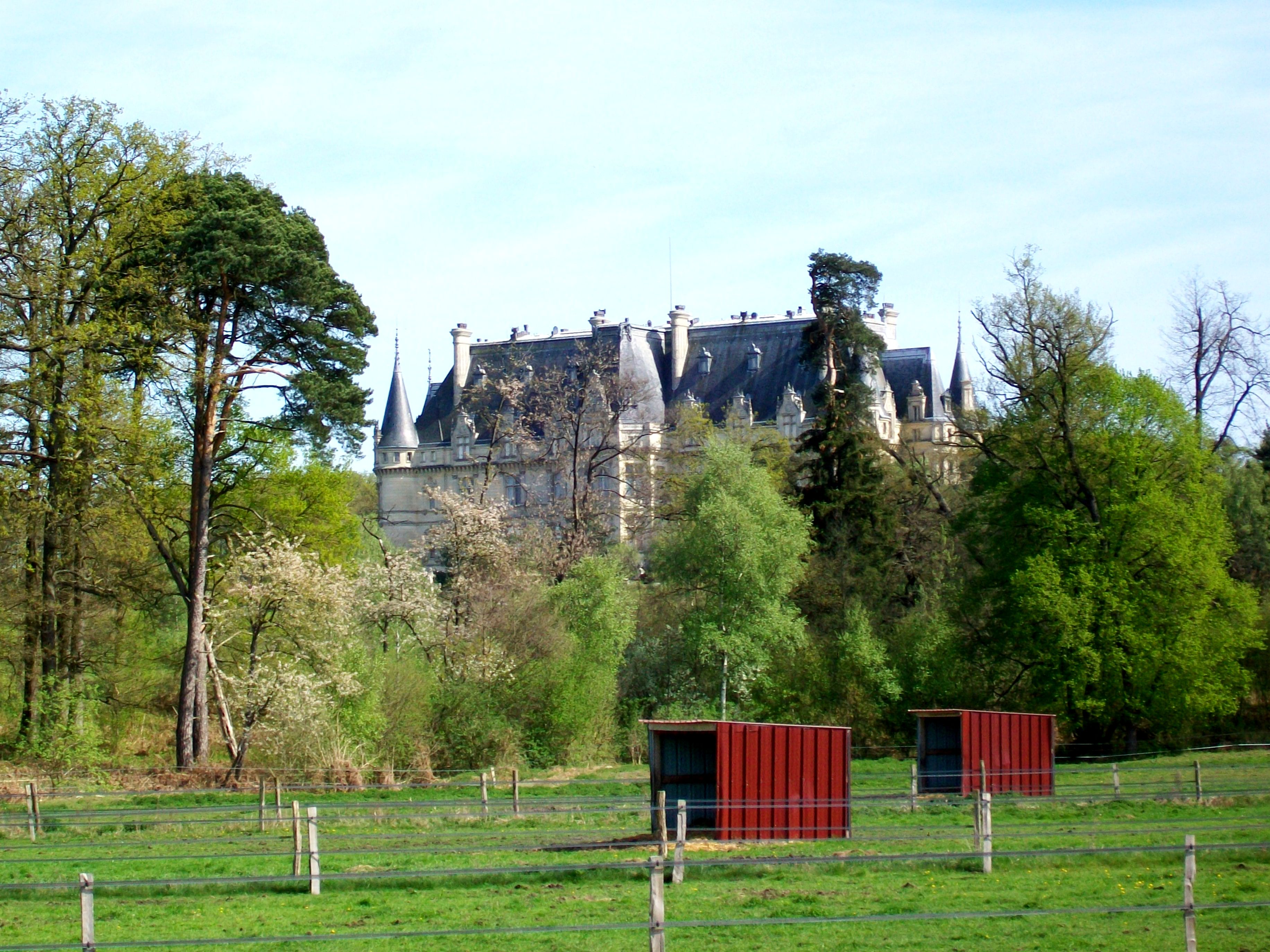
A neo-Gothic château built in 1894 for the Duke of Gramont, set within a protected parkland that borders the Ermenonville Forest in the Oise département.
At a glance
This 19th-century estate combines architectural distinction with landscape heritage. The château’s facades and roofs are protected as historical monuments, while its grounds hold separate conservation status. The setting merges built heritage with natural woodland.
History
The Château de Vallière was constructed in 1894 as a residence for the Duke of Gramont. Its neo-Gothic design reflected the romantic architectural tastes of the Gilded Age. The park gained official protection in 1961, and the building’s architectural elements were formally listed in 1975. Today the château is privately owned by Emirati businessman Mahdi Al Tajir.
What you see
The château exemplifies neo-Gothic style applied to domestic architecture. Its facades and roofline form the principal protected elements. The setting is inseparable from its appeal: the park extends across both Mortefontaine and the adjacent commune of Fontaine-Chaalis, positioned at the boundary of the Ermenonville Forest, a significant natural landscape in Picardy.
Cultural significance
The estate represents the 19th-century tradition of grand residential design influenced by medieval revival aesthetics. Its protected status reflects French heritage conservation priorities: recognizing both architectural merit and the relationship between buildings and their designed landscapes.
Key facts
- Built 1894
- Style: Neo-Gothic
- Location: Mortefontaine, Oise, Hauts-de-France
- Coordinates: 49.123°N, 2.612°E
- Architectural elements listed: 29 October 1975
- Park listed: 10 April 1961
- Original patron: Duke of Gramont
Practical information & getting there
The château is privately owned and not open to the public. The park, however, is a listed site and may be viewed from public access points on its perimeter. Mortefontaine is located in the Oise département, approximately 40 kilometres north of Paris. The nearby Ermenonville Forest offers additional exploration of the region’s cultural landscape.
Sources & resources
Find it on the map
See this place and what’s around it →📷 Become a Cultural Heritage Online photographer
Share your photos of places: they stay published under your name as the author. The more they're seen, the more you get noticed — and soon a contest will reward the most appreciated photos.
Log in or sign up free to add a photoIs this page about you?
This page is read by travellers and heritage enthusiasts who find it on Google. Tell us how you are connected to this place and we will take it from there.