
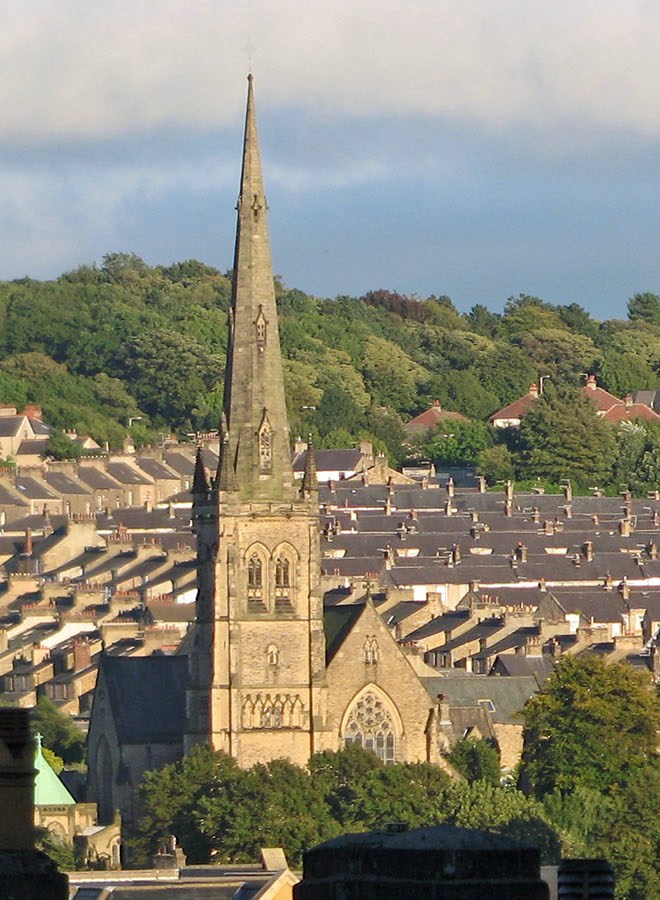
A Gothic Revival cathedral that evolved from a modest Catholic mission church into a living place of worship and cultural venue in northwest England.
At a glance
Lancaster Cathedral serves as the principal church of the Roman Catholic Diocese of Lancaster. Originally established as a mission church in 1798, it rose to cathedral status in 1924—a designation reflecting the growing Catholic community of Lancashire. The building itself dates to 1857–1859 and remains an active center for worship, concerts, and public gatherings.
History
The cathedral’s origins lie in a modest mission church founded in 1798 to serve Lancaster’s Catholic population during a period of gradual religious tolerance in England. The present structure was constructed between 1857 and 1859 on a new site, replacing the earlier mission building. In 1901, architect Austin and Paley added a baptistry, expanding the church’s liturgical spaces. The cathedral’s elevation from parish church status in 1924 marked an institutional milestone. More recent work in 1995 saw the east end reordered by Francis Roberts, reflecting evolving liturgical practices.
What you see
Designed by E. G. Paley, the cathedral embodies the Gothic Revival aesthetic popular in Victorian Britain. Pointed arches, ribbed vaults, and vertical emphasis—hallmarks of the style—create an interior atmosphere of soaring devotion. The 1901 baptistry addition by Austin and Paley integrates seamlessly with the original design. Grade II* listed status acknowledges its architectural merit and historical importance to the English built heritage.
Cultural significance
Lancaster Cathedral represents the nineteenth-century expansion of Catholic institutions across England following decades of legal restriction. Its presence in Lancashire reflects the region’s Catholic heritage and the community’s investment in permanent sacred architecture. Today it functions as both a spiritual center and a venue for the performing arts, demonstrating how historical religious buildings continue to serve contemporary cultural needs.
Key facts
- Location: Lancaster, Lancashire, United Kingdom
- Coordinates: 54.047°N, 2.7939°W
- Built: 1857–1859
- Architect: E. G. Paley
- Style: Gothic Revival
- Heritage listing: Grade II*
- Elevated to cathedral status: 1924
Practical information & getting there
The cathedral is open to visitors and welcomes attendance at services, concerts, and other events held throughout the year. For current opening hours, service times, and event schedules, consult the cathedral’s official channels before your visit.
Sources & resources
Find it on the map
See this place and what’s around it →📷 Become a Cultural Heritage Online photographer
Share your photos of places: they stay published under your name as the author. The more they're seen, the more you get noticed — and soon a contest will reward the most appreciated photos.
Log in or sign up free to add a photoIs this page about you?
This page is read by travellers and heritage enthusiasts who find it on Google. Tell us how you are connected to this place and we will take it from there.