
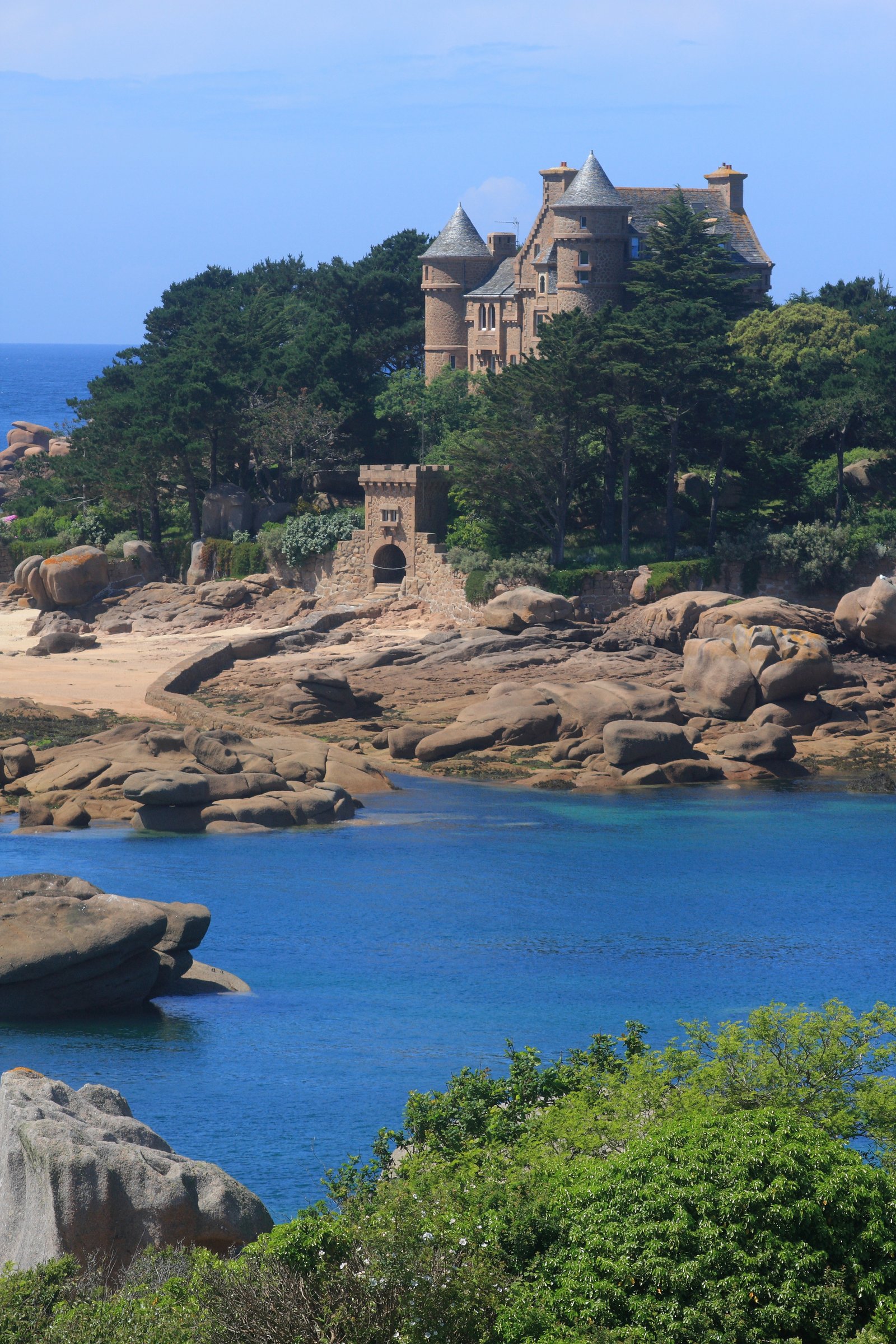
A neo-medieval château perched on a rocky island in Brittany’s English Channel, built in the late 19th century as an architectural fantasy in stone.
At a glance
This 1896 château occupies the island of Costaérès off the coast of Trégastel. Designed in the neo-medieval style, it represents the romantic architectural aspirations of its era—a period when wealthy patrons commissioned fantastical stone structures inspired by medieval forms.
History
The château was built in 1896 on its rocky island location. It emerged from the 19th-century European taste for reviving medieval aesthetics, transforming the remote Breton coastline with a bold statement in stone and turrets.
What you see
The building follows neo-medieval design principles, echoing the forms and imagery of medieval fortifications. Its setting on the island of Costaérès, surrounded by granite outcroppings in the English Channel, amplifies its dramatic silhouette and romantic appeal.
Cultural significance
The château exemplifies the 19th-century revival movement that transformed European taste and patronage. As a standalone fantasy castle on the Breton coast, it remains a striking expression of how historical imagination shaped the physical landscape of Brittany.
Key facts
- Built: 1896
- Country: France
- Location: Trégastel, Côtes-d’Armor, Brittany
- Setting: Island of Costaérès in the English Channel
- Coordinates: 48.8353, −3.4926
- Style: Neo-medieval
Practical information & getting there
The château is located on a private island off Trégastel in northern Brittany. Access and visiting details are not publicly documented; inquire locally or contact tourism offices in Côtes-d’Armor for current information.
Sources & resources
Find it on the map
See this place and what’s around it →📷 Become a Cultural Heritage Online photographer
Share your photos of places: they stay published under your name as the author. The more they're seen, the more you get noticed — and soon a contest will reward the most appreciated photos.
Log in or sign up free to add a photoIs this page about you?
This page is read by travellers and heritage enthusiasts who find it on Google. Tell us how you are connected to this place and we will take it from there.