
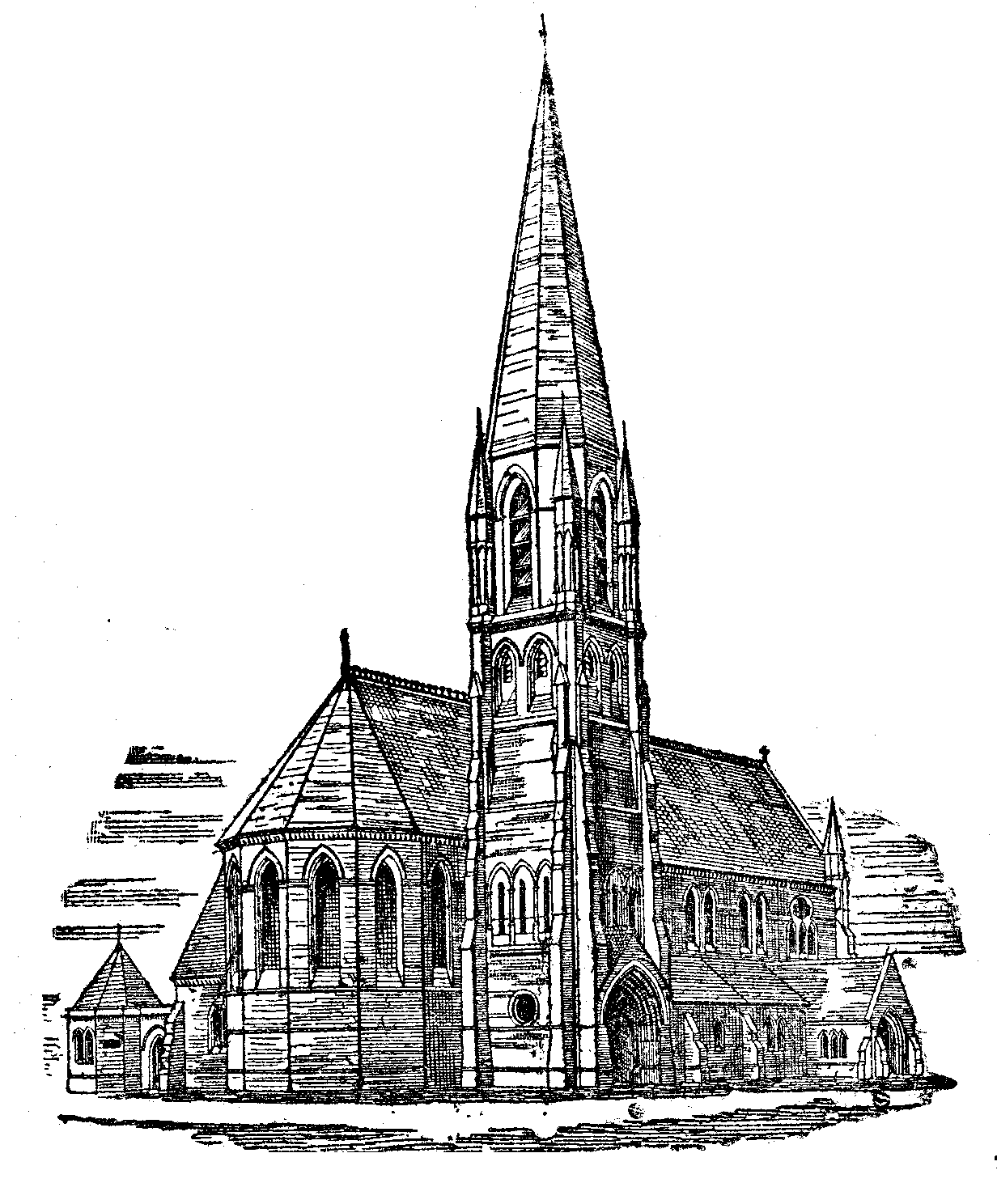
A Victorian church built in 1882, designed by Liverpool architect James Francis Doyle for the industrial town of Widnes.
At a glance
St Ambrose Church stands as a late 19th-century religious structure in Widnes, commissioned during the height of the town’s industrial expansion. The church represents the architectural ambitions of Victorian England, when rapidly growing industrial centers invested in substantial places of worship.
History
The church was constructed in 1882, a period of significant growth for Widnes as a chemical manufacturing hub. James Francis Doyle, a Liverpool-based architect active during the Victorian era, received the commission to design the building. Doyle (c. 1840–1913) was an accomplished designer whose work reflected the tastes and technical capabilities of his time.
What you see
Detailed architectural information about the church’s design, style, and notable features awaits further documentation.
Cultural significance
St Ambrose Church exemplifies Victorian-era ecclesiastical construction in an industrial landscape, reflecting the social aspirations of workers and manufacturers in 19th-century Lancashire.
Key facts
- Completed: 1882
- Architect: James Francis Doyle (c. 1840–1913) of Liverpool
- Location: Widnes, Halton, United Kingdom
- Coordinates: 53.3725°N, 2.7123°W
Practical information & getting there
St Ambrose Church is located in Widnes, a town in the Halton borough of Cheshire. You can find current visiting hours and services through the church’s official contacts or local visitor information for Widnes.
Sources & resources
Find it on the map
See this place and what’s around it →📷 Become a Cultural Heritage Online photographer
Share your photos of places: they stay published under your name as the author. The more they're seen, the more you get noticed — and soon a contest will reward the most appreciated photos.
Log in or sign up free to add a photoIs this page about you?
This page is read by travellers and heritage enthusiasts who find it on Google. Tell us how you are connected to this place and we will take it from there.