
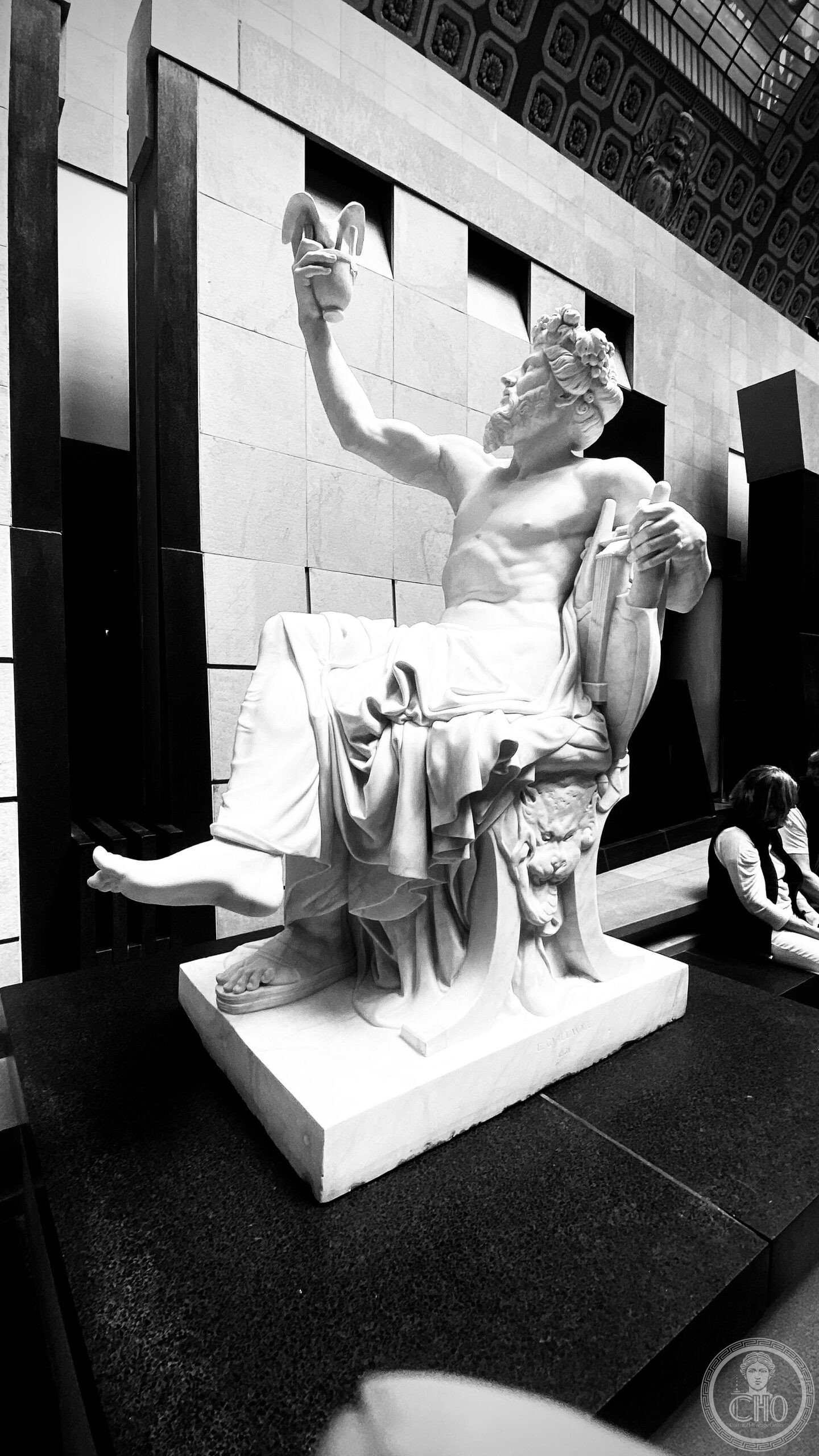
The Musée d’Orsay is an art museum on the Left Bank of the Seine in Paris, housed in the former Gare d’Orsay, a Beaux-Arts railway station built from 1898 to 1900. It holds the largest collection of Impressionist and Post-Impressionist masterpieces in the world, with works by Monet, Manet, Degas, Renoir, Cézanne, Seurat, Gauguin, and Van Gogh, covering French art from 1848 to 1914.
- Type
- National art museum
- Period
- Station built 1898–1900; converted to museum, opened 1986
- Style
- Beaux-Arts (station); major renovation by Gae Aulenti (museum interior, 1986)
- Location
- 1 Rue de la Légion d’Honneur, 75007 Paris, France
- Coordinates
- 48.8599° N, 2.3267° E
At a glance
- Type
- National art museum (French state)
- Period
- Station 1898–1900; museum opened 1986
- Style
- Beaux-Arts exterior · contemporary interior by Gae Aulenti
- Location
- Left Bank, 7th arrondissement, Paris, France
Overview
The Musée d’Orsay is one of the largest art museums in Europe and the premier destination in the world for Impressionist and Post-Impressionist painting. The collection spans not only painting but also sculpture, furniture, decorative arts, and photography, all dating from the period 1848 to 1914. Many of the works now displayed here were previously held at the Galerie nationale du Jeu de Paume before the museum opened in December 1986.
History
The building was constructed as the Gare d’Orsay terminus for the Orléans railway company, designed by architects Lucien Magne, Émile Bénard, and Victor Laloux for the 1900 Paris Universal Exhibition. Its electrified platforms were covered by a vast arched iron-and-glass roof. The station closed to mainline traffic in 1939 as platforms became too short for modern trains; it served as a mail sorting centre, a film set, and an auction house before the French government decided in 1977 to convert it into a museum. Italian architect Gae Aulenti redesigned the interior for the 1986 opening.
What you see
The great central nave — preserved from the original station — runs the full length of the building and displays large-scale sculpture at ground level. Upper-floor galleries hold the core Impressionist collection: Van Gogh’s self-portraits, Monet’s series paintings, Renoir’s Le Moulin de la Galette, and Manet’s Olympia and Le Déjeuner sur l’herbe. The building’s original clock faces, visible from both inside and outside the Seine-facing facade, are among Paris’s most photographed details.
Cultural significance
The Musée d’Orsay is the definitive institutional home of Impressionism, holding works that fundamentally changed the course of Western art. The adaptive reuse of the Gare d’Orsay is also a landmark in the history of heritage conservation, demonstrating that monumental industrial architecture could be transformed rather than demolished.
Practical information
Address: 1 Rue de la Légion d’Honneur, 75007 Paris. Open Tuesday to Sunday; closed Mondays and certain public holidays. Late opening on Thursday evenings. Admission is free for visitors under 18 and EU residents under 26. Check the official website for current hours, prices, and temporary exhibitions.
Getting there
RER C to Musée d’Orsay station (adjacent). Metro: Line 12 to Solférino (5 minutes on foot). Bus lines 24, 63, 68, 69, 73, 83, 84, and 94 stop nearby. Batobus river shuttle stops at the Musée d’Orsay pier. The museum is also within easy walking distance of the Tuileries Garden and the Louvre.
Sources & resources
Find it on the map
See this place and what’s around it →📷 Become a Cultural Heritage Online photographer
Share your photos of places: they stay published under your name as the author. The more they're seen, the more you get noticed — and soon a contest will reward the most appreciated photos.
Log in or sign up free to add a photo