
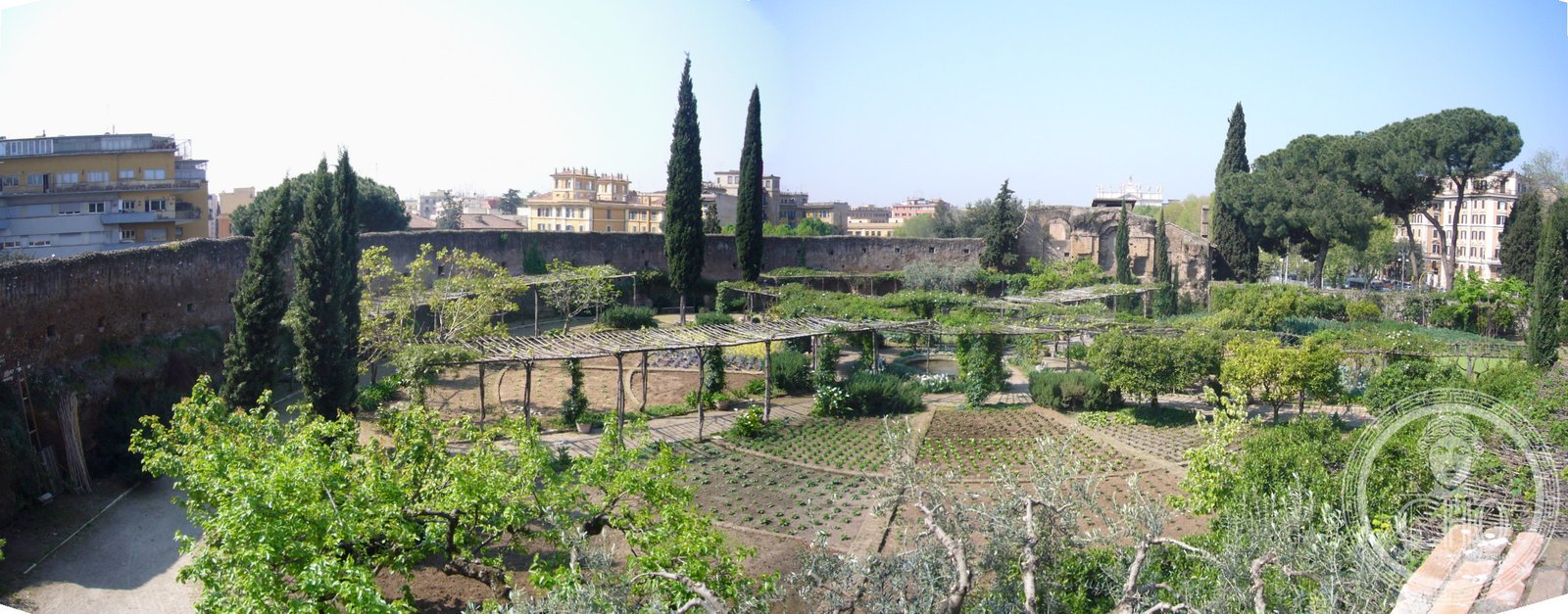
Santa Croce in Gerusalemme is a Catholic minor basilica and titular church in the Esquiline district of Rome, one of the Seven Pilgrim Churches of Rome, traditionally founded by Saint Helena — mother of Emperor Constantine — to house relics of the True Cross brought from Jerusalem in the early fourth century.
At a glance
- Type
- Minor basilica; titular church; pilgrimage church
- Period
- Founded 4th century; rebuilt 12th century; facade 1743
- Style
- Early Christian foundations; Romanesque rebuilding; Baroque facade
- Location
- Piazza di Santa Croce in Gerusalemme, R. XV Esquilino, Rome, Italy
- Coordinates
- 41.8883° N, 12.5156° E
Overview
Santa Croce in Gerusalemme is a Catholic minor basilica and titular church in the Rione XV Esquilino quarter of Rome. It is one of the Seven Pilgrim Churches of Rome, a circuit of basilicas that pilgrims have visited since the early medieval period to obtain indulgences and venerate the city’s most sacred relics. The basilica is named for the relic of the True Cross that tradition records Helena, mother of Constantine the Great, brought to Rome from the Holy Land.
History
The church was founded in the early fourth century, with tradition attributing its creation to Saint Helena, who is said to have had soil from Jerusalem spread beneath the foundations to sanctify the site. The original building formed part of the Sessorian Palace complex on the south-eastern edge of ancient Rome. It was substantially rebuilt in the twelfth century, and the prominent Baroque facade with its dynamic curved forms and statues was added in 1743 by architects Domenico Gregorini and Pietro Passalacqua. The church houses a Relic Chapel containing fragments venerated as part of the True Cross, a nail of the Crucifixion, and other Passion relics.
What you see
The 1743 Baroque facade is one of the most expressive in Rome, its concave-convex curves and flanking bell towers creating a dramatic street presence that contrasts with the ancient Christian origins within. The interior preserves an Early Christian three-nave basilica plan, with a medieval apse fresco cycle and side chapels. The underground Relic Chapel, reached by a staircase, displays the collection of Passion relics in a Renaissance setting with mosaic floor and coffered vault. The nearby Cistercian monastery contributes a cloister and monastic landscape to the complex.
Cultural significance
As one of the Seven Pilgrim Churches, Santa Croce in Gerusalemme occupies a central place in Rome’s sacred topography, attracting pilgrims since at least the time of Pope Gregory the Great. Its relic collection — particularly the fragments of the True Cross — made it a destination of international importance in medieval Christendom and a node in the global circulation of relics that shaped medieval religious culture. Today it remains an active pilgrimage site and a monument of the deepest strata of Christian Rome.
Practical information
- Address
- Piazza di Santa Croce in Gerusalemme 12, 00185 Rome
- Admission
- Free entry to the basilica; donations welcome
Getting there
The basilica is served by Metro Line A (station San Giovanni, approximately 10 minutes on foot) and by tram line 3 (stop Porta Maggiore). Bus lines 81 and 649 stop near the piazza. The site is easily combined with visits to San Giovanni in Laterano and the Aurelian Walls, which are within walking distance.
Sources & resources
See the place
Find it on the map
See this place and what’s around it →Historical events at this place (3)
📷 Become a Cultural Heritage Online photographer
Share your photos of places: they stay published under your name as the author. The more they're seen, the more you get noticed — and soon a contest will reward the most appreciated photos.
Log in or sign up free to add a photoIs this page about you?
This page is read by travellers and heritage enthusiasts who find it on Google. Tell us how you are connected to this place and we will take it from there.