
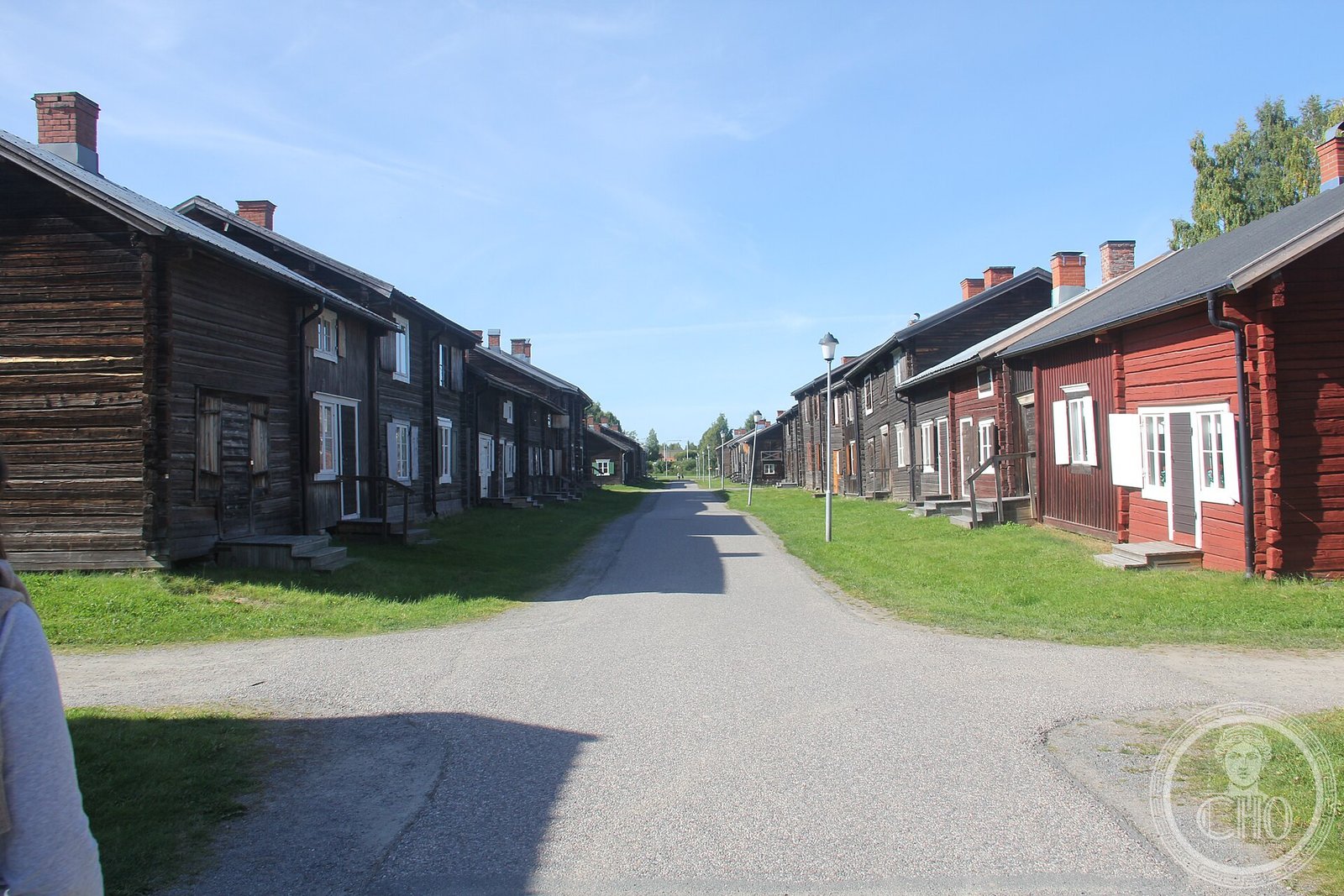
Bonnstan is a historic church town (Swedish: kyrkstad) adjacent to Skellefteå in Västerbotten County, northern Sweden, and one of the best-preserved examples of the distinctive ecclesiastical village type that developed across northern Scandinavia from the 17th century onward. Rows of painted timber cottages provided seasonal lodging for parishioners travelling long distances to attend church services, forming a unique form of vernacular religious settlement that UNESCO has recognised as part of the Church Villages of Gammelstad, Luleå World Heritage context.
At a glance
- Type
- Church town (kyrkstad) — vernacular religious settlement
- Period
- 17th–18th century; continuously maintained
- Style
- Nordic timber vernacular
- Location
- Skellefteå, Västerbotten County, Sweden (64.7514° N, 20.9293° E)
Overview
Bonnstan is among the largest surviving church towns in Sweden, comprising rows of small red-painted timber cottages clustered near the parish church of Skellefteå. The settlement functioned as a temporary village where rural parishioners from distant farms stayed overnight during major religious festivals — Christmas, Easter and Midsummer — when travel conditions made a same-day return impossible. Today the cottages are listed buildings, and the site is a key example of the northern Swedish kyrkstad tradition that shaped community life for centuries.
History
Church towns emerged in northern Sweden during the 17th century as the Lutheran church required all parishioners to attend services regularly despite living in a sparsely populated landscape of forests and rivers where distances could exceed 50 km. Skellefteå parish established Bonnstan to house the faithful from outlying villages during ecclesiastical feast days. The cottages were individually owned by farm families, passed down through generations, and meticulously maintained as expressions of family identity and piety. By the 19th century the tradition of overnight stays had largely faded, but the physical fabric survived, and formal heritage protection was introduced in the 20th century.
What you see
Bonnstan presents orderly rows of small timber cottages painted in the traditional Falun red pigment, with white window frames and modest pitched roofs — a composition that has changed little in two centuries. Narrow lanes separate the rows, and the cottages back onto small yards enclosed by wooden fences. The adjacent Skellefteå church, a neoclassical structure in white render, anchors the settlement spatially and reinforces the sense of a self-contained religious community frozen in time.
Cultural significance
Church towns represent a uniquely Scandinavian solution to the challenge of religious observance in a dispersed northern landscape, and Bonnstan is among the most intact surviving examples of this tradition. The settlement offers direct material evidence of Lutheran communal life in early modern northern Sweden and has been recognised as a nationally significant listed monument. It stands alongside the UNESCO World Heritage church town of Gammelstad in Luleå as testimony to a form of collective religious heritage found nowhere else in the world.
Practical information
- Address
- Bonnstan, Skellefteå, Västerbotten County, Sweden
- Hours
- Exterior accessible year-round; interiors by arrangement with local heritage organisations
- Admission
- Free to walk through the historic lanes
Getting there
Skellefteå Airport (SKF) serves the town with connections to Stockholm Arlanda. From central Skellefteå, Bonnstan is reachable on foot or by local bus. The E4 motorway passes through Skellefteå for those travelling by car along the Norrland coast. Overnight rail services from Stockholm to Luleå stop at Bastuträsk, from which a bus connection reaches Skellefteå.
Sources & resources
See the place
Find it on the map
See this place and what’s around it →📷 Become a Cultural Heritage Online photographer
Share your photos of places: they stay published under your name as the author. The more they're seen, the more you get noticed — and soon a contest will reward the most appreciated photos.
Log in or sign up free to add a photoIs this page about you?
This page is read by travellers and heritage enthusiasts who find it on Google. Tell us how you are connected to this place and we will take it from there.