
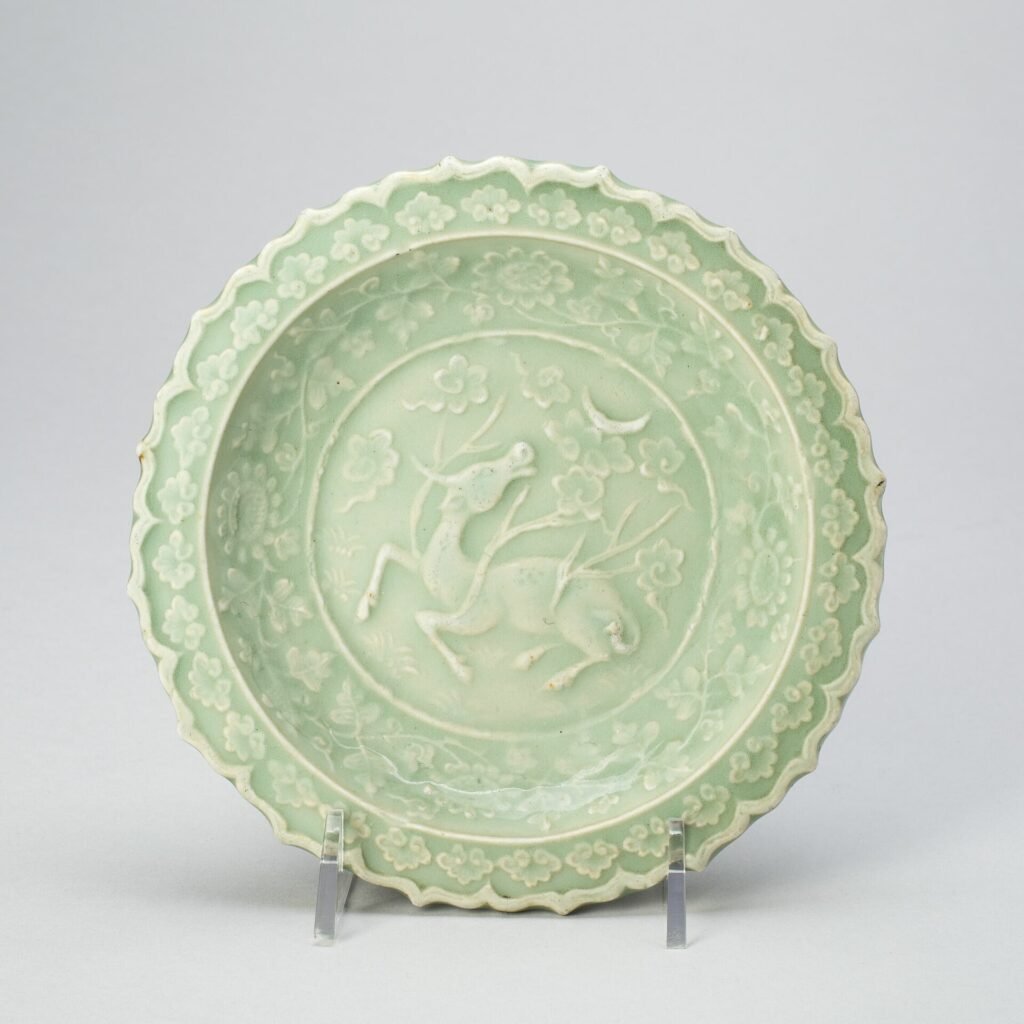
A luminous green-glazed ceramic tradition spanning over five centuries, Longquan celadon represents one of China’s greatest contributions to world ceramics and trade.
In UNESCO’s words
The city of Longquan in the coastal Chinese province of Zhejian is known for its celadon pottery and the traditional firing technology that imparts its distinctive glaze. Compounded from violet-golden clay and a mixture of burnt feldspar, limestone, quartz and plant ash, the glaze is prepared from recipes that have often been handed down for generations by teachers or within families. The glaze is applied to a fired stoneware vessel, which is then fired again in a repeated cycle of six stages of heating and cooling where precise temperatures matter a great deal: either over- or under-firing will spoil the effect. Experienced celadon artists carefully control each stage with a thermometer and by observing the colour of the flame, which reaches temperatures as high as 1310º C. The final product may take either of two styles: ‘elder brother’ celadon has a black finish with a crackle effect, while the ‘younger brother’ variety has a thick, lavender-grey and plum-green finish. With its underlying jade-like green colour, celadon fired by the family-oriented businesses of Longquan is prized as masterwork-quality art that can also serve as household ware. It is a proud symbol of the cultural heritage of the craftspeople, their city and the nation.
Official description, UNESCO Intangible Cultural Heritage List — Traditional firing technology of Longquan celadon
At a glance
Longquan celadon is a high-fired stoneware distinguished by its distinctive glaze, which ranges from jade-like green to lavender-grey and plum-green tones. The glaze is made from violet-golden clay combined with burnt feldspar, limestone, quartz and plant ash, mixed according to recipes often passed down through families or between teachers and students. The finished pieces serve as both masterwork-quality art and functional household ware, prized for their refined appearance.
Origins & history
The official description focuses on the technical tradition rather than historical periods. Longquan celadon production developed through the careful refinement of firing techniques and glaze recipes over generations. The tradition has been sustained by family-oriented businesses that continue to apply ancestral knowledge to their craft, maintaining the methods and formulas that define the ware.
The practice
Celadon artists shape vessels from violet-golden clay, then apply the specially prepared glaze before firing. The production involves a repeated cycle of six stages of heating and cooling, where precise temperature control is essential—firing reaches as high as 1310°C. Experienced potters monitor each stage using a thermometer and by observing flame colour. Two distinct styles emerge: 'elder brother' celadon with a black finish and crackle effect, and 'younger brother' with thick lavender-grey and plum-green tones. Either over- or under-firing will ruin the final result.
Cultural significance
Longquan celadon is a proud symbol of cultural heritage for the craftspeople, their city and the nation. The jade-like green colour and refined quality of pieces produced by local family businesses have earned them recognition as masterworks. The tradition embodies the knowledge and skill passed down through generations, connecting each potter to centuries of accumulated craft wisdom and family legacy.
Key facts
- Country: China
- Inscribed: 2009
- UNESCO list: Representative List of the Intangible Cultural Heritage of Humanity
- UNESCO reference: 00205
- UNESCO vocabulary: Celadon; Ceramic art; Technical skills
- Map: Longquan — the locality named in UNESCO’s official description of this element
Where to experience it
Longquan, in the coastal Chinese province of Zhejiang, remains the centre of celadon production and the home of this ceramic tradition. Visitors to the city can observe skilled artisans at work in family-oriented businesses, where they apply generations-old glazing recipes and carefully control the multi-stage firing process. The finished pieces—whether the distinctive 'elder brother' celadon with its black crackled finish or the 'younger brother' variety in lavender-grey and plum-green—showcase the jade-like green colour that makes Longquan celadon prized worldwide as both masterwork art and functional household ware.
Sources & resources
- UNESCO — official element page: Traditional firing technology of Longquan celadon
- UNESCO — open data record: Intangible Heritage List, reference 00205
- UNESCO — official video: UNESCO film on this element — embedded on this page
- UNESCO — official photograph: Photograph of this element — Longquan Celadon Industry Association — Longquan Celadon Industry Association, 2008
- Reference — Wikipedia (secondary): Longquan celadon — consulted as a secondary reference, not as confirmation
- Cultural Heritage Online: Our archive and city guides

Find it on the map
See this place and what’s around it →📷 Become a Cultural Heritage Online photographer
Share your photos of places: they stay published under your name as the author. The more they're seen, the more you get noticed — and soon a contest will reward the most appreciated photos.
Log in or sign up free to add a photo