
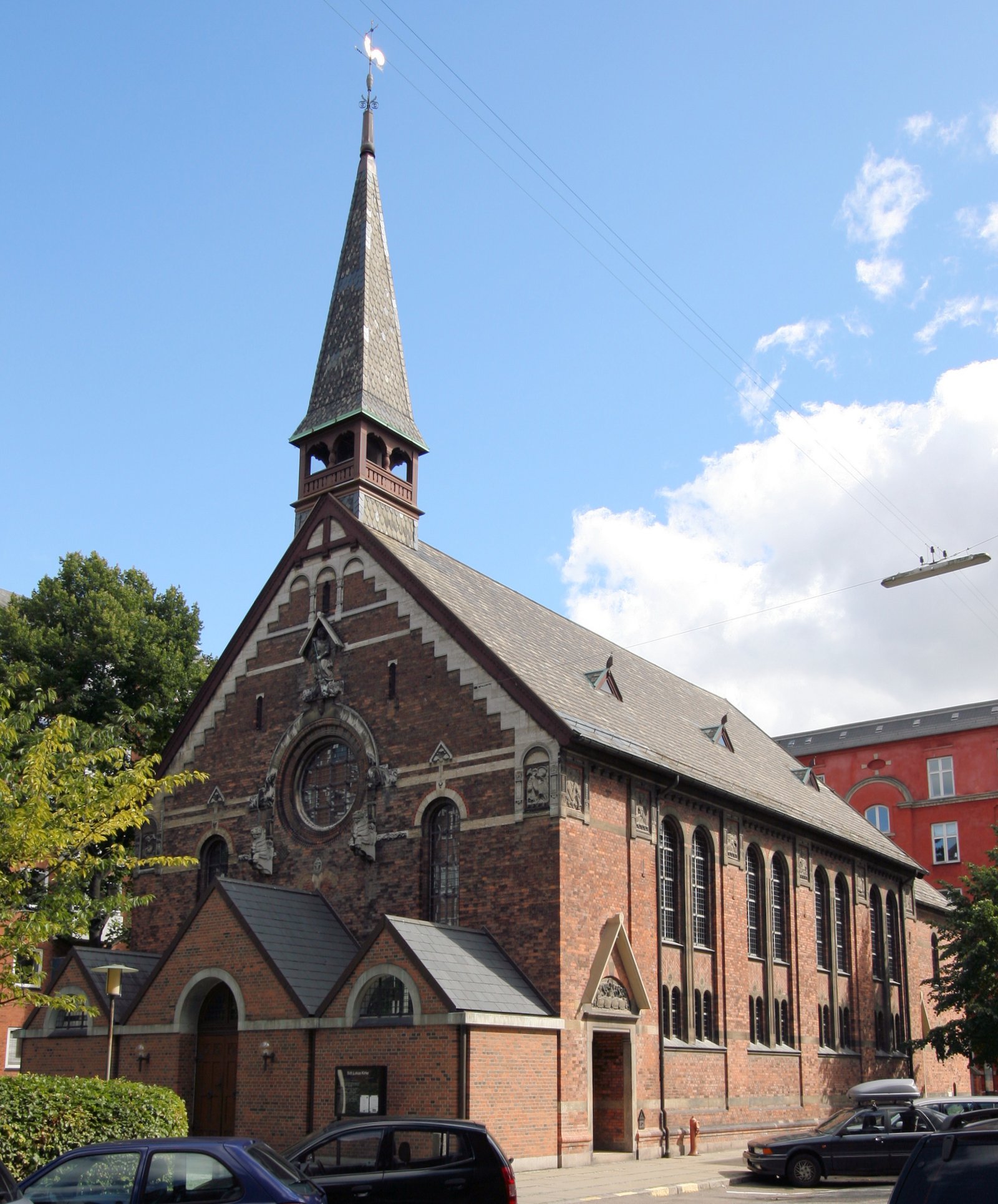
A red-brick Protestant church completed in 1897 by architect Valdemar Koch, St. Luke’s stands as the second-oldest church in Copenhagen’s Frederiksberg district.
At a glance
St. Luke’s Church is a Church of Denmark parish church in Frederiksberg, a leafy municipality west of central Copenhagen. Completed at the end of the nineteenth century, it represents Koch’s contribution to the city’s ecclesiastical architecture during a period of significant church building.
History
The church was completed in 1897 to the design of Valdemar Koch, an architect active in Copenhagen who built several other churches around the same period. Among Frederiksberg’s churches, St. Luke’s ranks as the second-oldest structure in this category.
What you see
Koch’s design reflects the ecclesiastical tastes of the 1890s. The building exemplifies late nineteenth-century church architecture in Copenhagen, though specific architectural details and materials are best observed during a visit to the site.
Cultural significance
As part of Copenhagen’s expanding Frederiksberg district, St. Luke’s Church documents the era when suburban parishes required new religious institutions. It remains an active Church of Denmark congregation and contributes to the area’s architectural heritage.
Key facts
- Country: Denmark
- City: Frederiksberg Municipality, Copenhagen
- Completed: 1897
- Architect: Valdemar Koch
- Coordinates: 55.68°N, 12.54°E
Practical information & getting there
St. Luke’s Church is located in Frederiksberg, a residential area accessible by local transport from central Copenhagen. As an active parish church, visiting hours and services can be confirmed through the Church of Denmark or local Frederiksberg tourism information.
Sources & resources
Find it on the map
See this place and what’s around it →📷 Become a Cultural Heritage Online photographer
Share your photos of places: they stay published under your name as the author. The more they're seen, the more you get noticed — and soon a contest will reward the most appreciated photos.
Log in or sign up free to add a photoIs this page about you?
This page is read by travellers and heritage enthusiasts who find it on Google. Tell us how you are connected to this place and we will take it from there.