
On Corpus Christi, Venezuelan brotherhoods dress as devils to honour the presence of Christ in the Eucharist, performing elaborate dances that blend Catholic devotion with African and Indigenous traditions.
In UNESCO’s words
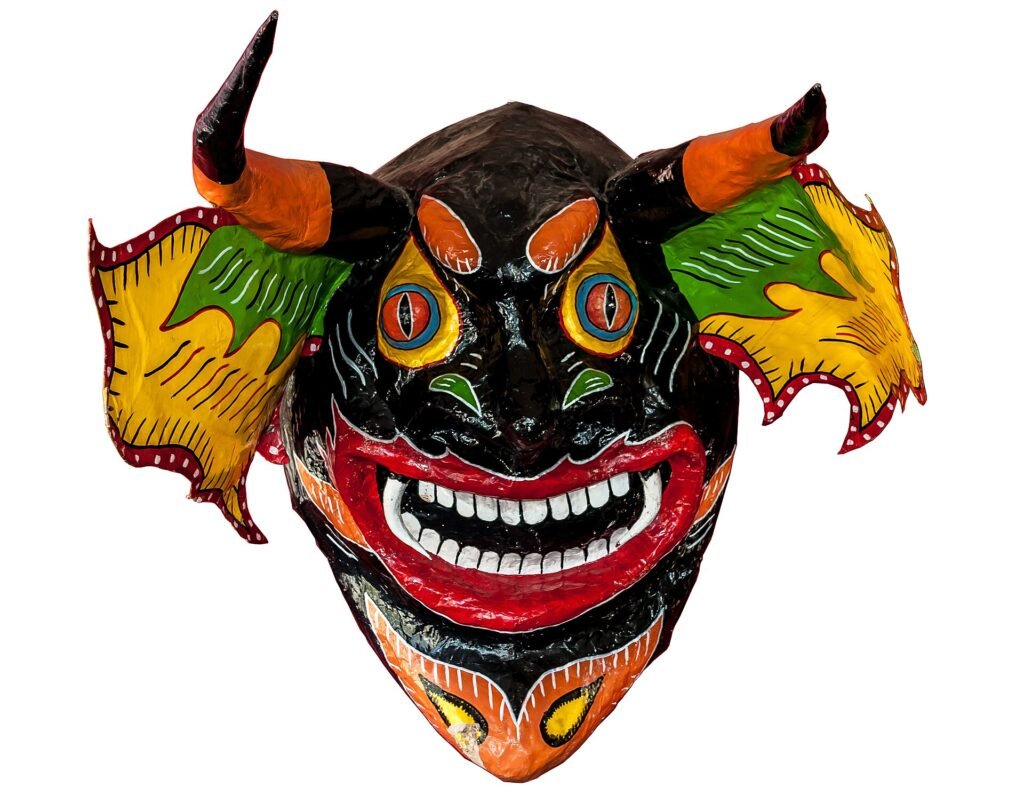
The small communities along the central coastal region of Venezuela have a special way to celebrate the Feast of Corpus Christi, an annual Roman Catholic holiday commemorating the presence of Christ in the Sacrament. Groups of adults, young men and children disguised as masked devils dance backwards in penitence as an official of the Catholic Church carries forth the Blessed Sacrament. String and percussion instruments provide musical accompaniment and worshippers carry maracas to ward off evil spirits. At the climax of the celebration the devils surrender to the Sacrament, symbolizing the triumph of good over evil. The dancers or promeseros (promise-keepers) are lifelong members of a confraternity that transmit the historical memory and ancestral traditions. Each confraternity crafts its own devil masks, which are worn with crosses, scapulars and blessed palm leaves. Dancers also use bells, handkerchiefs and strips of ribbon as protection from evil spirits. Women oversee the spiritual preparation of children, organize the stages of the ritual, prepare food, provide support for the dances, and raise altars along the procession route; in recent years, some communities have begun to welcome them as dancers. The practice is steeped in creativity, organization and faith, and promotes a strong sense of communal and cultural identity.
Official description, UNESCO Intangible Cultural Heritage List — Venezuela's Dancing Devils of Corpus Christi
At a glance
The Dancing Devils of Corpus Christi is a way that small communities along Venezuela's central coast celebrate the Catholic feast day. Adults, young men and children wear devil masks and dance backwards in penitence while an official carries the Blessed Sacrament in procession. String and percussion instruments accompany the celebration, and worshippers carry maracas to ward off evil spirits. The dancers, known as promeseros, belong to confraterities that have transmitted these ancestral traditions across generations. The ritual reaches its climax when the devils surrender to the Sacrament, symbolizing the triumph of good over evil.
Origins & history
The Dancing Devils emerged from the cultural encounter between Spanish Catholicism and the experiences of enslaved and Indigenous peoples in colonial Venezuela. The practice channels spiritual reverence through the figure of the devil, transforming a symbol of evil into an instrument of praise and devotion to Christ in the Eucharist.
The practice
Members of confraterities craft their own devil masks, worn with crosses, scapulars and blessed palm leaves. Dancers carry bells, handkerchiefs and strips of ribbon as additional protection from evil spirits. Women organize the ritual's stages, prepare food, arrange altars along the procession route and provide support for the dancers; in recent years some communities have welcomed them as participants. The dancers move backwards in penitence as the Sacrament is carried forward, accompanied by string and percussion instruments and maracas.
Cultural significance
The practice preserves ancestral memory within the confraternities, whose lifelong members transmit historical knowledge to new generations. It strengthens communal identity and promotes a deep sense of cultural belonging through shared faith and creativity. The celebration represents an enduring expression of how communities practice their Catholic devotion through their own distinctive traditions.
Key facts
- Country: Venezuela (Bolivarian Republic of)
- Inscribed: 2012
- UNESCO list: Representative List of the Intangible Cultural Heritage of Humanity
- UNESCO reference: 00639
- UNESCO vocabulary: Dance; Festivals; Religious practice
- Map: not shown — UNESCO’s official description of this element names no locality, and a living tradition is practised across a community, not at one address.
Where to experience it
The tradition thrives in small communities along Venezuela's central coastal region, where local confraternities keep the practice alive through their annual Corpus Christi celebrations. Visitors can witness the masked devils dancing backwards in penitence as the Blessed Sacrament is carried in procession, accompanied by string and percussion instruments. Each community crafts its own distinctive devil masks and organizes the ritual stages, with women preparing food, raising altars along the route, and increasingly joining as dancers. The celebrations showcase the creativity and faith that bind these communities together, drawing both members and observers to participate in this demonstration of good triumphing over evil.
Sources & resources
- UNESCO — official element page: Venezuela's Dancing Devils of Corpus Christi
- UNESCO — open data record: Intangible Heritage List, reference 00639
- UNESCO — official photograph: Photograph of this element — Consuelo Arriaga — 2008 Fundación Centro de la Diversidad Cultural
- Reference — Wikipedia (secondary): Dancing devils of Corpus Christi — consulted as a secondary reference, not as confirmation
- Cultural Heritage Online: Our archive and city guides
