
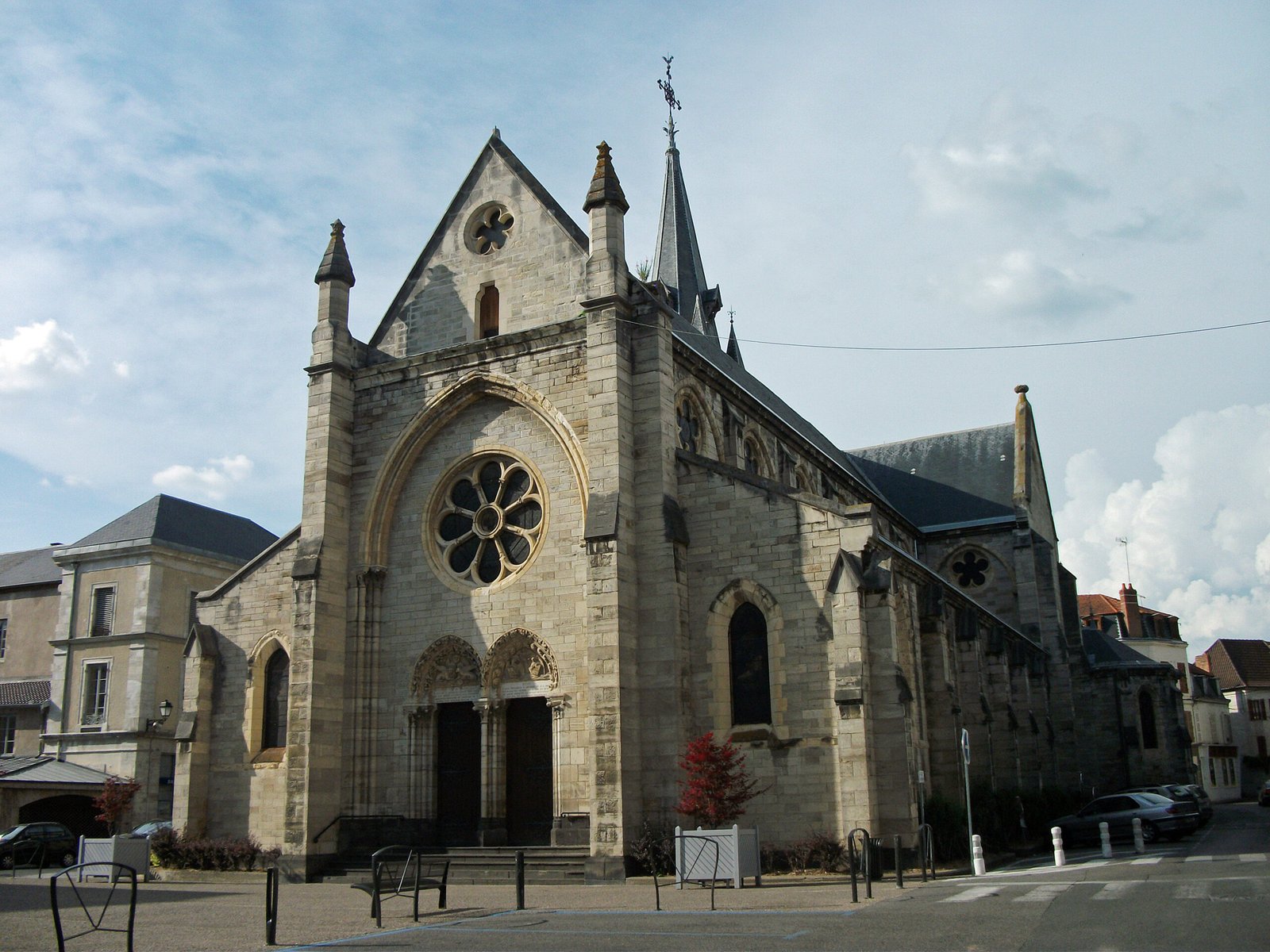
A mid-19th-century parish church built in early Gothic style, Saint-Saturnin has served as Cusset’s principal place of worship since its completion in 1867.
At a glance
This stone church occupies the town center of Cusset, a commune in central France. Constructed over a decade-long campaign from 1857 to 1867, it represents the religious and civic aspirations of the period. The building remains actively used for worship today.
History
Saint-Saturnin was erected during the mid-nineteenth century, a time of renewed church building across France. Construction began in 1857 and concluded a decade later in 1867, providing Cusset with its primary religious structure. It has functioned continuously as the town’s main place of worship since its opening.
What you see
The church displays characteristics of early Gothic revival style, a movement popular in nineteenth-century France. Its architectural vocabulary draws from medieval precedent while employing contemporary building practices and materials of its era.
Cultural significance
Saint-Saturnin embodies the Victorian-era confidence in institutional religion and civic identity. As Cusset’s principal religious building, it anchors the town center spatially and spiritually, reflecting both local piety and architectural tastes of Second Empire France.
Key facts
- Country: France
- City: Cusset
- Completed: 1867
- Style: Early Gothic
- Coordinates: 46.1319°N, 3.4572°E
Practical information & getting there
The Church of Saint-Saturnin is located in central Cusset. For current opening hours, services, and access information, contact the local tourist office or the church directly.
Sources & resources
Find it on the map
See this place and what’s around it →📷 Become a Cultural Heritage Online photographer
Share your photos of places: they stay published under your name as the author. The more they're seen, the more you get noticed — and soon a contest will reward the most appreciated photos.
Log in or sign up free to add a photoIs this page about you?
This page is read by travellers and heritage enthusiasts who find it on Google. Tell us how you are connected to this place and we will take it from there.