
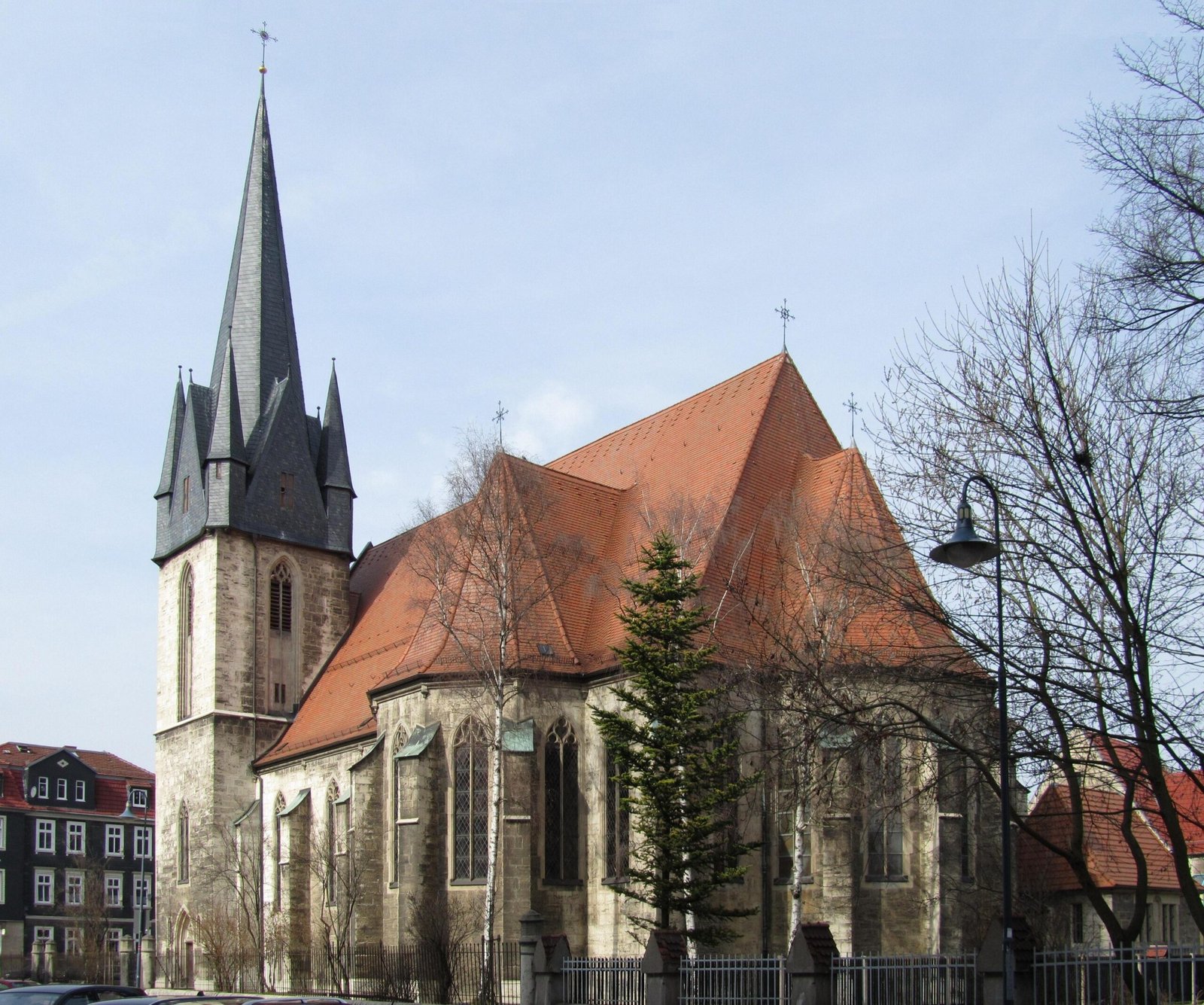
A turn-of-the-century Roman Catholic hall church in Thuringia, designed by a leading diocesan architect and completed in the early modernist period.
At a glance
St. Joseph’s Church is a three-nave cruciform hall church constructed between 1903 and 1905 in Mühlhausen, Thuringia. The building represents early 20th-century Catholic church architecture in Germany, designed by Arnold Güldenpfennig, the diocesan architect of Paderborn.
History
The church was built at the turn of the 20th century, a period of expansion for Catholic communities in predominantly Protestant regions of Germany. Construction took place from 1903 to 1905, following designs by Güldenpfennig, whose role as Paderborn’s diocesan architect reflected the church’s importance within the wider religious infrastructure of the region.
What you see
The structure is a cruciform three-nave hall church, a design that accommodates substantial congregations while maintaining the traditional cross plan. This architectural type, common in early modern German Catholic churches, balances liturgical function with spatial grandeur. The three-nave arrangement allows for lateral aisles alongside the central nave, typical of hall church design.
Cultural significance
St. Joseph’s Church stands as evidence of Catholic institutional growth in Thuringia during the industrial era. The selection of Paderborn’s diocesan architect underscores the church’s regional importance and reflects broader patterns of Catholic religious life in early 20th-century Germany.
Key facts
- Country: Germany
- City: Mühlhausen, Thuringia
- Built: 1903–1905
- Architect: Arnold Güldenpfennig (Paderborn diocesan architect)
- Type: Roman Catholic cruciform three-nave hall church
- Coordinates: 51.2095, 10.4686
Practical information & getting there
St. Joseph’s Church is located in Mühlhausen, a town in central Thuringia. The town is accessible by rail and road from major German cities. For visiting hours, services, and specific access information, contact local tourism authorities or the church directly.
Sources & resources
Find it on the map
See this place and what’s around it →📷 Become a Cultural Heritage Online photographer
Share your photos of places: they stay published under your name as the author. The more they're seen, the more you get noticed — and soon a contest will reward the most appreciated photos.
Log in or sign up free to add a photoIs this page about you?
This page is read by travellers and heritage enthusiasts who find it on Google. Tell us how you are connected to this place and we will take it from there.