
A dynamic dance music born from the fusion of traditional Bakongo partner rhythms and Cuban son influences, Congolese rumba pulses with multilayered guitar riffs, electric bass, and the high-energy instrumental bridge known as the sebene.
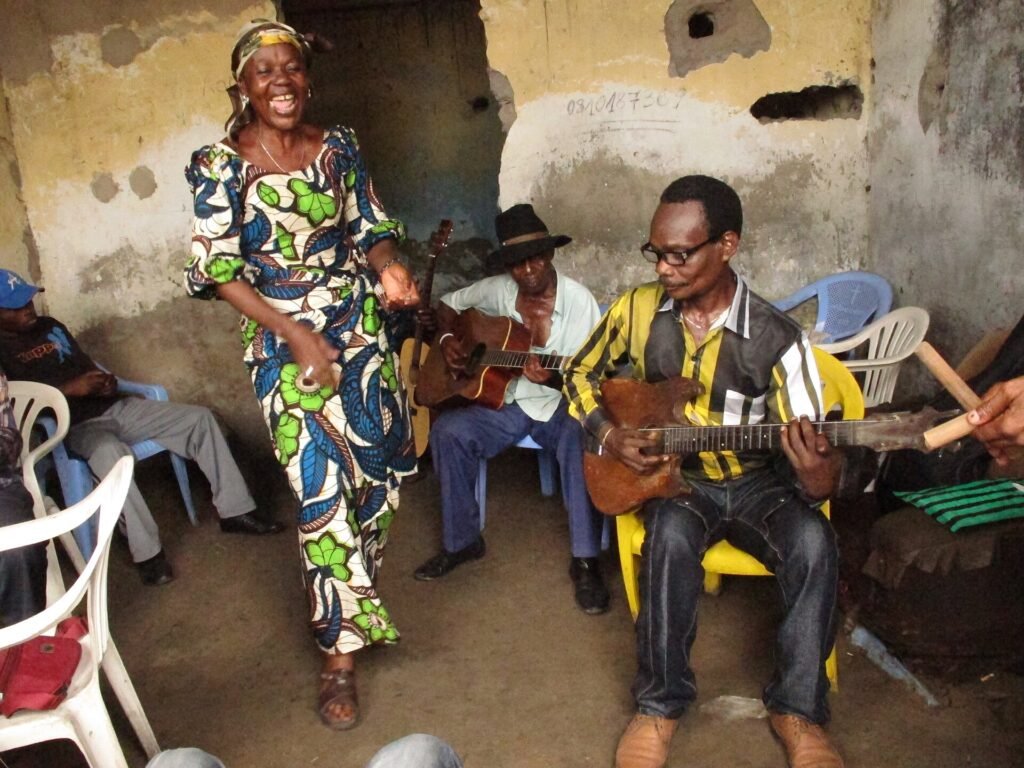
In UNESCO’s words
Congolese rumba is a musical genre and a dance common in urban areas of the Democratic Republic of the Congo and the Republic of the Congo. Generally danced by a male-female couple, it is a multicultural form of expression originating from an ancient dance called nkumba (meaning ‘waist’ in Kikongo). The rumba is used for celebration and mourning, in private, public and religious spaces. It is performed by professional and amateur orchestras, choirs, dancers and individual musicians, and women have played a predominant role in the development of religious and romantic styles. The tradition of Congolese rumba is passed down to younger generations through neighbourhood clubs, formal training schools and community organisations. For instance, rumba musicians maintain clubs and apprentice artists to carry on the practice and the manufacture of instruments. The rumba also plays an important economic role, as orchestras are increasingly developing cultural entrepreneurship aimed at reducing poverty. The rumba is considered an essential and representative part of the identity of Congolese people and its diaspora. It is perceived as a means of conveying the social and cultural values of the region and of promoting intergenerational and social cohesion and solidarity.
Official description, UNESCO Intangible Cultural Heritage List — Congolese rumba
At a glance
Congolese rumba is a musical genre and dance form practiced in urban areas of the Democratic Republic of the Congo and the Republic of the Congo. Typically performed by male-female couples, it evolved from an ancient dance called nkumba, meaning 'waist' in Kikongo. Used for celebration and mourning across private, public, and religious spaces, the rumba is performed by professional and amateur orchestras, choirs, dancers, and individual musicians. Women have been central to developing its religious and romantic styles.
Origins & history
Congolese rumba originates from the ancient dance nkumba. The tradition has been passed down through generations and has adapted over time as a form of musical and cultural expression in urban settings. Its development reflects the multicultural character of Congolese society, drawing on diverse influences to create a distinctive musical genre.
The practice
The rumba involves both musicians and dancers working together. Professional and amateur orchestras, choirs, and individual musicians perform the genre. Practitioners use various instruments and vocal techniques to create the music. Dancers—typically male-female couples—move in response to the performance. The tradition is sustained through neighbourhood clubs, formal training schools, and community organisations, where established musicians maintain clubs and apprentice new artists while also teaching instrument manufacture.
Cultural significance
Congolese rumba holds essential meaning for Congolese people and their diaspora, representing a core part of their identity. The tradition conveys the social and cultural values of the region while fostering intergenerational and social cohesion and solidarity. Beyond its cultural importance, rumba generates economic benefits, with orchestras increasingly developing cultural entrepreneurship as a means to reduce poverty. The genre remains a vital expression of Congolese creativity and values.
Key facts
- Country: Democratic Republic of the Congo, Congo
- Inscribed: 2021
- UNESCO list: Representative List of the Intangible Cultural Heritage of Humanity
- UNESCO reference: 01711
- UNESCO vocabulary: Dance; Instrumental music; Popular music
- Map: not shown — UNESCO’s official description of this element names no locality, and a living tradition is practised across a community, not at one address.
Where to experience it
Congolese rumba flourishes in urban areas across the Democratic Republic of the Congo and the Republic of the Congo, where it remains central to Congolese identity. Visitors can experience the tradition in neighbourhood clubs, community organisations, and formal training schools that pass the practice to younger generations. Professional and amateur orchestras, choirs, and individual musicians perform at celebrations and social gatherings, while rumba musicians maintain apprenticeships and teach instrument-making. The genre also reaches international audiences through touring ensembles and recordings, connecting diaspora communities worldwide to their cultural roots.
Sources & resources
- UNESCO — official element page: Congolese rumba
- UNESCO — open data record: Intangible Heritage List, reference 01711
- UNESCO — official video: UNESCO film on this element — embedded on this page
- UNESCO — official photograph: Photograph of this element — Etienne Kokolo, Kinshasa, République du Congo, 2018
- Reference — Wikipedia (secondary): Congolese rumba — consulted as a secondary reference, not as confirmation
- Cultural Heritage Online: Our archive and city guides
