
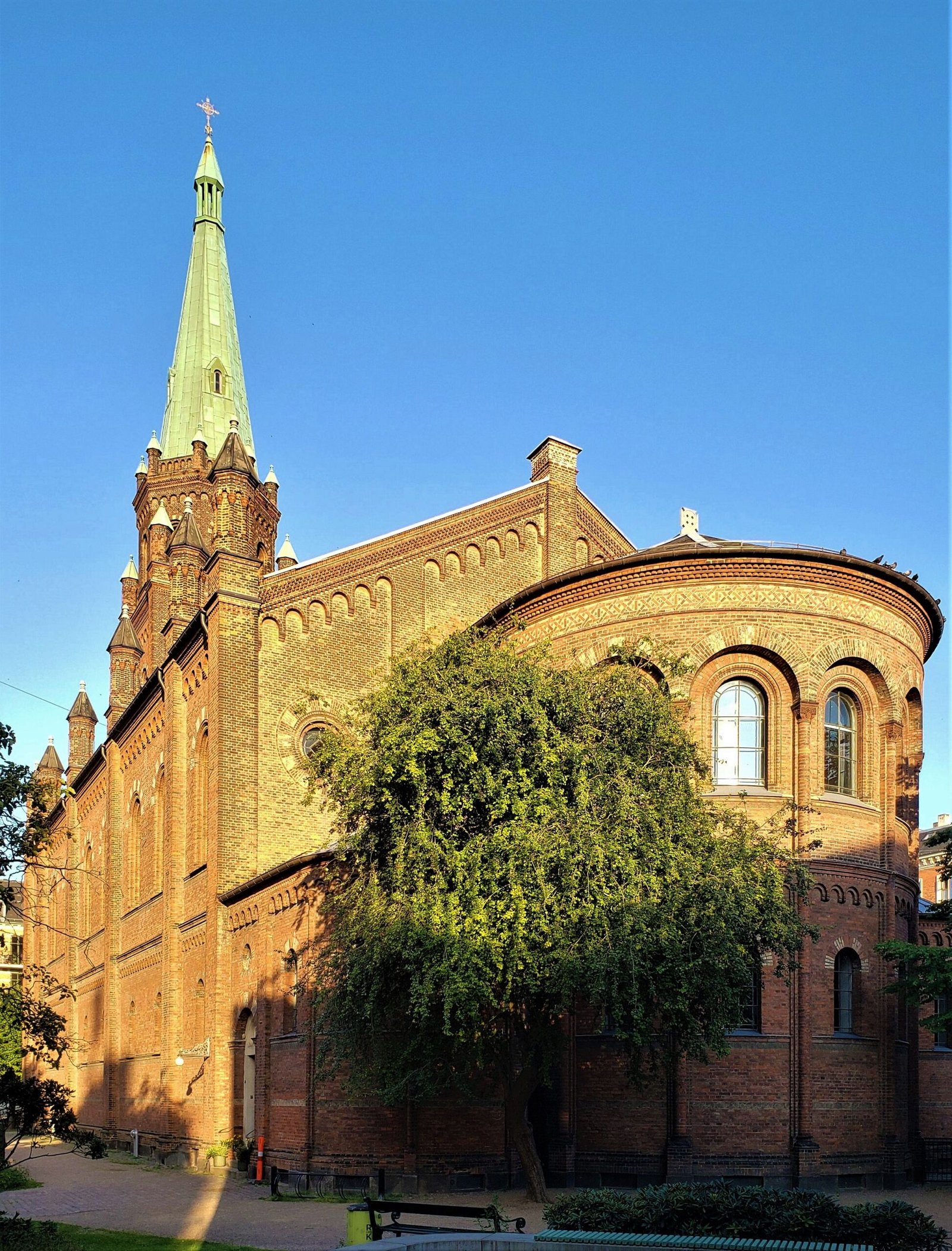
The oldest and largest church in Vesterbro, Copenhagen’s historic working-class district, completed in 1880 by city architect Ludvig Fenger.
At a glance
St. Matthew’s Church dominates the corner of Mathæusgade and Valdemarsgade in Vesterbro. Designed by Copenhagen’s city architect, it stands as the principal religious structure of its neighborhood and reflects the district’s nineteenth-century urban expansion.
History
The church was completed in 1880, a pivotal moment in Copenhagen’s development. The city architect Ludvig Fenger designed it to serve the growing population of Vesterbro, which was developing into a distinct urban district during the industrial era.
What you see
The building’s design reflects late nineteenth-century Danish ecclesiastical architecture. As the largest church in its district, the structure commands its corner location with presence and solidity, characteristic of Fenger’s civic work.
Cultural significance
St. Matthew’s Church anchors Vesterbro’s cultural and spiritual life. It represents both the architectural ambitions of Copenhagen’s municipal authorities and the neighborhood’s identity as a distinct urban community.
Key facts
- Country: Denmark
- City: Copenhagen Municipality
- Coordinates: 55.6694, 12.5481
- Completed: 1880
- Architect: Ludvig Fenger (city architect)
- Location: Corner of Mathæusgade and Valdemarsgade
Practical information & getting there
The church is located in central Vesterbro, accessible by Copenhagen’s comprehensive public transport network. The corner location on Mathæusgade makes it easy to find in the neighborhood.
Sources & resources
Find it on the map
See this place and what’s around it →📷 Become a Cultural Heritage Online photographer
Share your photos of places: they stay published under your name as the author. The more they're seen, the more you get noticed — and soon a contest will reward the most appreciated photos.
Log in or sign up free to add a photoIs this page about you?
This page is read by travellers and heritage enthusiasts who find it on Google. Tell us how you are connected to this place and we will take it from there.