
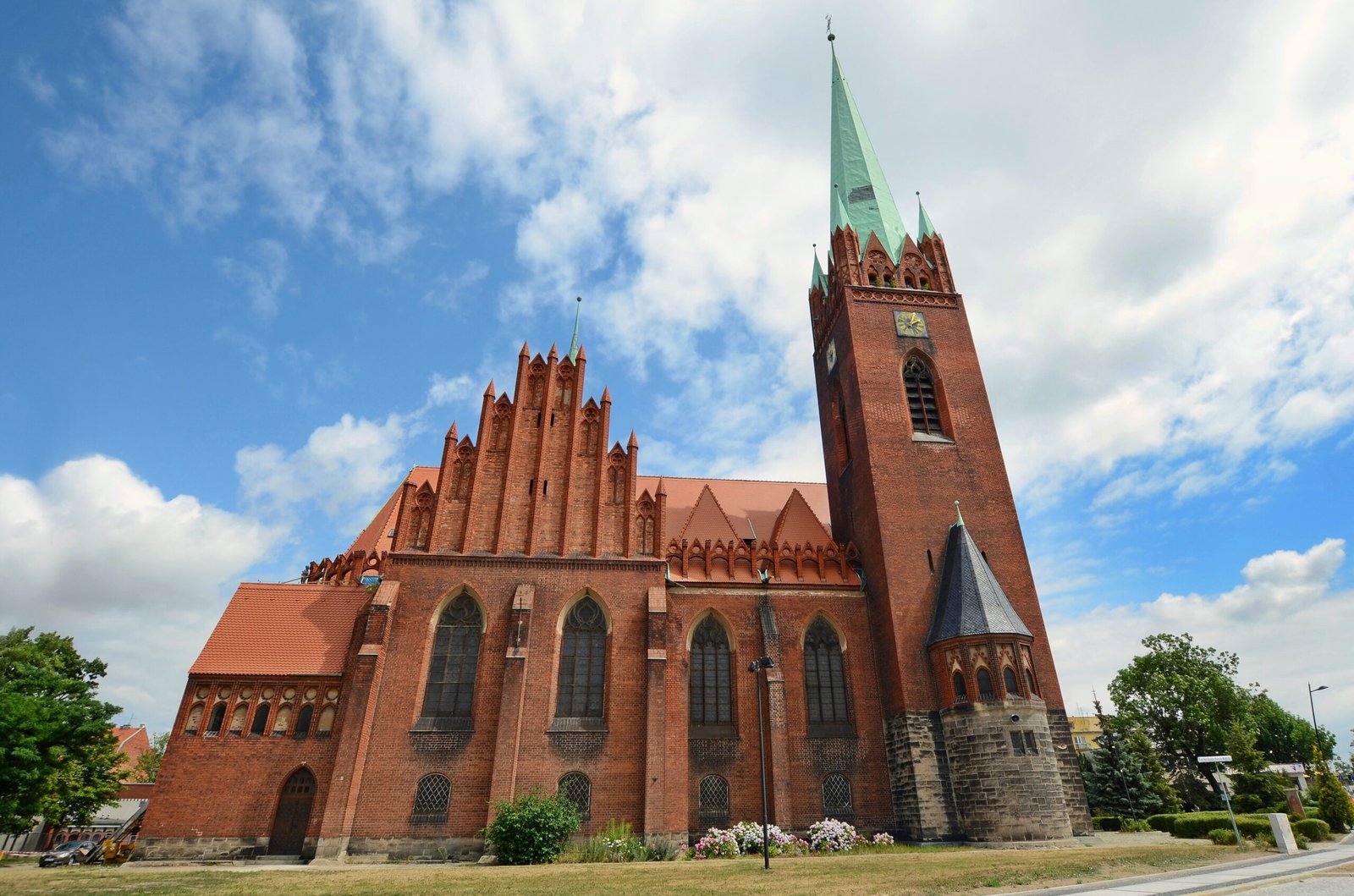
A neogothic parish church completed in 1908, this Legnica landmark began its life as a Protestant place of worship before becoming Roman Catholic.
At a glance
The Church of Saint Hyacinth stands as a testament to Legnica’s architectural heritage. Built in the neogothic style at the turn of the twentieth century, it represents the religious and cultural shifts that shaped Central Europe during this transformative period.
History
Constructed in 1908, the church was originally built as a Protestant place of worship. Its transition to Roman Catholic use reflects the complex religious history of the region and the changing demographics of Legnica over successive generations.
What you see
The structure exemplifies neogothic design principles, a style that drew inspiration from medieval cathedral architecture while employing nineteenth- and early twentieth-century construction techniques and materials. Its aesthetic choices reflect the era’s romantic engagement with Gothic revival.
Cultural significance
The church embodies the religious pluralism that characterized early twentieth-century Central European towns. Its architectural style and functional evolution document broader patterns of cultural and spiritual identity in the region.
Key facts
- Country: Poland
- City: Legnica
- Completed: 1908
- Style: Neogothic
- Denomination: Roman Catholic (originally Protestant)
- Coordinates: 51.2103°N, 16.1728°E
Practical information & getting there
The church is located in Legnica, a city in southwestern Poland with good transport connections. For visiting hours and further details, contact local tourism services or the parish directly.
Sources & resources
Find it on the map
See this place and what’s around it →📷 Diventa un fotografo di Cultural Heritage Online
Condividi le tue foto dei luoghi: restano pubblicate con la tua firma come autore. Più vengono viste, più ti fai conoscere — e presto un concorso premierà le foto più apprezzate.
Accedi o registrati gratis per aggiungere una fotoDo you manage this place?
This page is read by travellers and heritage enthusiasts who find it on Google. Keep it accurate — and make it work for you. Free for non-profit heritage institutions.