
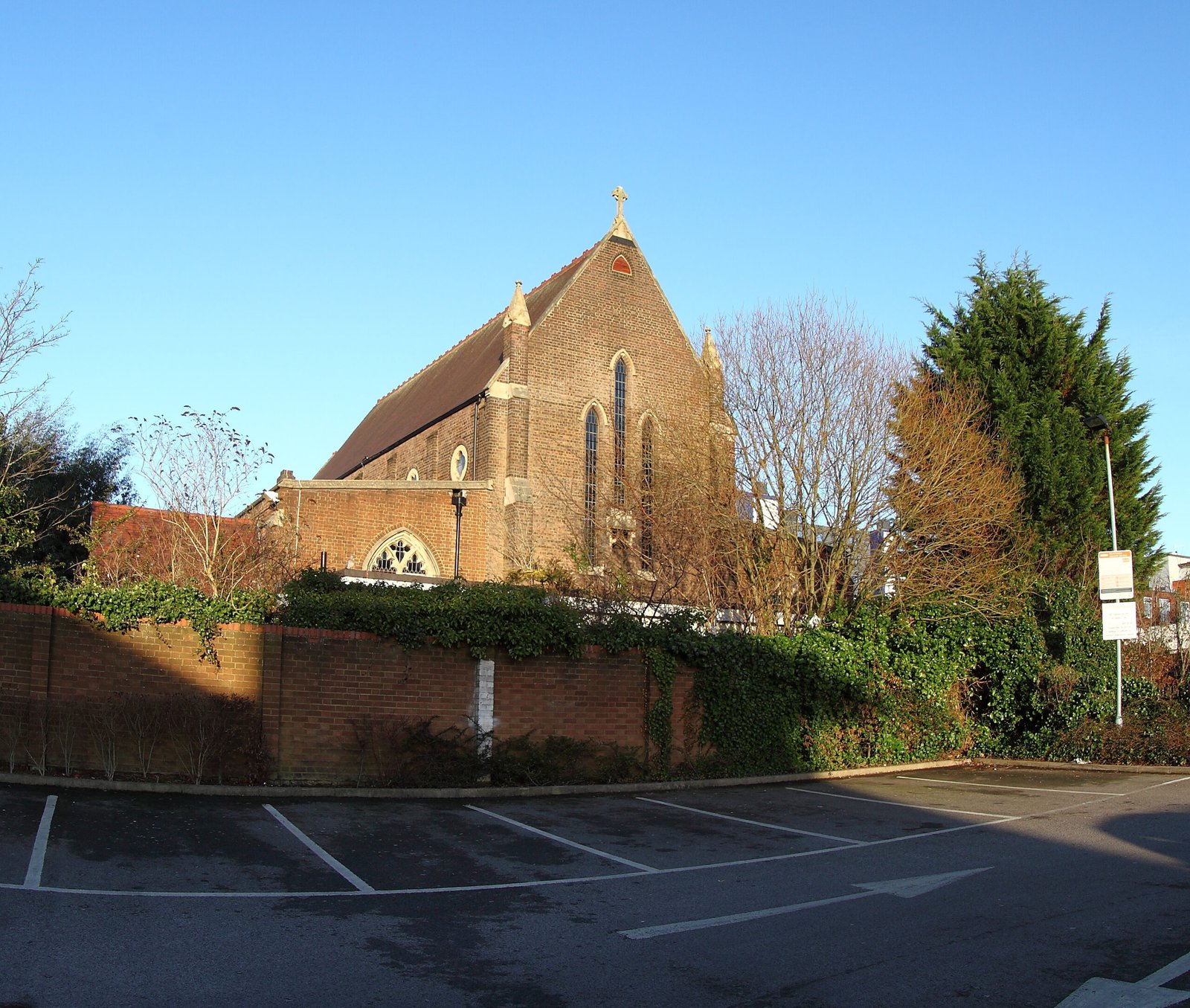
A Gothic Revival parish church in central Luton, built in 1910 and marking the first Roman Catholic place of worship established in the town after the Reformation.
At a glance
This brick Gothic Revival church stands at the intersection of Castle Street and Victoria Street in Luton’s town centre. Its construction in 1910 represented a significant milestone for English Catholic life in the region.
History
The parish was founded in 1845, but the current church building dates to 1910. This construction marked the first Roman Catholic church erected in Luton following the Reformation, reflecting the gradual re-establishment of Catholic communities in England during the nineteenth and early twentieth centuries.
What you see
The church exemplifies the Gothic Revival style, an architectural mode that drew on medieval precedents. Its design references traditional church vocabulary while adapting it to its Victorian and Edwardian context. The building’s position at a prominent town-centre corner gives it visibility and civic presence.
Cultural significance
As Luton’s first post-Reformation Catholic church, Our Lady Help of Christians represents both religious resilience and changing attitudes toward religious freedom in Britain. The church remains a focal point for the local Catholic community and an example of nineteenth-century ecclesiastical expansion.
Key facts
- Location: Castle Street and Victoria Street, Luton town centre
- Coordinates: 51.875823, -0.416205
- Parish founded: 1845
- Present church completed: 1910
- Architectural style: Gothic Revival
- Significance: First Roman Catholic church built in Luton after the Reformation
- Country: United Kingdom
Practical information & getting there
The church is located in Luton’s town centre near the A505 road. For current opening times, service schedules, and visiting information, contact the parish directly or consult the Diocese of Arundel and Brighton website.
Sources & resources
Find it on the map
See this place and what’s around it →📷 Become a Cultural Heritage Online photographer
Share your photos of places: they stay published under your name as the author. The more they're seen, the more you get noticed — and soon a contest will reward the most appreciated photos.
Log in or sign up free to add a photoIs this page about you?
This page is read by travellers and heritage enthusiasts who find it on Google. Tell us how you are connected to this place and we will take it from there.