

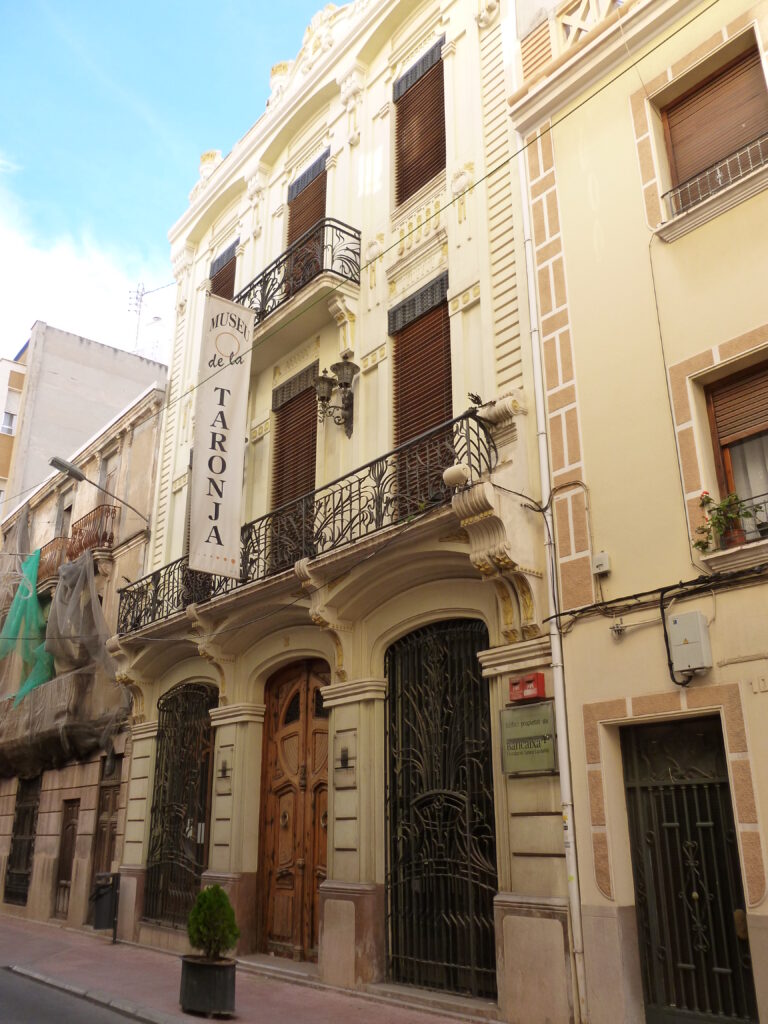
A Valencian Art Nouveau gem celebrating the region’s citrus heritage, located in the heart of Burriana.
At a glance
The Orange Museum occupies a striking Art Nouveau structure on Major Street, its architecture a testament to early 20th-century Valencian design sensibilities. The building itself, the Casa Conill of 1910, is as much an attraction as the collection, which is now in store: the museum has been closed for about fourteen years and the town is looking for a new venue to reopen it.
History
Burriana became a centre of orange cultivation and trade in the Valencian region. Founded in 1995 by Vicente Abad García, the museum preserves that agricultural legacy through its dedication to the fruit that shaped the town’s identity and prosperity, although its doors have been shut since around 2012.
What you see
The building exemplifies Valencian Art Nouveau style—an architectural movement that embraced organic forms, decorative detail, and modern materials. The façade and interior design reflect the elegance and innovation characteristic of the period.
Cultural significance
The museum documents Burriana’s role in Spain’s citrus industry and showcases how oranges shaped the region’s economy, culture, and trade networks. It stands as a cultural monument to agricultural heritage.
Key facts
- Location: 10 Major Street, Burriana, Castellón, Spain
- Architectural style: Valencian Art Nouveau
- Coordinates: 39.8902, -0.0831
Practical information & getting there
The museum is situated on Major Street in Burriana, a town in Castellón province within the Valencia region. Detailed opening hours and admission information are available via local tourism resources.
Sources & resources
Find it on the map
See this place and what’s around it →📷 Become a Cultural Heritage Online photographer
Share your photos of places: they stay published under your name as the author. The more they're seen, the more you get noticed — and soon a contest will reward the most appreciated photos.
Log in or sign up free to add a photoIs this page about you?
This page is read by travellers and heritage enthusiasts who find it on Google. Tell us how you are connected to this place and we will take it from there.
This entry stays online and free either way — and a free account lets you add to it yourself.