
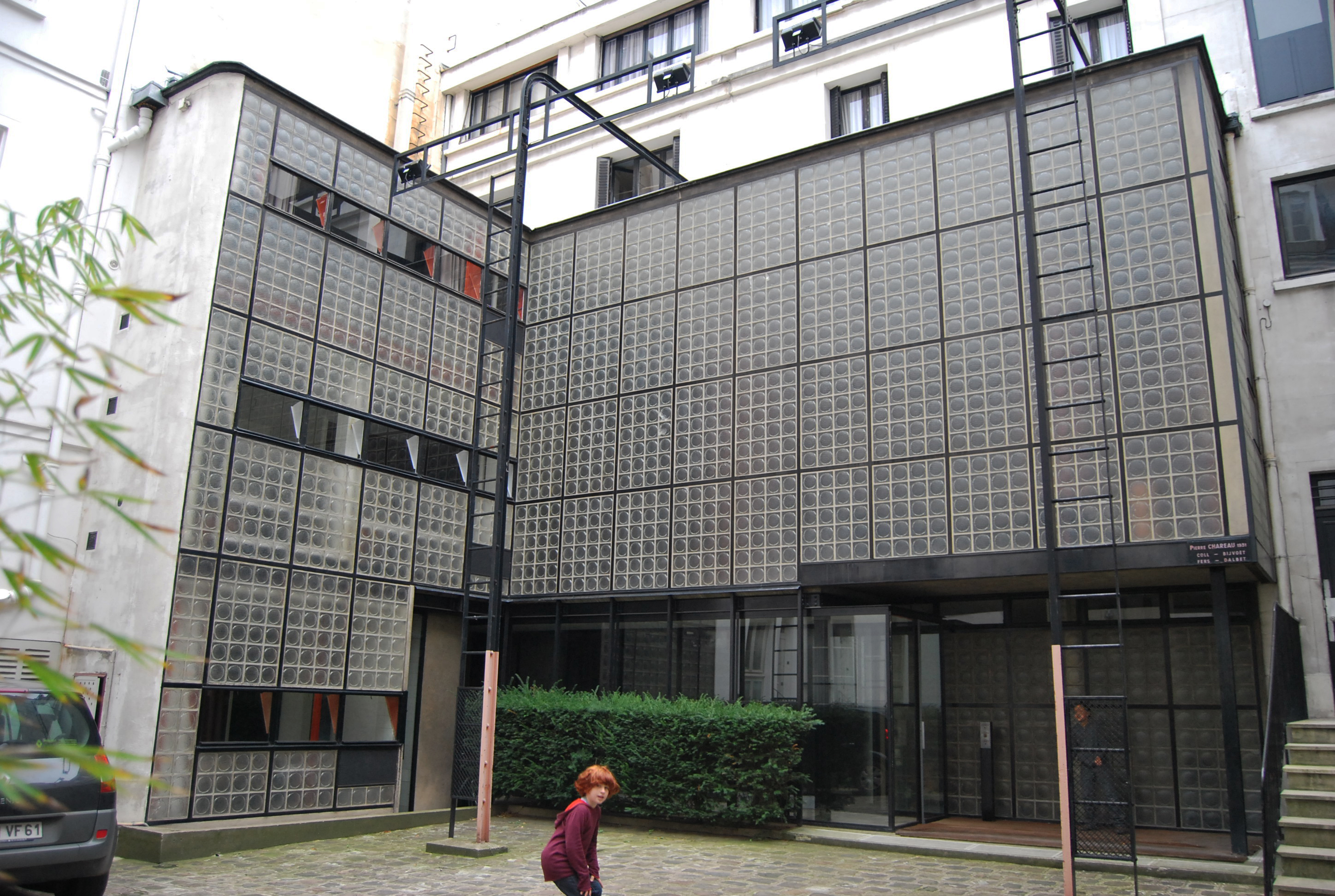
A pioneer of early modernism, this Parisian house transformed industrial materials into domestic elegance, where steel and glass become poetry.
At a glance
Built between 1928 and 1932, the Maison de Verre stands as a landmark of early modern design in the Saint-Thomas-d’Aquin neighbourhood. Its radical transparency and material honesty challenged conventional ideas of what a private home could be. Steel, glass, and glass block form its structural and aesthetic core.
History
Constructed in the interwar period when modernism was reshaping European architecture, the house emerged from a vision of pure functionalism married to refined living. Its four-year construction (1928–1932) reflected the deliberate craftsmanship required to realize such an unconventional design in Paris.
What you see
The façade and interior reveal a consistent philosophy: every material serves both function and form. Glass blocks create luminous walls that shift with light. Bare steel beams articulate the structure without concealment. Perforated metal sheets filter visibility while suggesting industrial authenticity.
Industrial fixtures—heavy-duty lighting, mechanical elements, rubberized floor tiles—occupy the same rooms as refined furnishings and traditional décor. This collision of vocabularies defines the house’s character.
Cultural significance
The Maison de Verre represents a pivotal moment in twentieth-century design: the conviction that modern materials and working methods could elevate domestic life rather than diminish it. It challenged the boundary between factory and home, utility and beauty. The house remains influential for architects and designers exploring honest material expression.
Key facts
- Location: Saint-Thomas-d’Aquin, Paris, France
- Coordinates: 48.85391, 2.32799
- Construction period: 1928–1932
- Style: Early modern
- Primary materials: Steel, glass, glass block
Practical information & getting there
The Maison de Verre is located in central Paris near the Seine. It remains a private residence and is not open to regular public tours, though it is occasionally featured in architectural study programmes and heritage documentation.
Sources & resources
Find it on the map
See this place and what’s around it →📷 Become a Cultural Heritage Online photographer
Share your photos of places: they stay published under your name as the author. The more they're seen, the more you get noticed — and soon a contest will reward the most appreciated photos.
Log in or sign up free to add a photoIs this page about you?
This page is read by travellers and heritage enthusiasts who find it on Google. Tell us how you are connected to this place and we will take it from there.