
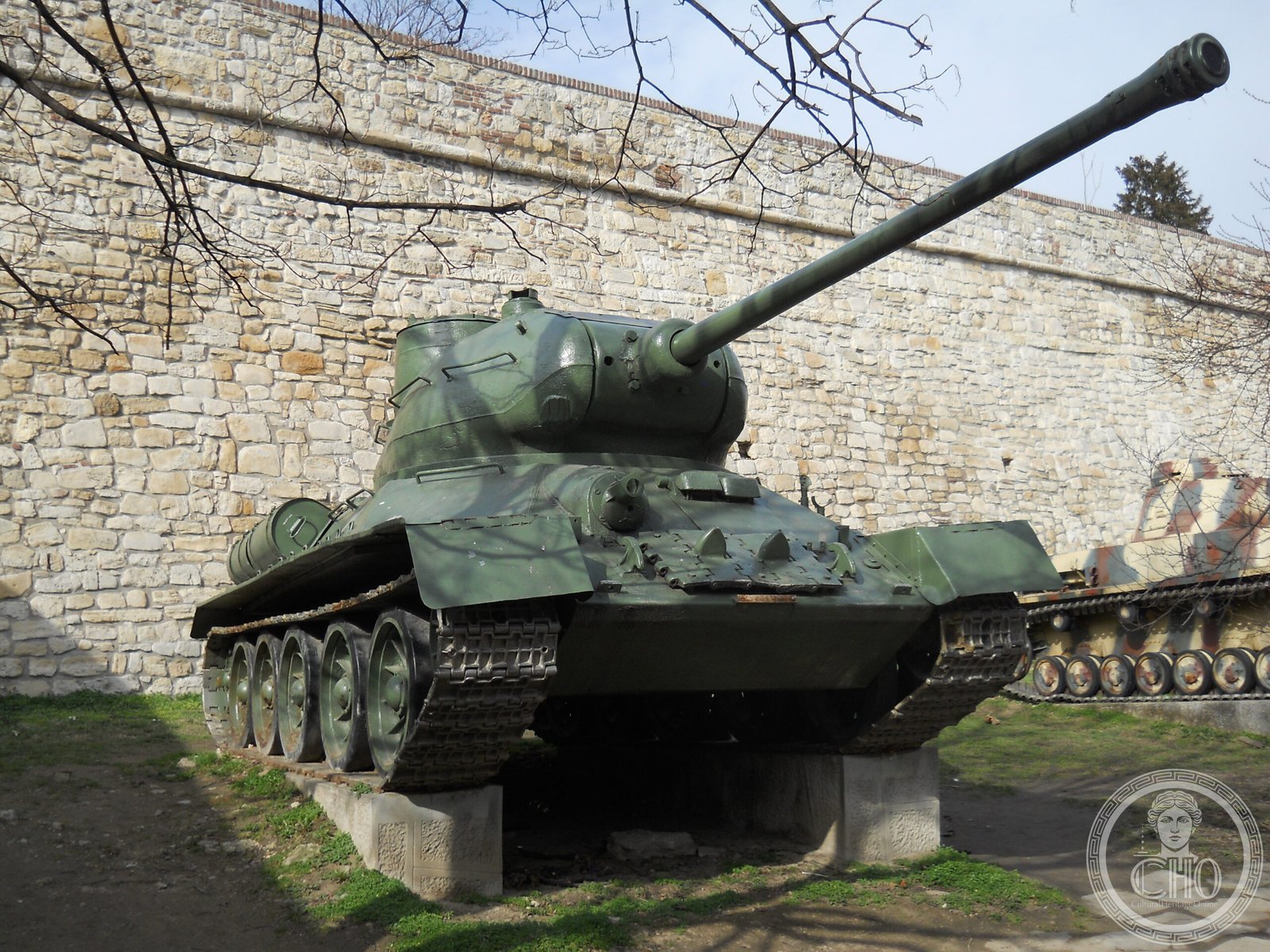
The Military Museum in Belgrade is one of the oldest and largest military history museums in the Western Balkans, housed within the Kalemegdan Fortress at the confluence of the Sava and Danube rivers. Founded in 1878, the museum holds over 30,000 artefacts spanning Serbian and Yugoslav military history from antiquity through the 20th century, including weapons, uniforms, maps, artillery pieces, and aircraft displayed in its extensive outdoor park.
At a glance
- Type
- Military history museum
- Period
- Founded 1878; Kalemegdan Fortress dates to Roman and medieval periods
- Style
- Historical institution within medieval fortress complex
- Location
- Kalemegdan Fortress, Belgrade, Serbia
- Coordinates
- 44.8219° N, 20.4498° E
Overview
Situated at the heart of Kalemegdan Park, the Military Museum occupies a commanding position within one of Serbia’s most significant historical monuments. The museum documents over two millennia of warfare in the region, from Roman legions and Byzantine fortifications to the First and Second World Wars and the conflicts of the 1990s. Its collection is among the most comprehensive in Southeast Europe and serves as both a memorial institution and a centre for historical scholarship.
History
The museum was established in 1878 following Serbian independence, with an initial mandate to preserve weapons and military equipment from the liberation wars against Ottoman rule. Its collections grew substantially after the Balkan Wars (1912–1913) and the First World War, during which Serbia suffered catastrophic losses and produced remarkable examples of military resilience. The Second World War added further layers of artefacts, including partisan equipment and Axis weapons captured during the National Liberation struggle. The institution has been housed in its current location within Kalemegdan since 1904.
What you see
The indoor galleries are arranged chronologically and thematically, covering ancient Illyrian and Roman arms, medieval Serbian armour, Ottoman period equipment, 19th-century rifles and cannons, and the full span of 20th-century warfare. The outdoor Artillery Park is one of the museum’s most distinctive features, displaying dozens of artillery pieces, anti-aircraft guns, tanks, aircraft, and naval equipment under open skies against the backdrop of the Danube. Personal artefacts, maps, documents, and photographs add human depth to the military narrative.
Cultural significance
The Military Museum is central to Serbia’s collective memory and national identity, housing artefacts from wars that shaped the modern state. Its location within Kalemegdan — itself a palimpsest of Celtic, Roman, Byzantine, Ottoman, and Habsburg occupation — gives the institution extraordinary historical depth, making it an essential destination for understanding the turbulent history of the Balkans.
Practical information
- Address
- Kalemegdan bb, 11000 Belgrade, Serbia
- Hours
- Tuesday–Sunday, approx. 10:00–17:00; check official website for seasonal hours
- Admission
- Paid entry; concessions available
Getting there
The museum is accessible on foot from Belgrade city centre via Kalemegdan Park. Tram lines 2, 7, 9, and 11 stop near the park entrance. By bus, multiple routes serve the Studentski Trg and Stari Grad stops. Parking is available nearby on Pariska Street.
Sources & resources
See the place
Find it on the map
See this place and what’s around it →📷 Become a Cultural Heritage Online photographer
Share your photos of places: they stay published under your name as the author. The more they're seen, the more you get noticed — and soon a contest will reward the most appreciated photos.
Log in or sign up free to add a photoIs this page about you?
This page is read by travellers and heritage enthusiasts who find it on Google. Tell us how you are connected to this place and we will take it from there.