
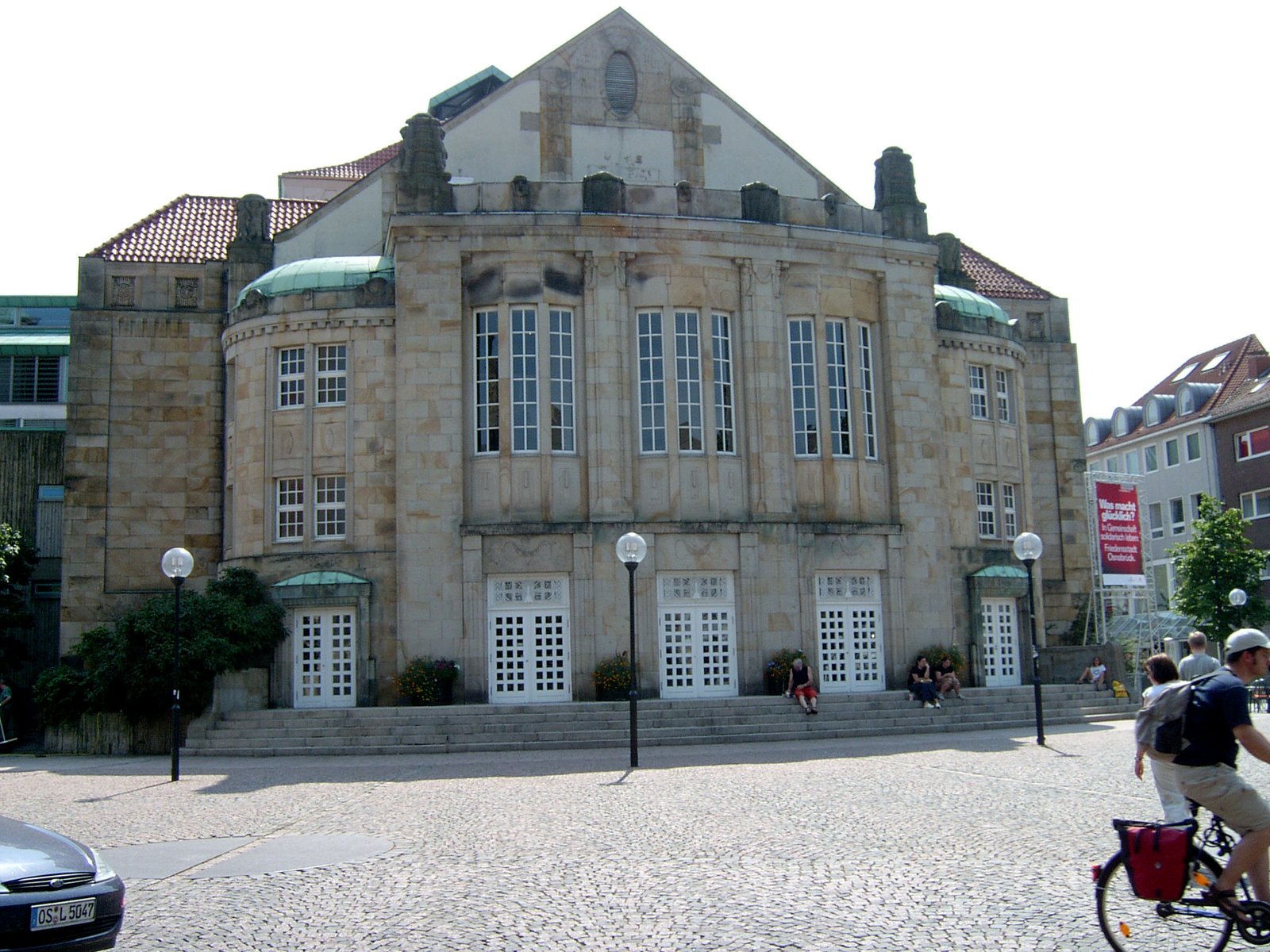
Theater Osnabrück
A municipal theatre with roots stretching to the 18th century, now operating two venues that reflect Osnabrück’s enduring commitment to the performing arts.
At a glance
Theater Osnabrück operates under the auspices of Städtische Bühnen Osnabrück gGmbH, presenting drama, music, and dance across two performance spaces. The Theater am Domhof seats 642; the intimate emma-theater holds 96. The company is currently led by Intendant Ralf Waldschmidt, with Andreas Hotz serving as Generalmusikdirektor.
History
Theatrical life in Osnabrück began in 1771 with performances at Schloss Osnabrück. By 1780, productions had moved to two former aristocratic residences. The composer Albert Lortzing held an official affiliation with the company from 1827 to 1833, a significant chapter in its artistic development.
In 1832, Osnabrück became one of the first German cities to establish a municipal theatre, marking a shift from private patronage to civic support. The main theatre building was constructed between 1905 and 1909. On 29 September 1909, Julius Caesar inaugurated the new stage—a symbolic opening that announced the theatre’s arrival as a modern cultural institution.
World War II brought devastation. Allied bombing in 1945 damaged the Domhof building severely, and British occupation authorities initially banned all theatrical performances. The prohibition was lifted in July 1945. Reconstruction began in 1949 and was completed in 1950, allowing the theatre to resume its cultural mission.
What you see
The Theater am Domhof retains its early 20th-century character following post-war restoration, with an auditorium of 642 seats designed for varied productions. The emma-theater, a more intimate 96-seat space, offers a different theatrical experience. Together, these venues accommodate classical drama, contemporary work, opera, and concert performance.
Cultural significance
Theater Osnabrück stands as a record of German civic cultural life from the Enlightenment through the present. Its transition from aristocratic patronage to public institution reflects broader European developments in arts funding and access. The theatre’s survival through war and reconstruction, followed by continuous operation, demonstrates resilience and community investment in live performance.
Key facts
- Country: Germany
- City: Osnabrück
- Coordinates: 52.27666667, 8.04444444
- Main venue: Theater am Domhof (642 seats)
- Secondary venue: emma-theater (96 seats)
- Founded: 1771 (as theatrical presentations); established as municipal theatre in 1832
- Current Intendant: Ralf Waldschmidt (since 2011)
- Current Generalmusikdirektor: Andreas Hotz (since 2012)
Practical information & getting there
Theater Osnabrück is located in the city centre of Osnabrück, accessible by public transport and on foot from the main railway station. For performance schedules, ticket information, and venue details, consult the theatre’s official website or contact the box office directly.
Sources & resources
Find it on the map
See this place and what’s around it →📷 Diventa un fotografo di Cultural Heritage Online
Condividi le tue foto dei luoghi: restano pubblicate con la tua firma come autore. Più vengono viste, più ti fai conoscere — e presto un concorso premierà le foto più apprezzate.
Accedi o registrati gratis per aggiungere una fotoDo you manage this place?
This page is read by travellers and heritage enthusiasts who find it on Google. Keep it accurate — and make it work for you. Free for non-profit heritage institutions.