
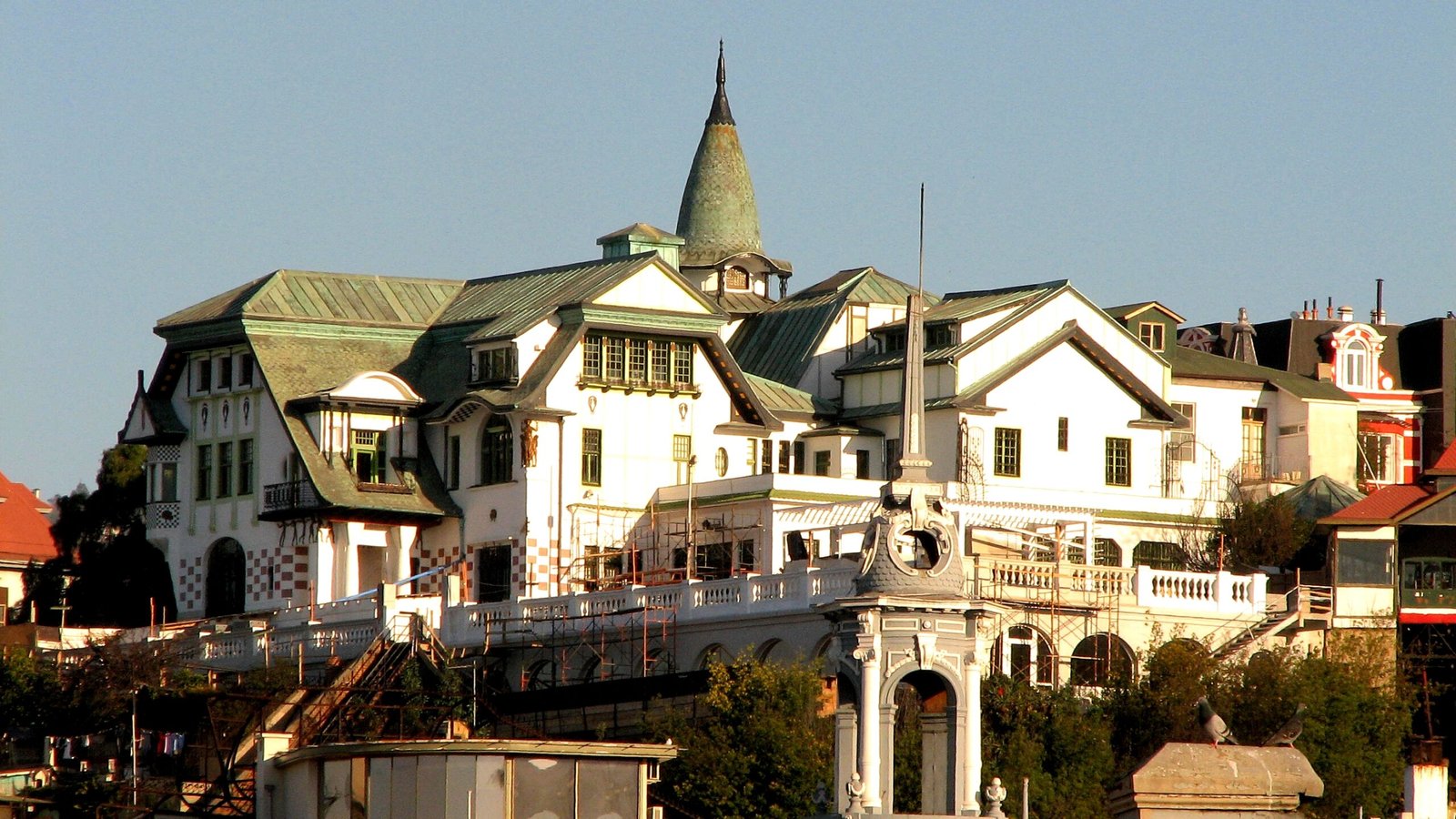
An early twentieth-century mansion in Chile’s main port city, this Italian-designed palace preserves the refined taste of a prominent Croatian businessman and reflects the cosmopolitan ambitions of Valparaíso’s golden age.
At a glance
Palacio Baburizza stands as a testament to Valparaíso’s prosperity during the early 1900s, when European merchants and entrepreneurs shaped the city’s cultural landscape. The palace exemplifies the architectural sophistication that wealthy immigrants brought to Chile’s Pacific coast.
History
Croatian businessman Pascual Baburizza commissioned this residence in 1916, engaging Italian architects to design a home befitting his status. The palace served as his private residence for decades before its role shifted. In 1971, the building was converted into a museum, opening its doors to the public. The Chilean government recognized its historical importance by declaring it a national historic monument in 1976.
What you see
Italian architects designed the palace with the refined aesthetics characteristic of early twentieth-century European residential architecture. The building reflects the classical and eclectic tastes that dominated elite domestic spaces of this period.
Cultural significance
The palace documents Valparaíso’s transformation into a cosmopolitan hub where European capital and expertise reshaped the urban landscape. It embodies the intersection of immigrant entrepreneurship and Chilean cultural development during the nation’s export-driven prosperity. As a museum, it preserves both architectural heritage and the material culture of the Chilean bourgeoisie.
Key facts
- Country: Chile
- City: Valparaíso
- Built: 1916
- Architects: Italian (unnamed)
- Converted to museum: 1971
- Declared historic monument: 1976
- Coordinates: -33.0404, -71.6289
Practical information & getting there
The palace is located in Valparaíso, accessible via Chile’s central coast. As a museum, it welcomes visitors during established hours. Contact local tourism resources for current opening times and admission details.
Sources & resources
- Palacio Baburizza on Wikipedia
- Cultural Heritage Online
Find it on the map
See this place and what’s around it →📷 Become a Cultural Heritage Online photographer
Share your photos of places: they stay published under your name as the author. The more they're seen, the more you get noticed — and soon a contest will reward the most appreciated photos.
Log in or sign up free to add a photoIs this page about you?
This page is read by travellers and heritage enthusiasts who find it on Google. Tell us how you are connected to this place and we will take it from there.