
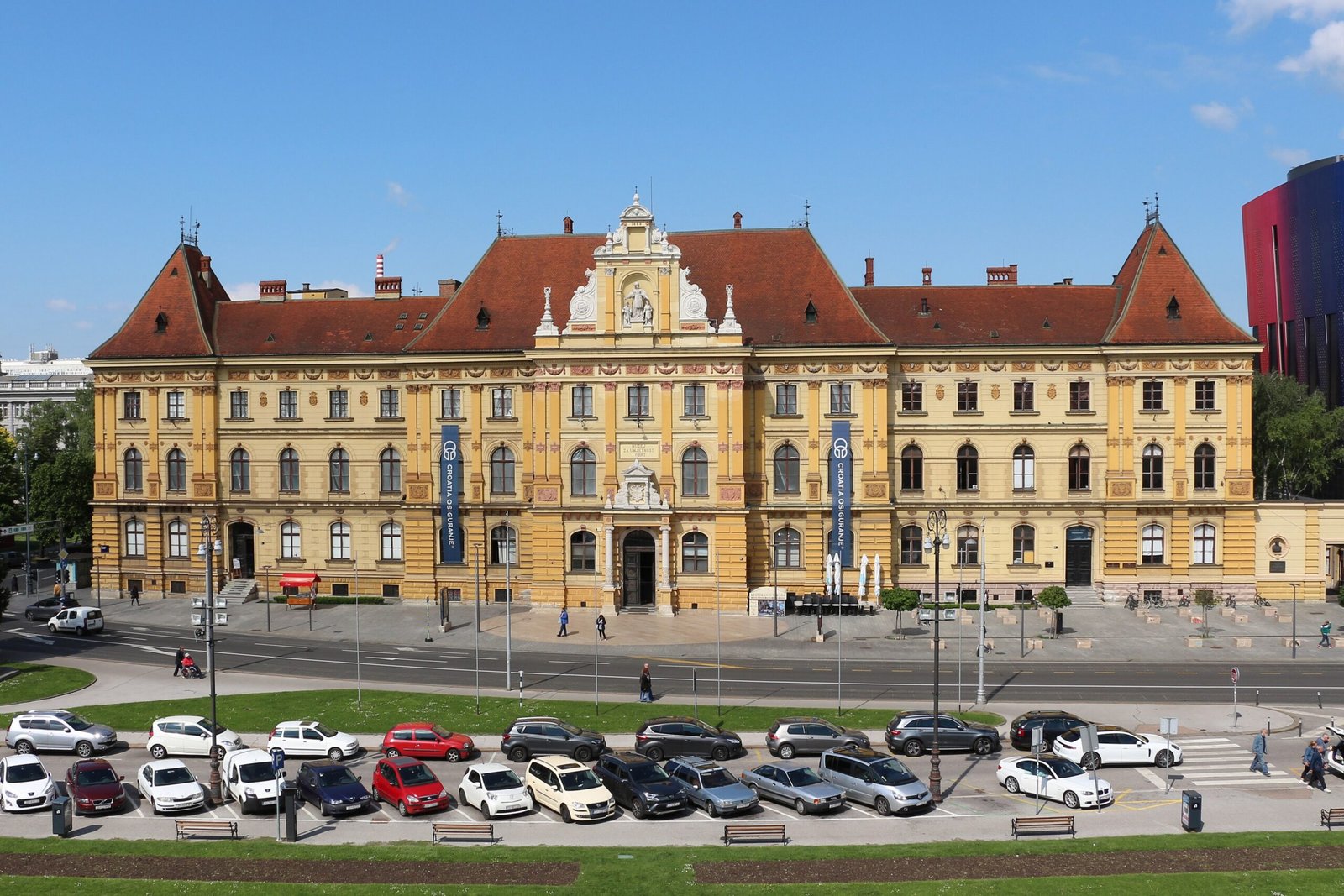
A pioneering institution founded to preserve traditional crafts and elevate everyday design, housing over 160,000 objects spanning from the Gothic period to the 20th century.
At a glance
The Museum of Arts and Crafts in Zagreb stands as one of Europe’s earliest institutions dedicated to the preservation and advancement of applied design. Established in 1880 by the Arts Society under the direction of Izidor Kršnjavi, it merged the theoretical ideals of the English Arts and Crafts movement with Gottfried Semper’s intellectual framework, aiming to create a new aesthetic culture for the emerging middle class.
History
The museum’s origins predate its formal establishment. In 1875, Kršnjavi acquired the first objects for the collection using a donation from Bishop Josip Juraj Strossmayer at an inheritance auction of Catalan painter and collector Mariano Fortuny in Paris. The institution was officially founded in 1880, followed by the creation of the Crafts School (now the Applied Art and Design School) in 1882. The first permanent display opened in 1909, after years in unsuitable premises on Gajeva Street. A major renovation in 1995 reorganized the holdings according to director Vladimir Maleković’s vision and architect Marijan Hržić’s spatial design.
What you see
The building, constructed in 1888 by architect Hermann Bollé, was one of the first purpose-built structures designed to integrate museum and school functions seamlessly. Its grand historicist design draws from the German Renaissance tradition, creating an imposing palace that reflects the institution’s cultural ambitions.
The current permanent exhibition spans three floors and over 2,000 square meters, displaying approximately 3,000 objects. Visitors encounter decorative arts and everyday items arranged chronologically, tracing stylistic evolution from Gothic through Art Deco periods.
Cultural significance
The museum embodies a distinctive moment in European cultural history, when industrial societies sought to revitalize handcraft traditions through education and collection. By combining museum and school under one roof, it pioneered an integrated approach to design pedagogy that influenced institutional models across the continent.
Its collection of over 160,000 objects demonstrates the breadth of applied arts across six centuries, making it an essential archive for understanding European design and craft traditions.
Key facts
- Founded: 1880
- Building designed by: Hermann Bollé (1888)
- Location: Zagreb, Croatia
- Coordinates: 45.80916667, 15.96861111
- Collection size: Over 160,000 objects, 4th–20th century
- Current permanent display: 1995 (renovation)
- Exhibition area: Over 2,000 m² across three floors
Practical information & getting there
The museum is located in central Zagreb. For current opening hours, admission prices, and access details, consult the official website or contact the institution directly. Check ahead for any special exhibitions or temporary closures.
Sources & resources
Find it on the map
See this place and what’s around it →📷 Become a Cultural Heritage Online photographer
Share your photos of places: they stay published under your name as the author. The more they're seen, the more you get noticed — and soon a contest will reward the most appreciated photos.
Log in or sign up free to add a photoIs this page about you?
This page is read by travellers and heritage enthusiasts who find it on Google. Tell us how you are connected to this place and we will take it from there.