
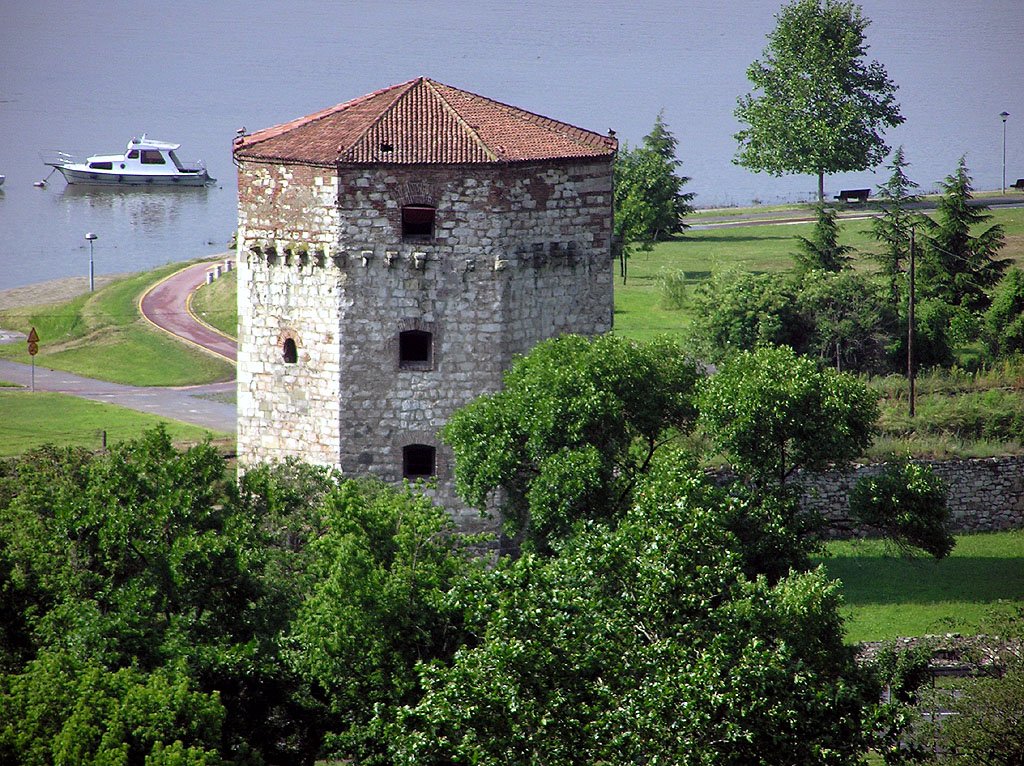
The sole surviving mediaeval tower of Belgrade Fortress stands as a sentinel where the Sava meets the Danube. Built in the 15th century to defend the fortress, this structure later served darker purposes before becoming a museum.
At a glance
Nebojša Tower is the last remaining tower of Belgrade Fortress, a 15th-century defensive structure positioned at a crucial river confluence. Originally built as the fortress’s major stronghold, it has since transformed into a cultural venue open to visitors.
History
Constructed in the 15th century, Nebojša Tower served as the primary defensive bastion of Belgrade Fortress for centuries. Its strategic location at the confluence of the Sava and Danube rivers made it vital to the fortress’s function. Over time, the tower’s purpose shifted—it was later repurposed as a dungeon. In 2010, the structure underwent adaptation to become a museum, extending its role from military and penal use to cultural preservation.
What you see
This mediaeval tower stands as the sole architectural survivor of Belgrade Fortress’s original defensive network. Its 15th-century construction and riverside position define its physical character and historical importance within the fortress complex.
Cultural significance
Nebojša Tower represents a crucial link to Belgrade’s mediaeval past and the fortification strategies of the Balkans. Its survival, while other fortress towers vanished, makes it an irreplaceable witness to centuries of military architecture and strategic urban development. The tower’s transformation into a museum reflects contemporary approaches to preserving and interpreting military heritage.
Key facts
- Country: Serbia
- City: Belgrade
- Period: 15th century
- Coordinates: 44.827365, 20.447883
- Current use: Museum (adapted 2010)
Practical information & getting there
Nebojša Tower is located at the confluence of the Sava and Danube rivers in Belgrade. For visiting hours, admission details, and current exhibitions, consult the tower’s museum information or contact Belgrade tourism services directly.
Sources & resources
Find it on the map
See this place and what’s around it →📷 Become a Cultural Heritage Online photographer
Share your photos of places: they stay published under your name as the author. The more they're seen, the more you get noticed — and soon a contest will reward the most appreciated photos.
Log in or sign up free to add a photoIs this page about you?
This page is read by travellers and heritage enthusiasts who find it on Google. Tell us how you are connected to this place and we will take it from there.