
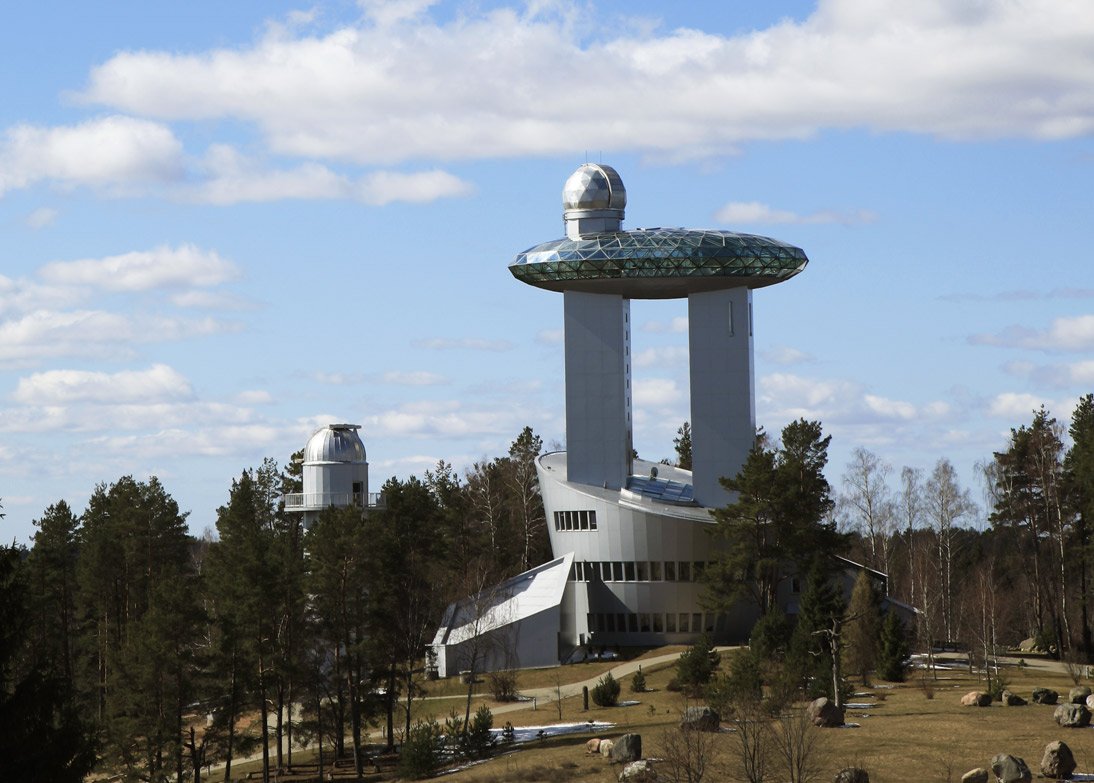
A pioneering museum exploring humanity’s cultural understanding of the cosmos, established alongside an active astronomical observatory north of Vilnius.
At a glance
The world’s first museum dedicated to ethnocosmology—the study of how different cultures perceive and interpret the sky—sits in rural Kulionys village. The museum functions as both archive and research center, with an active observatory enabling visitors to connect ancient cosmological knowledge with contemporary astronomical observation.
History
Established in 1990, the museum emerged from a scholarly vision to preserve and interpret the diverse ways human societies have understood celestial phenomena. Built adjacent to the Molėtai Astronomical Observatory, it represents an innovative fusion of ethnographic study and observational science—a collaboration that remains uncommon in museum practice.
What you see
The museum’s layout integrates exhibition space with observatory facilities. Its physical setting—the remote Lithuanian countryside—reinforces the museum’s thematic connection between terrestrial place and celestial observation, offering visitors minimal light pollution for stargazing.
Cultural significance
The museum addresses a scholarly gap: the relationship between folklore, religion, mythology, and astronomy across cultures. It documents how Lithuanian and other European traditions understood the cosmos, preserving knowledge systems that risk being forgotten in an increasingly urbanized world.
Key facts
- Location: Kulionys village, Lithuania
- Established: 1990
- Coordinates: 55.31539, 25.55506
- Distance from Vilnius: approximately 70 km (43 miles) north
- Adjacent facility: Molėtai Astronomical Observatory
- Notable distinction: first museum of ethnocosmology worldwide
Practical information & getting there
The museum is situated in remote countryside about 70 km north of Lithuania’s capital. To visit, arrange transportation from Vilnius to Kulionys village, where the observatory and museum complex are located. Contact the Molėtai Astronomical Observatory for current opening hours and access arrangements.
Sources & resources
Find it on the map
See this place and what’s around it →📷 Become a Cultural Heritage Online photographer
Share your photos of places: they stay published under your name as the author. The more they're seen, the more you get noticed — and soon a contest will reward the most appreciated photos.
Log in or sign up free to add a photoIs this page about you?
This page is read by travellers and heritage enthusiasts who find it on Google. Tell us how you are connected to this place and we will take it from there.