
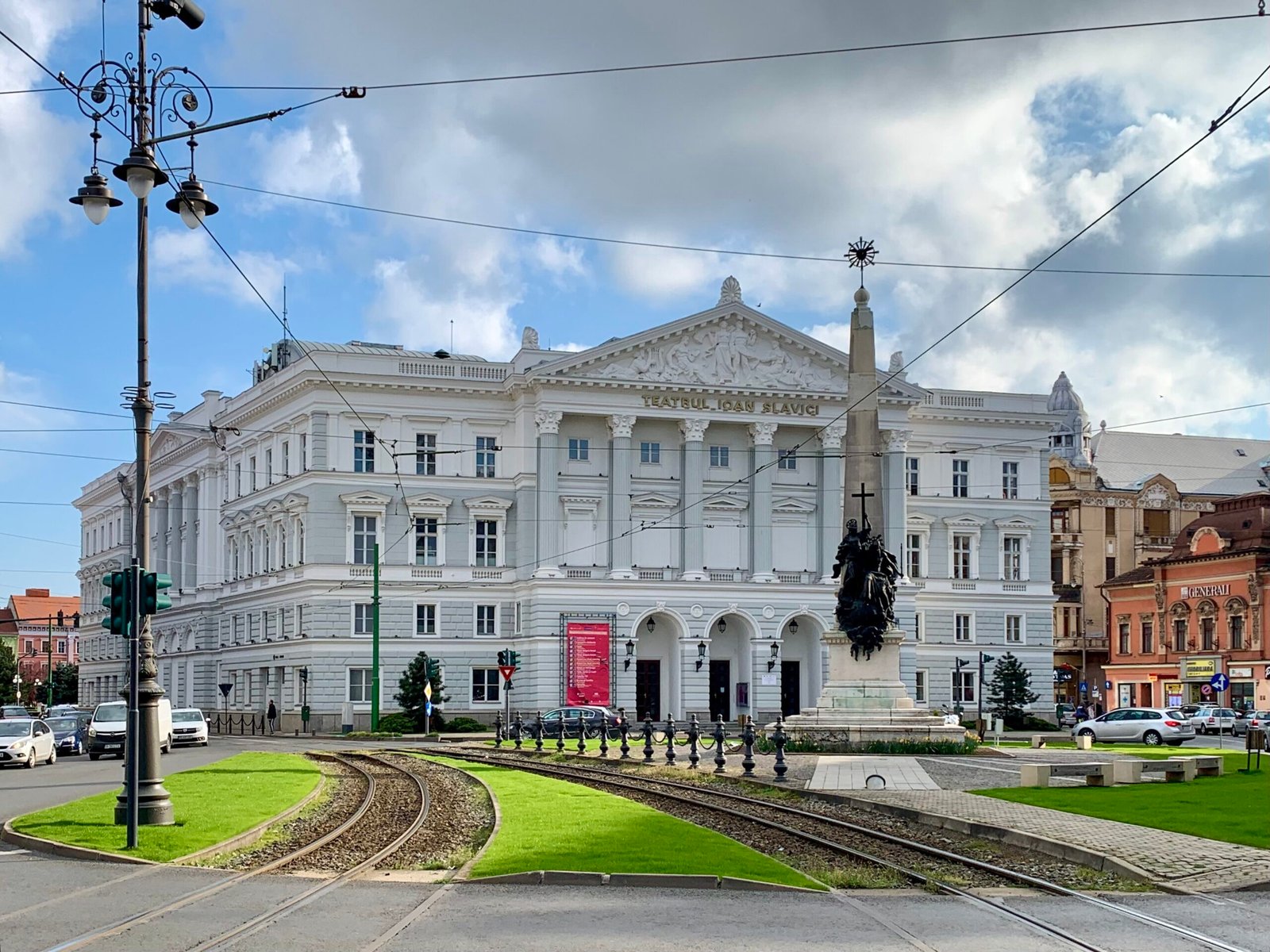
A neoclassical theatre in western Romania, built in 1874 and named after the celebrated writer Ioan Slavici, a native of the region.
At a glance
The Ioan Slavici Classical Theatre stands as a landmark of 19th-century architecture in Arad. Its neoclassical façade and carefully proportioned interior reflect the refined tastes of Romania’s cultural aspirations during the Austro-Hungarian period. The theatre remains a working venue for performances.
History
The theatre was designed around 1862, attributed to architect Anton Czigler—though possibly to his son, Győző Czigler. Construction began in 1869 under the supervision of architect Antal Szkalnitzky and was completed in 1874. The building was subsequently named in honour of Ioan Slavici, the Romanian writer and native of nearby Șiria, cementing the theatre’s connection to the region’s cultural identity.
What you see
The theatre exemplifies neoclassical design principles characteristic of Central European civic buildings of the era. Its architectural vocabulary—refined proportions, ordered façade, and elegant detailing—reflects the aesthetic conventions of late 19th-century urban planning in the Austro-Hungarian sphere.
Cultural significance
Named after Ioan Slavici, whose literary work shaped Romanian cultural discourse, the theatre honours both a celebrated writer and Arad’s role as a centre of cultural production. The building represents the civic pride invested in theatre architecture during Romania’s period of modernisation.
Key facts
- Location: Arad, Romania
- Completed: 1874
- Architectural style: Neoclassical
- Designed by: Anton Czigler (or possibly Győző Czigler), circa 1862
- Construction supervised by: Antal Szkalnitzky
- Coordinates: 46.17°N, 21.32°E
Practical information & getting there
The theatre is located in central Arad, in western Romania, accessible by road from Budapest and other regional centres. Performance schedules and visiting information are available through local tourism resources.
Sources & resources
Find it on the map
See this place and what’s around it →📷 Become a Cultural Heritage Online photographer
Share your photos of places: they stay published under your name as the author. The more they're seen, the more you get noticed — and soon a contest will reward the most appreciated photos.
Log in or sign up free to add a photoIs this page about you?
This page is read by travellers and heritage enthusiasts who find it on Google. Tell us how you are connected to this place and we will take it from there.