
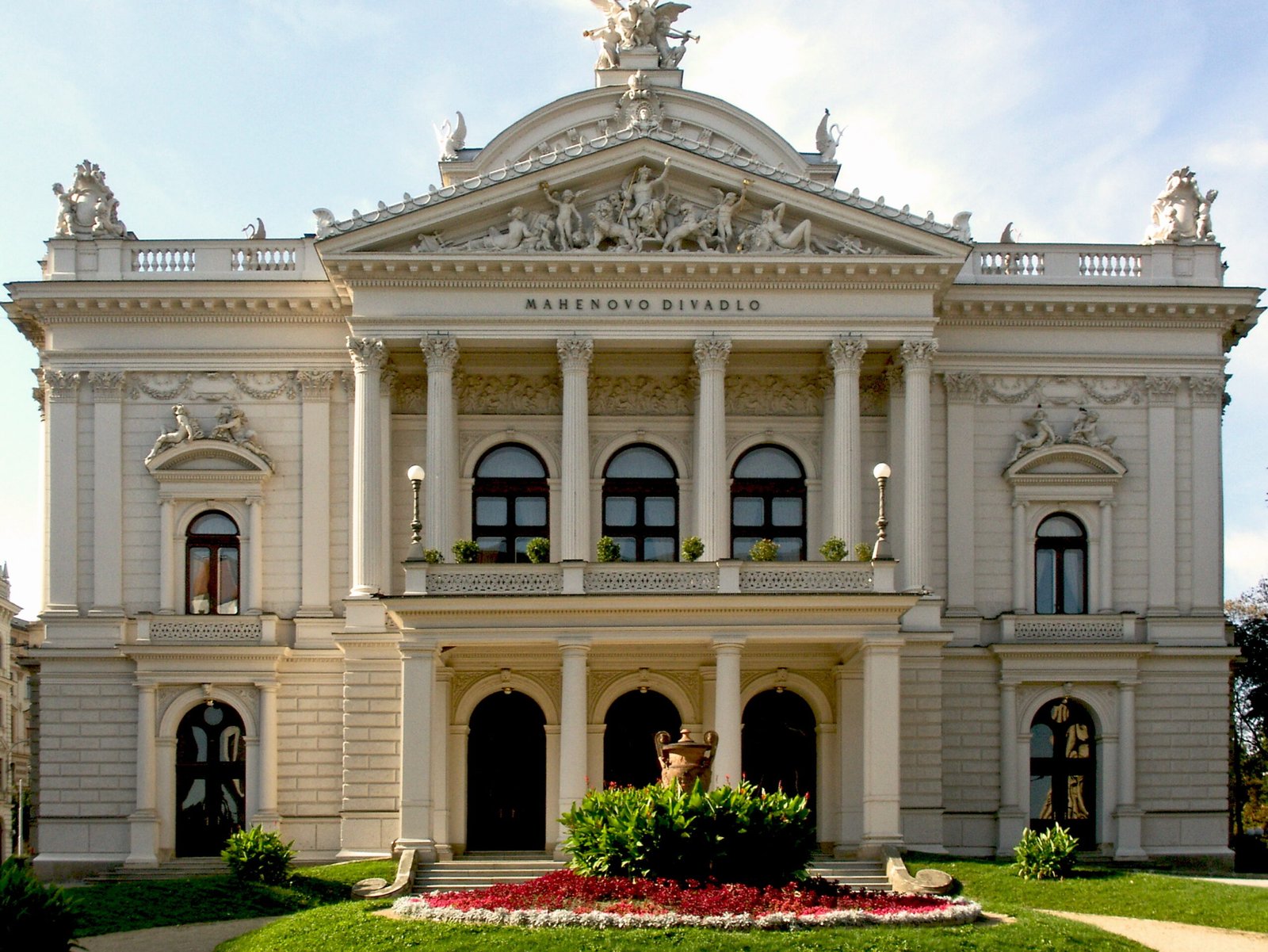
A pioneering venue where electric light first illuminated an entire public building, this Brno theatre combines Renaissance, Baroque and Neoclassical grandeur.
At a glance
Mahen Theatre stands as a landmark of technological innovation and architectural ambition. Built in 1882, it was among the first public buildings worldwide to abandon gas lamps entirely in favour of electric illumination—a distinction that marked it as a space of modernity and progress.
History
Originally constructed as the Deutsches Stadttheater (German City Theatre), Mahen Theatre opened during a period of urban expansion in Brno. Its adoption of electric lighting was revolutionary for its time, signalling the city’s embrace of emerging technologies even as the industrial age was gathering momentum across Europe.
What you see
The building merges three classical vocabularies with assured balance. Neo-Renaissance elements provide structural grace, while Neo-Baroque detailing adds ornamental richness and Neoclassical proportions lend restrained elegance. The result is an eclectic yet cohesive façade that reflects late 19th-century architectural confidence.
Cultural significance
Mahen Theatre represents a threshold moment in architectural history—the point where artistic ambition met scientific progress. Its status as one of the first electrically lit public buildings elevates it beyond regional importance, making it a symbol of how theatre spaces adapted to and championed new technology.
Key facts
- Country: Czechia
- City: Brno
- Coordinates: 49.19638889°N, 16.61305556°E
- Built: 1882
- Original name: Deutsches Stadttheater
- Architectural styles: Neo-Renaissance, Neo-Baroque, Neoclassical
Practical information & getting there
Mahen Theatre is located in central Brno and remains an active cultural venue. Consult the theatre’s official website for current performance schedules, ticket information and visitor details.
Sources & resources
Find it on the map
See this place and what’s around it →📷 Diventa un fotografo di Cultural Heritage Online
Condividi le tue foto dei luoghi: restano pubblicate con la tua firma come autore. Più vengono viste, più ti fai conoscere — e presto un concorso premierà le foto più apprezzate.
Accedi o registrati gratis per aggiungere una fotoDo you manage this place?
This page is read by travellers and heritage enthusiasts who find it on Google. Keep it accurate — and make it work for you. Free for non-profit heritage institutions.