

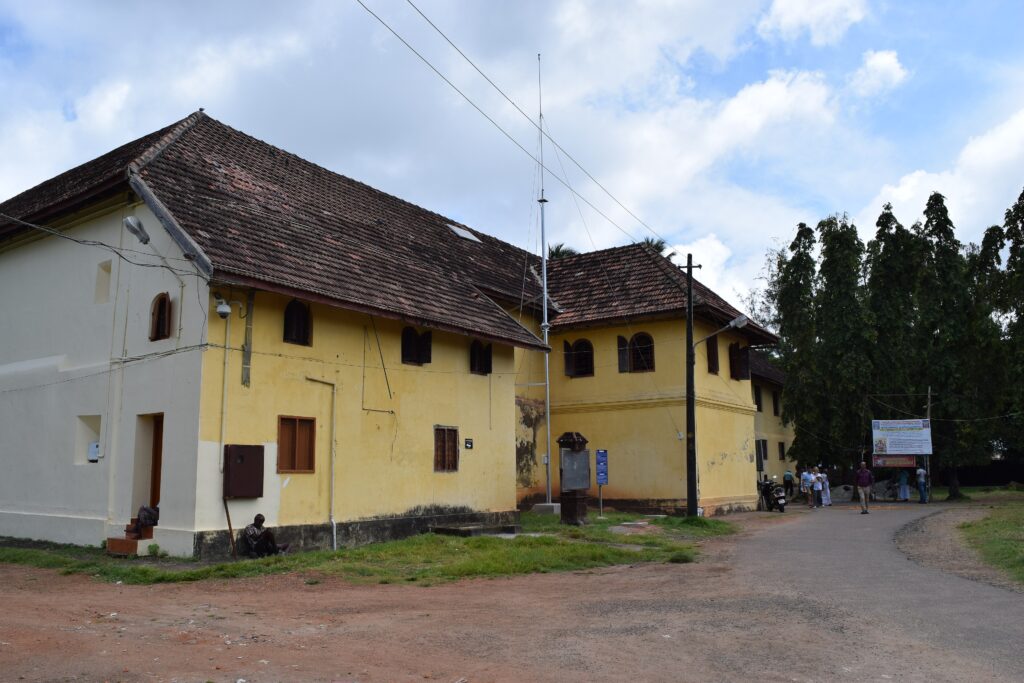
Known as the Dutch Palace despite its Portuguese origins, this landmark showcases Kerala’s finest mural traditions through royal portraiture and historical exhibits.
At a glance
Mattancherry Palace stands in the spice-trading quarter of Kochi, its walls alive with vivid Kerala murals. The palace holds exhibits documenting the Rajas who ruled this once-independent kingdom, their regalia and royal history preserved within its distinctive architecture.
History
The Portuguese Empire constructed this palace as a diplomatic gift to the Kingdom of Cochin, establishing it as a symbol of trade and alliance in Kerala’s maritime golden age. Despite its Portuguese commissioning, the palace became known locally and internationally as the Dutch Palace—a name that persists today, reflecting the region’s complex colonial legacy.
What you see
The palace is celebrated for its exceptional Kerala murals. Portraits of successive Rajas adorn interior walls, rendered in the traditional regional style with characteristic pigments and techniques. The building itself merges Portuguese construction with local aesthetic preferences, creating a unique architectural hybrid.
Cultural significance
This palace represents a pivotal moment in Kerala’s history—the intersection of European colonial ambition and Indian royal sovereignty. The murals document the lineage of Cochin’s rulers and stand as masterworks of regional artistic tradition. The site preserves knowledge of an independent kingdom that maintained considerable autonomy despite foreign presence.
Key facts
- Location: Mattancherry, Kochi, Kerala, India
- Coordinates: 9.958°N, 76.259°E
- Builder: Portuguese Empire
- Original recipient: Kingdom of Cochin
- UNESCO tentative list status: Yes
Practical information & getting there
Mattancherry Palace is located in the historic spice quarter of Kochi, easily accessible by local transport. The site remains an active museum displaying royal artifacts and the Kerala murals. For current visiting hours, admission fees, and any restrictions, consult local tourism information before your visit.
Sources & resources
Find it on the map
See this place and what’s around it →
Advertisement. Pictured, from the Cleveland Museum of Art (CC0) and not for sale: a parure of about 1850, a Lalique brooch, a Castellani bangle. How we handle this
📷 Become a Cultural Heritage Online photographer
Share your photos of places: they stay published under your name as the author. The more they're seen, the more you get noticed — and soon a contest will reward the most appreciated photos.
Log in or sign up free to add a photoIs this page about you?
This page is read by travellers and heritage enthusiasts who find it on Google. Tell us how you are connected to this place and we will take it from there.