
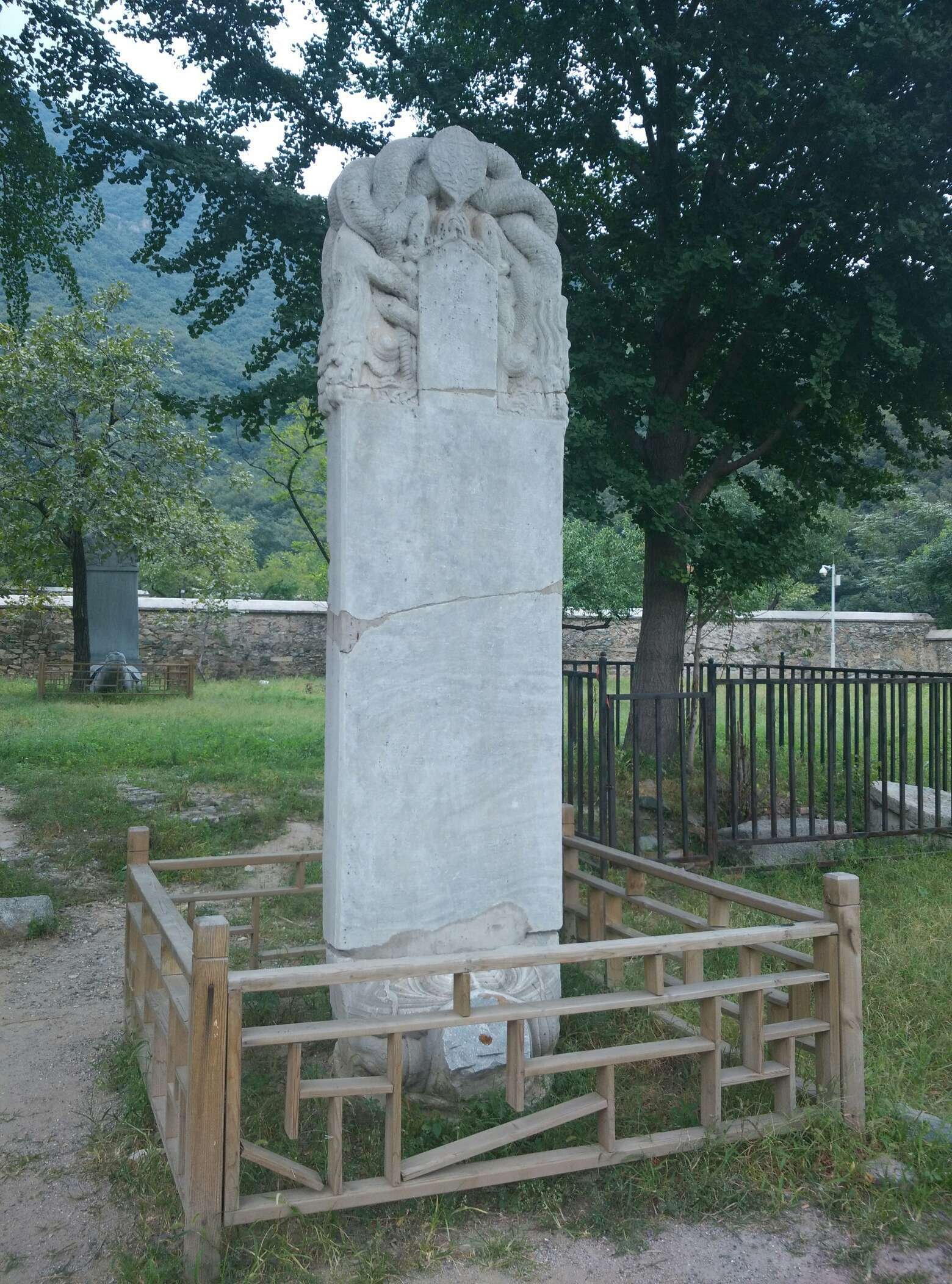
A remarkable multi-faith sanctuary in Beijing where Buddhists and early Chinese Christians worshipped across centuries, leaving traces of the Church of the East in China.
At a glance
The Cross Temple stands as a unique witness to religious coexistence in medieval China. Originally a Buddhist foundation, it transitioned between faiths across dynasties, serving Christians during the Tang and Yuan periods and Buddhists during the Liao and Ming. Today it survives as archaeological remains: two ancient steles, pillar bases, and stone blocks carved with crosses and Syriac inscriptions.
History
Built first as a Buddhist temple, the structure saw Christian use during the Tang dynasty (618–907), though this remains hypothesised among scholars. During the Liao period (916–1125), it returned to Buddhist worship. The Yuan dynasty (1271–1368) brought Christian worshippers—a significant phase in China’s Church of the East history. Ming-dynasty Buddhists (1368–1644) reclaimed the site before it was sold in 1911, marking the end of continuous religious use. Modern scholarship first documented the temple in 1919. The Cultural Revolution brought damage; protection returned in 2006.
What you see
Two ancient steles survive from the Liao and Yuan periods, though Ming-era hands altered their inscriptions. Stone blocks carved with crosses and geometric patterns emerged during early 20th-century exploration. One block bears Syriac script—a rare direct link to Eastern Christianity in China. These carved blocks now reside in the Nanjing Museum. The site itself preserves groundwork and pillar bases, offering spatial evidence of the temple’s original layout.
Cultural significance
The Cross Temple may represent the only known place of worship built by or for the Church of the East (Nestorian Christianity) discovered in China. Its multi-faith layers embody medieval China’s religious pluralism, when Buddhism, Christianity, and other traditions coexisted under imperial patronage. The Syriac inscriptions testify to the Silk Road’s cultural reach and the Church of the East’s eastward expansion before Islam’s rise restricted Christian communities in Asia.
Key facts
- Location: Fangshan, Beijing, China (39.74°N, 115.90°E)
- Original function: Buddhist temple
- Religious periods: Buddhist (original), possibly Christian (Tang), Buddhist (Liao), Christian (Yuan), Buddhist (Ming)
- Key artifact: Stone blocks with crosses and Syriac inscriptions (now at Nanjing Museum)
- Protected status: National-level site since 2006
- First modern documentation: 1919
Practical information & getting there
The site is located in Fangshan District, southwest of central Beijing. Some artifacts are viewable at the Nanjing Museum (Jiangsu Province) rather than on site. Specific visiting hours and access conditions should be confirmed locally, as the site is primarily archaeological.
Sources & resources
Find it on the map
See this place and what’s around it →📷 Become a Cultural Heritage Online photographer
Share your photos of places: they stay published under your name as the author. The more they're seen, the more you get noticed — and soon a contest will reward the most appreciated photos.
Log in or sign up free to add a photoIs this page about you?
This page is read by travellers and heritage enthusiasts who find it on Google. Tell us how you are connected to this place and we will take it from there.