
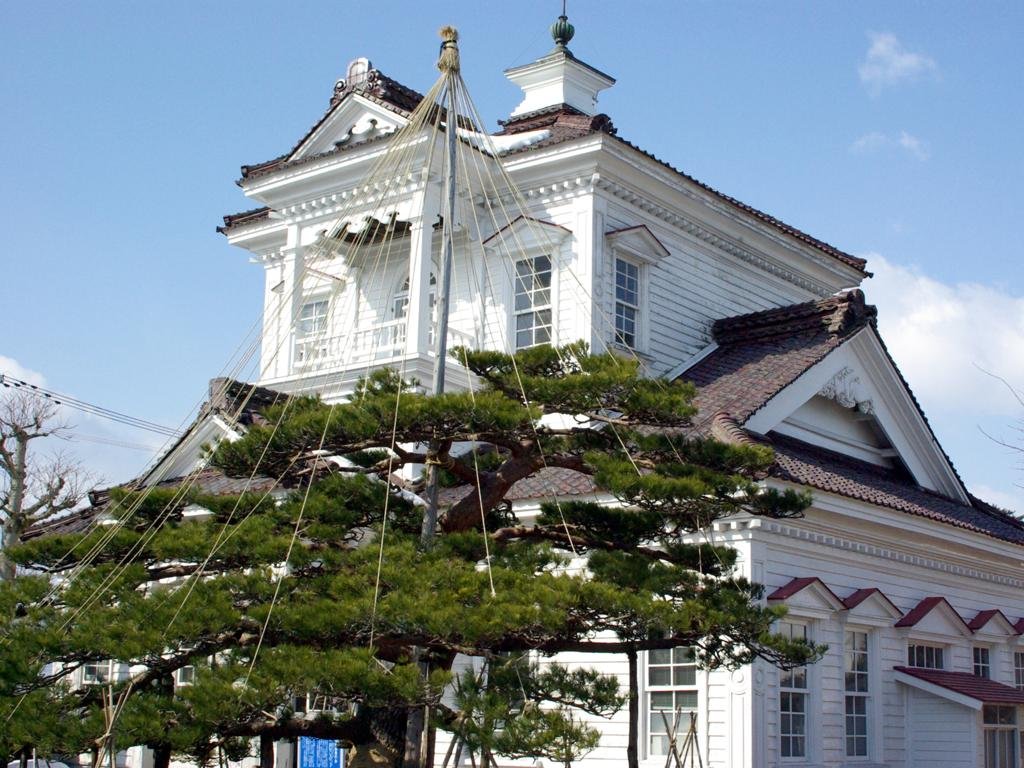
A private museum in Yamagata Prefecture dedicated to the folk culture and heritage of the Shōnai region, anchored by preserved samurai residences and an exceptional collection of traditional crafts and ceremonial objects.
At a glance
Founded in 1950 by the former Lord Sakai of the Shōnai Domain, the Chidō Museum preserves the material and artistic legacy of northeastern Japan. Its grounds blend original structures—including a lord’s retirement residence from 1863—with relocated historical buildings spanning the Edo and Meiji periods, creating an open-air archive of regional life.
History
The museum was established when Lord Sakai donated his properties to advance local culture and education. Over subsequent decades, significant buildings were systematically relocated to the site: the Former Tsuruoka Police Station (1884) arrived in 1957, the Former Nishitagawa District Office (1881) in 1972, and a remarkable three-story farmhouse from Tamugimata in 1965. A dedicated storage facility for National Important Folklore Cultural Assets opened in 1981, formalizing the museum’s curatorial mission.
What you see
The Goinden, the Sakai Lords’ retirement residence completed in 1863, anchors the complex. Its attached Japanese garden holds designation as a Place of Scenic Beauty. Two Meiji-era Western buildings—designed by prefectural governor Mishima Michitsune—are designated Important Cultural Properties: their brick and stone construction reflects Japan’s rapid architectural modernization.
The Former Shibuya Family Home, a three-story farmhouse with thatched roof built in 1822, demonstrates vernacular construction methods of rural Shōnai. The Lord’s arsenal (Mingu no Kura) completes the ensemble of preserved structures.
Cultural significance
Chidō holds two National Treasures among its collections: both are tachi (long swords) representing Japan’s metalworking heritage. The museum’s folk materials—fishing implements, porter’s equipment, wooden vessels, work clothes, and pottery—document daily life in the Shōnai and surrounding Echigo regions across generations.
The museum’s architecture embodies Japan’s transition from feudal to modern governance, preserving physical evidence of administrative and domestic life across three centuries.
Key facts
- Location: Tsuruoka, Yamagata Prefecture, Japan (38.73°N, 139.82°E)
- Founded: 1950
- Type: Private museum with relocated historic buildings
- Collections: Two National Treasure tachi, paintings, seven Important Tangible Folk Cultural Properties
- Designated structures: Japanese garden (Place of Scenic Beauty), two Meiji buildings (Important Cultural Properties)
Practical information & getting there
The museum is located in Tsuruoka in Yamagata Prefecture. For current opening hours, admission fees, and detailed access information, consult the museum’s official website or contact them directly before your visit.
Sources & resources
Find it on the map
See this place and what’s around it →📷 Become a Cultural Heritage Online photographer
Share your photos of places: they stay published under your name as the author. The more they're seen, the more you get noticed — and soon a contest will reward the most appreciated photos.
Log in or sign up free to add a photoIs this page about you?
This page is read by travellers and heritage enthusiasts who find it on Google. Tell us how you are connected to this place and we will take it from there.