
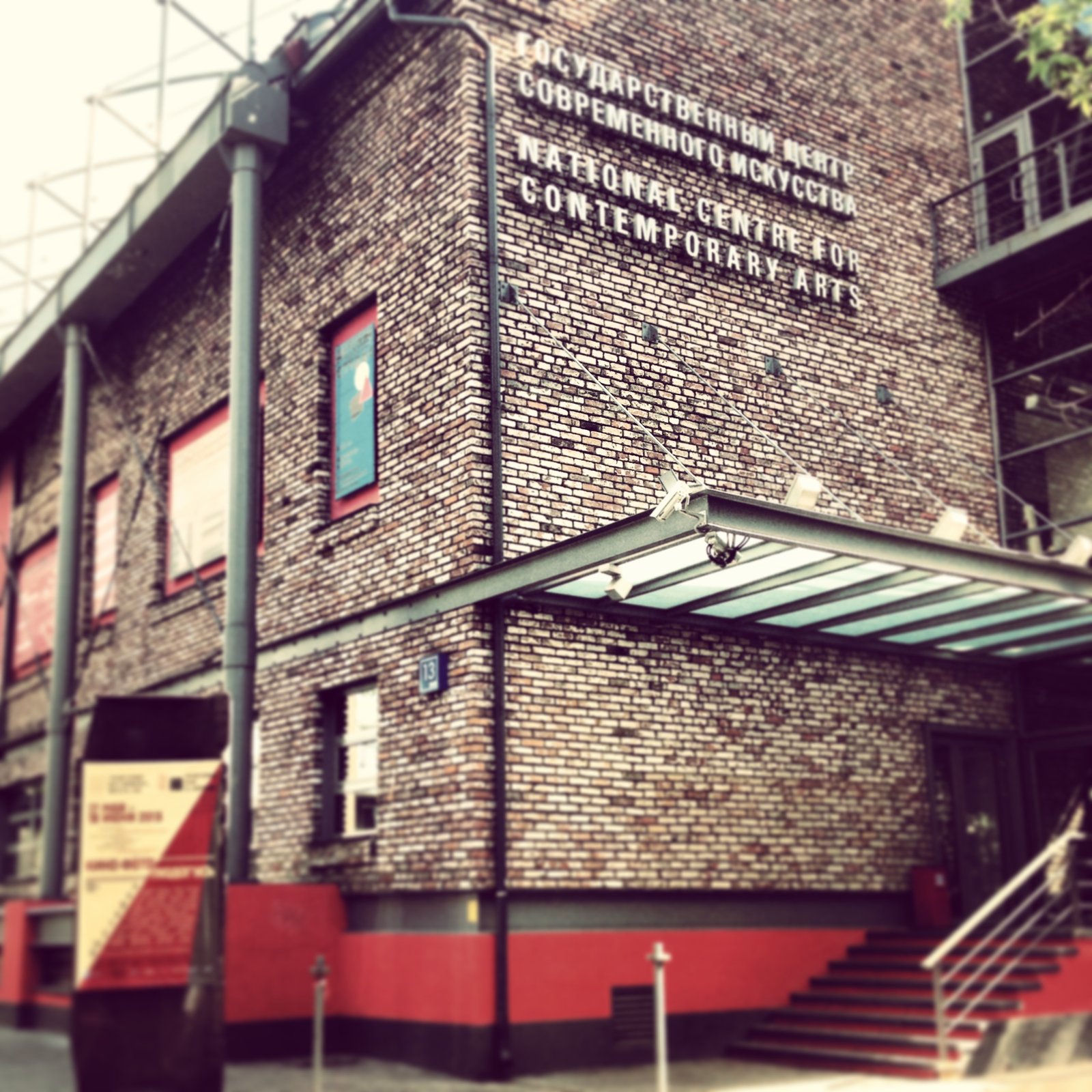
A Moscow-born institution built by nonconformist artists to give Russian contemporary art an institutional home, and dismantled by decree three decades later.
At a glance
The National Center for Contemporary Art, known by its Russian acronym NCCA, was a museum, exhibition, and research body dedicated to positioning Russian contemporary art within the wider global scene. It never had a single flagship building in the way older Moscow institutions do. Instead it operated as a network, with branches reaching from Kaliningrad to Tomsk. Its story is as much about bureaucratic upheaval as about art.
History
Nonconformist figures of the late Soviet Union founded the center in 1992. That origin matters. These were artists and organizers who had worked outside, and often against, official Soviet cultural structures, and the new institution gave their practice a formal platform in the post-Soviet years. For two decades the center grew, opening branches across Russia. In 2012 the Ministry of Culture rejected a long-approved plan for a purpose-built Moscow headquarters. The setback proved fatal to institutional independence. By 2016 the museum and its branches were disbanded and folded into the ROSIZO building, a state exhibition organization. In 2020 what remained passed to the Pushkin State Museum of Fine Arts, ending the center’s existence as a standalone body.
What you see
There is no signature building to point to here. The center’s architecture was organizational rather than physical: a headquarters model spread across nine branch cities, including Vladikavkaz, Ekaterinburg, Kaliningrad, Nizhny Novgorod, Saint Petersburg, and Tomsk. Each branch operated within existing local structures rather than a single commissioned campus. This decentralized form shaped how audiences across Russia, not only in the capital, encountered contemporary art.
Cultural significance
Before its 2020 merger, the center had staged 72 exhibitions involving 919 artists. That included 56 group shows and 16 solo presentations, a body of programming that helped define what counted as contemporary Russian art for a generation of viewers and critics. The center’s founding by nonconformist artists gave it a particular authority. It was built by people who had once worked at the margins, now shaping the mainstream. Its dissolution into state bodies in 2016 and 2020 marks a broader shift in how Russia manages contemporary art institutions, folding independent-minded organizations into centralized, ministry-linked structures.
Key facts
- Founded: 1992, by nonconformist Soviet-era artists
- Location: Moscow, Russia, with nine regional branches
- Branch cities: Vladikavkaz, Ekaterinburg, Kaliningrad, Nizhny Novgorod, Saint Petersburg, Tomsk
- Exhibitions staged (to 2020): 72, involving 919 artists
- 2016: disbanded and merged into the ROSIZO building
- 2020: absorbed by the Pushkin State Museum of Fine Arts
Practical information & getting there
The National Center for Contemporary Art no longer operates as an independent institution, so there is no current admission or visiting schedule to plan around. Its holdings and programming legacy now sit within the Pushkin State Museum of Fine Arts framework in Moscow. Visitors interested in its history are best served by researching the archived record of the center rather than seeking a standing venue under its own name.
Sources & resources
Find it on the map
See this place and what’s around it →📷 Become a Cultural Heritage Online photographer
Share your photos of places: they stay published under your name as the author. The more they're seen, the more you get noticed — and soon a contest will reward the most appreciated photos.
Log in or sign up free to add a photoIs this page about you?
This page is read by travellers and heritage enthusiasts who find it on Google. Tell us how you are connected to this place and we will take it from there.