
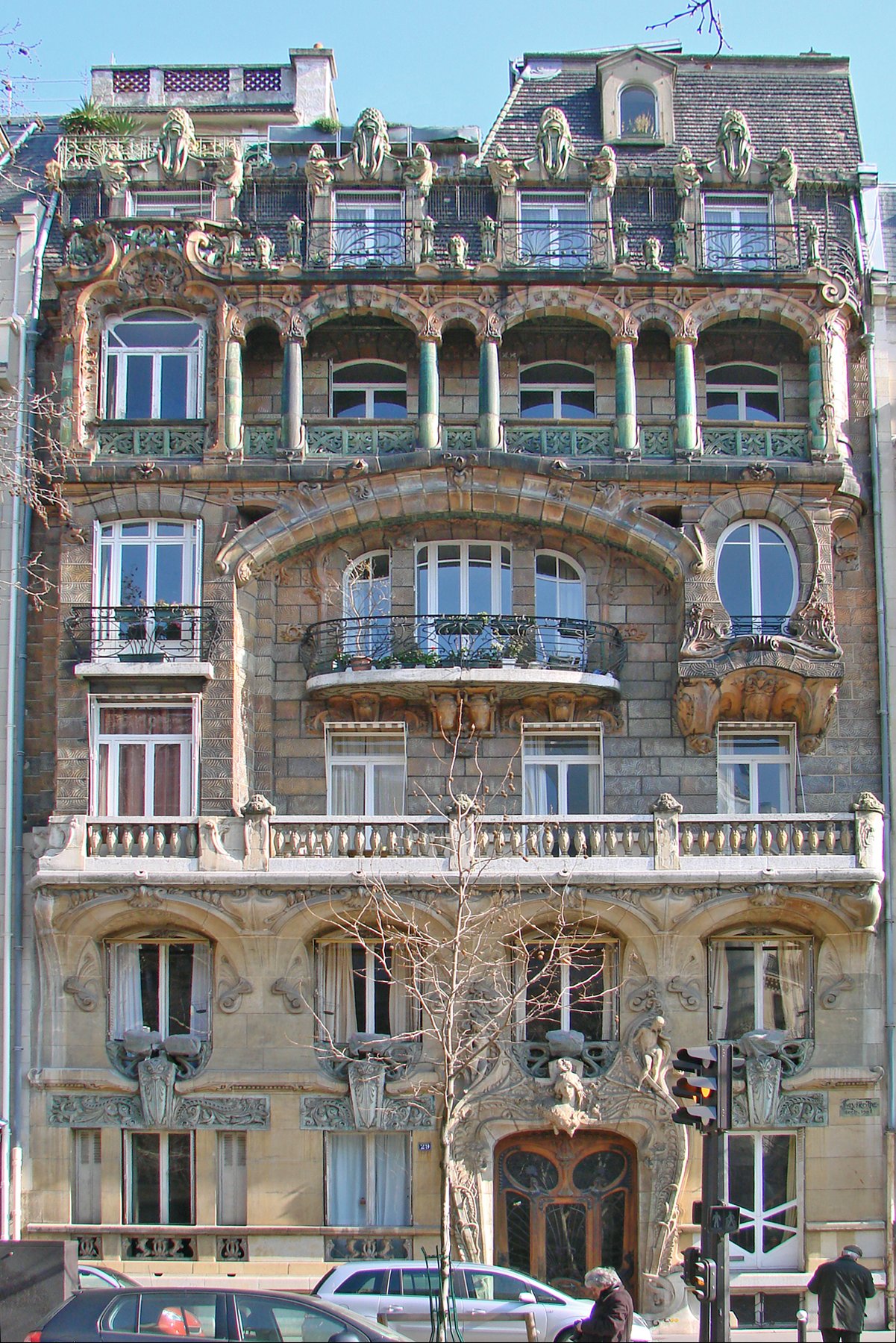
A masterpiece of Art Nouveau apartment building in central Paris, celebrated for its exuberant sculptural and ceramic facade that earned its architect the city’s prize for innovation.
At a glance
Located at 29 Avenue Rapp in the 7th arrondissement, the Lavirotte Building stands as one of Paris’s finest surviving examples of Art Nouveau design. Completed in 1901, it demonstrates the movement’s commitment to ornamentation and craftsmanship at an urban domestic scale.
History
Jules Lavirotte designed and constructed the building between 1899 and 1901, a period of flourishing Art Nouveau experimentation in Paris. The originality of its facade won official recognition: Lavirotte received the prize for the most original new facade in the 7th arrondissement in 1901, validating his ambitious artistic vision.
What you see
The facade is a tour de force of sculptural and ceramic decoration. Ceramic tiles—manufactured by the renowned craftsman Alexandre Bigot—cover expansive surfaces, while ornamental sculpture adorns the exterior. Every element serves the Art Nouveau philosophy of integrating art into everyday architecture, transforming a residential building into a work of art.
Cultural significance
The Lavirotte Building represents Art Nouveau at its most uncompromising. Rather than restraint, Lavirotte embraced lavish ornament and skilled craftsmanship, proving that commercial apartment housing could aspire to the highest aesthetic ambitions. It remains a touchstone of early 20th-century Parisian design.
Key facts
- Country: France
- City: 7th arrondissement, Paris
- Coordinates: 48.85912, 2.30091
- Completed: 1901
- Architect: Jules Lavirotte
- Ceramicist: Alexandre Bigot
Practical information & getting there
The building is located on Avenue Rapp in Paris’s 7th arrondissement, easily accessible by Metro. It remains a private residential building; exterior viewing is recommended. The surrounding neighborhood contains other notable Art Nouveau and Belle Époque architecture worth exploring on foot.
Sources & resources
Find it on the map
See this place and what’s around it →📷 Become a Cultural Heritage Online photographer
Share your photos of places: they stay published under your name as the author. The more they're seen, the more you get noticed — and soon a contest will reward the most appreciated photos.
Log in or sign up free to add a photoIs this page about you?
This page is read by travellers and heritage enthusiasts who find it on Google. Tell us how you are connected to this place and we will take it from there.