
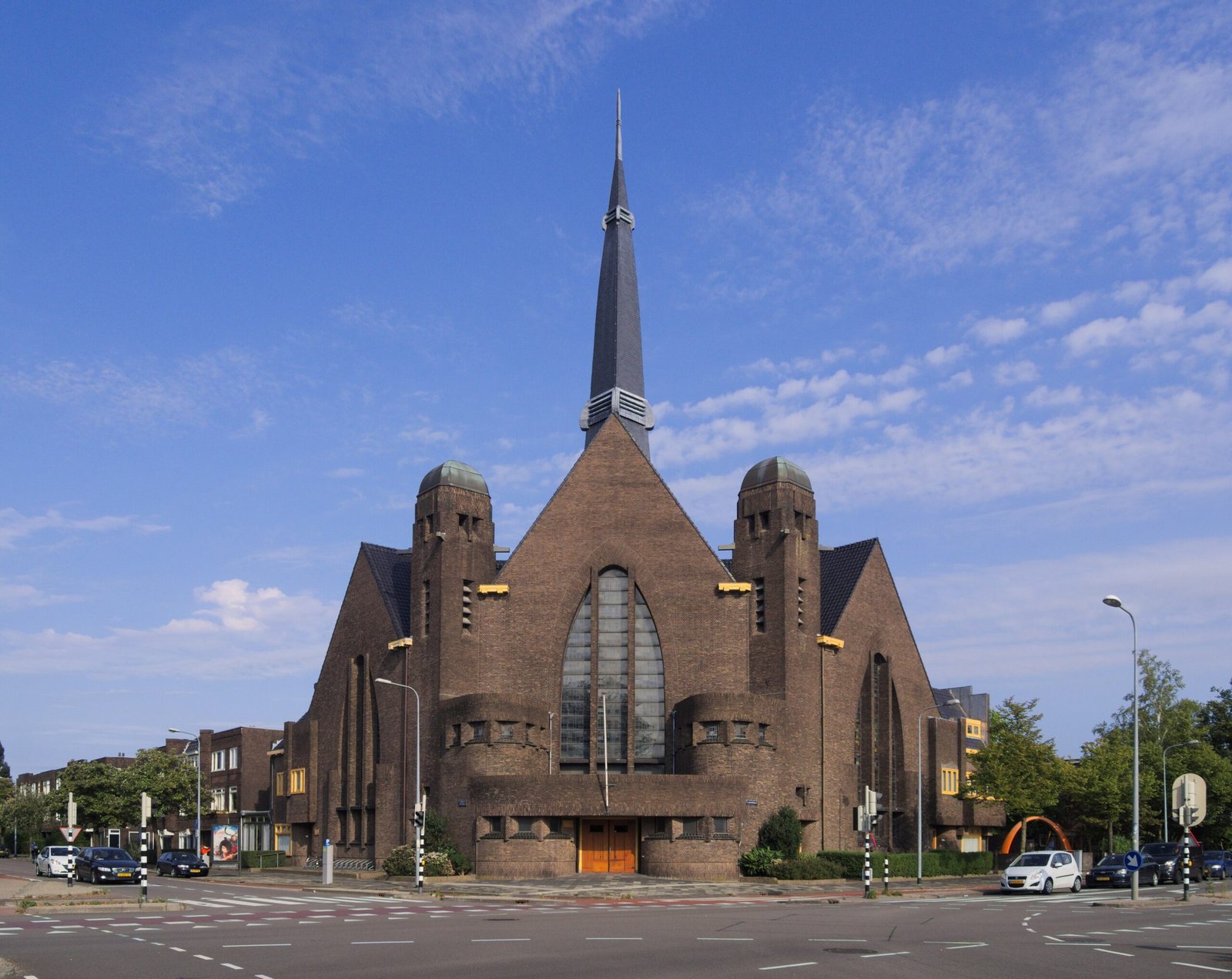
A reformed church completed in 1929, the Oosterkerk stands as a twentieth-century addition to Groningen’s religious architecture in the Oosterparkbuurt district.
At a glance
The Oosterkerk (Eastern Church) is a reformed Protestant church in the northeastern Oosterparkbuurt neighbourhood of Groningen. Completed in 1929, it occupies a prominent corner site at the intersection of E. Thomassen à Thuessinklaan and S.S. Rosensteinlaan.
History
The church was constructed in 1929 as part of Groningen’s architectural expansion during the early twentieth century. Its establishment reflected the growth of Protestant reform communities in the city during this period.
What you see
The building’s design reflects the reformed tradition of Dutch ecclesiastical architecture from the interwar period. Its corner location on two major thoroughfares makes it a visible landmark within the neighbourhood’s urban fabric.
Cultural significance
The Oosterkerk represents Dutch reformed Protestant heritage and the expansion of Groningen’s religious and residential districts during the early twentieth century. It remains part of the city’s architectural record of this transformative era.
Key facts
- Country: Netherlands
- City: Groningen
- Year completed: 1929
- Coordinates: 53.2267, 6.5725
- Location: Corner of E. Thomassen à Thuessinklaan and S.S. Rosensteinlaan, Oosterparkbuurt
Practical information & getting there
The Oosterkerk is located in Groningen’s Oosterparkbuurt neighbourhood. You can reach it via the intersection of E. Thomassen à Thuessinklaan and S.S. Rosensteinlaan. For current visiting hours and information, contact local Groningen tourism services.
Sources & resources
Find it on the map
See this place and what’s around it →📷 Become a Cultural Heritage Online photographer
Share your photos of places: they stay published under your name as the author. The more they're seen, the more you get noticed — and soon a contest will reward the most appreciated photos.
Log in or sign up free to add a photoIs this page about you?
This page is read by travellers and heritage enthusiasts who find it on Google. Tell us how you are connected to this place and we will take it from there.