
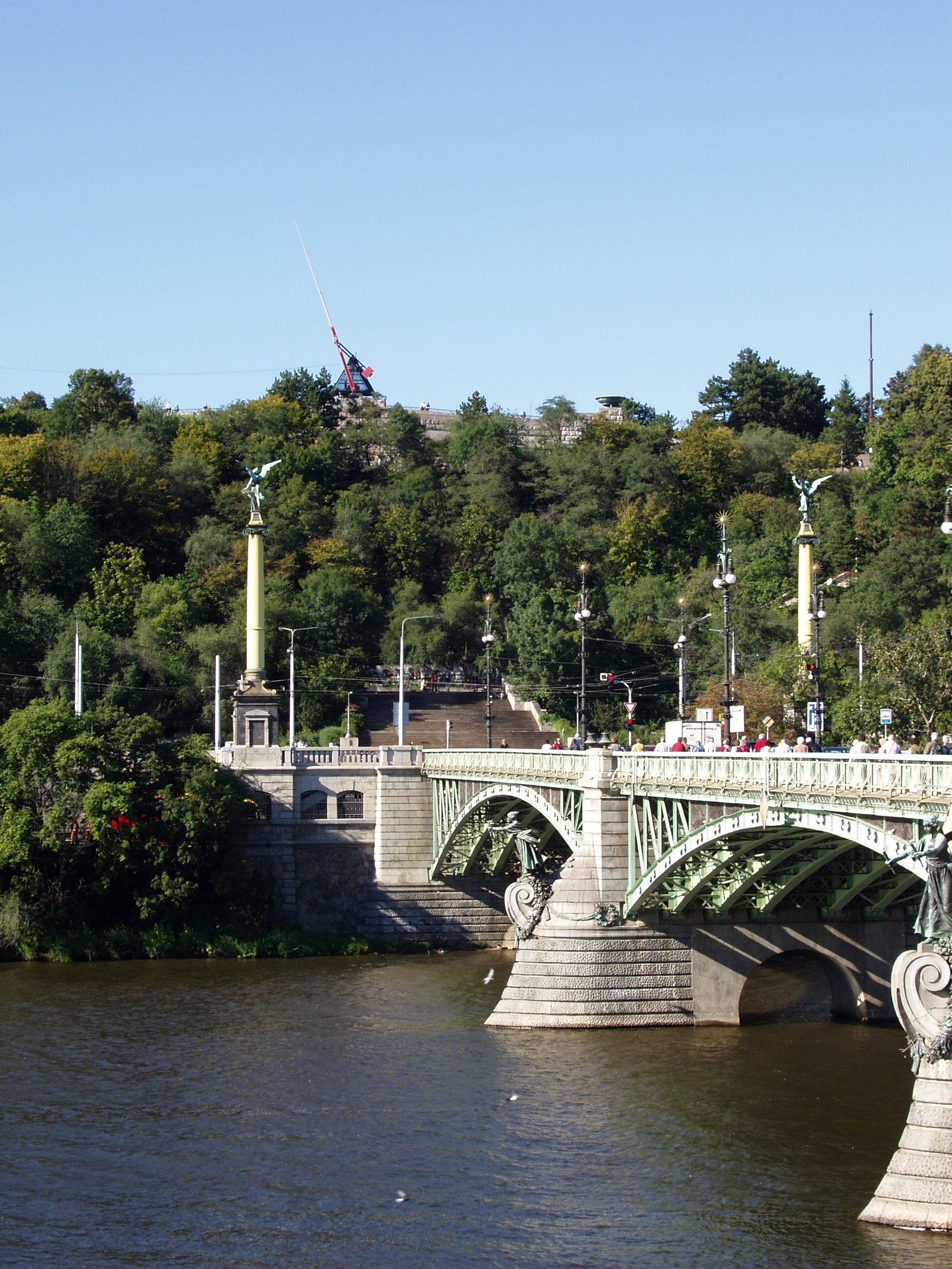
An arch bridge spanning the Vltava River in Prague’s Holešovice district, connecting the city’s historic quarters across one of Central Europe’s most significant waterways.
At a glance
The Svatopluk Čech Bridge carries vehicular and pedestrian traffic across the Vltava in Prague. Its arched design is characteristic of early modern Czech bridge engineering, serving as both functional infrastructure and architectural landmark in the city’s urban fabric.
History
Named after the 19th-century Czech writer Svatopluk Čech, this bridge represents Prague’s continuous development as a major European city. The Vltava has long required crossing points to unite the districts on its banks.
What you see
The bridge’s defining feature is its arch structure, engineered to span the Vltava’s width while accommodating both modern traffic flows and pedestrian movement. The arch form provides both structural integrity and visual elegance characteristic of Prague’s bridge heritage.
Cultural significance
The bridge forms part of Prague’s essential transport network and contributes to the city’s distinctive silhouette along the Vltava. It represents the practical infrastructure that shaped modern Prague’s growth across the river.
Key facts
- Location: Holešovice, Prague, Czech Republic
- Coordinates: 50.0931°N, 14.4170°E
- Primary feature: Arch bridge spanning the Vltava River
Practical information & getting there
The bridge is accessible by public transport throughout Prague and by foot or bicycle. It serves the Holešovice district and connects to Prague’s wider street network. Visit the nearby Vltava embankments for views of the bridge and river.
Sources & resources
Find it on the map
See this place and what’s around it →📷 Become a Cultural Heritage Online photographer
Share your photos of places: they stay published under your name as the author. The more they're seen, the more you get noticed — and soon a contest will reward the most appreciated photos.
Log in or sign up free to add a photoIs this page about you?
This page is read by travellers and heritage enthusiasts who find it on Google. Tell us how you are connected to this place and we will take it from there.