

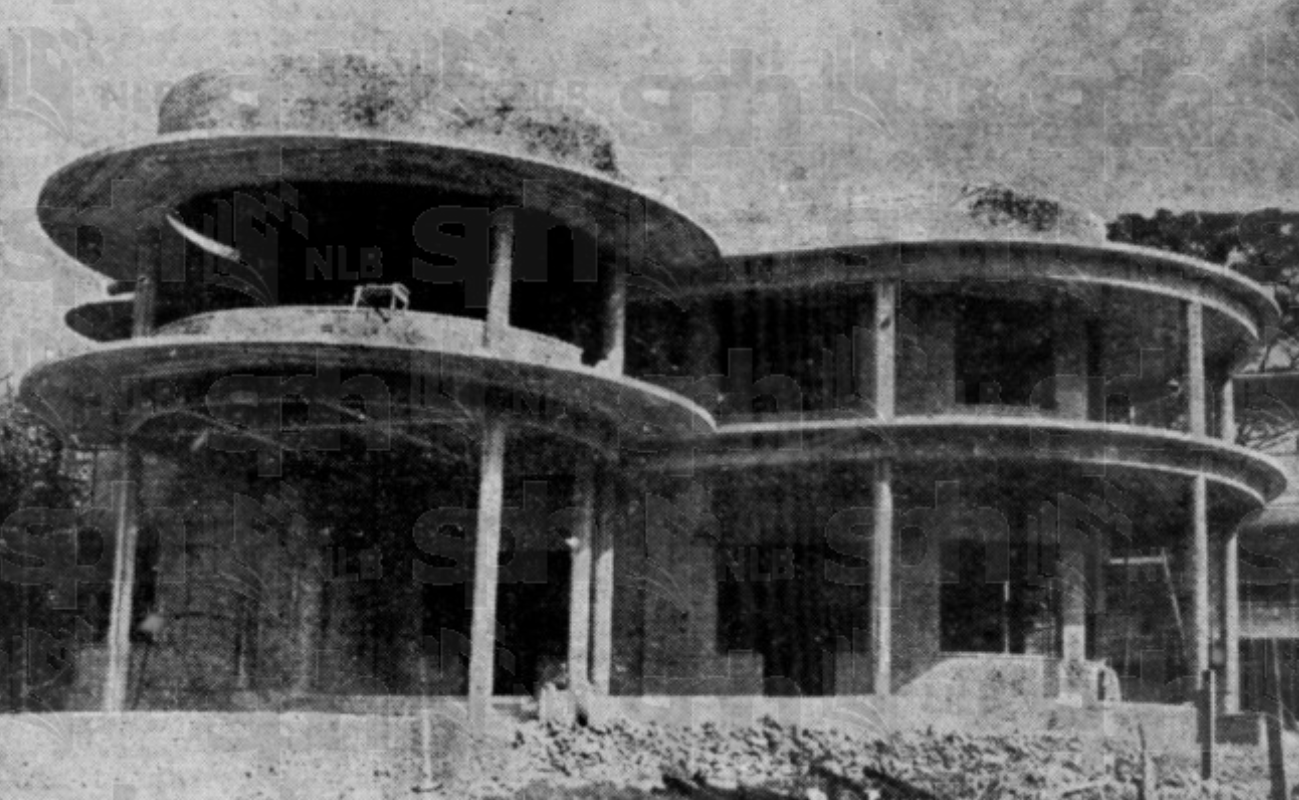
An early 20th-century bungalow in Singapore’s River Valley district, built for a prominent merchant’s son and later adapted as a guest house before falling into disuse.
At a glance
This residential bungalow, also known as Wellington House, dates to 1938 and stands on Grange Road. Built during Singapore’s interwar boom, it represents the domestic architecture of the colonial era’s merchant class. The house remains abandoned today.
History
Chee Guan Chiang House was constructed in 1938 for Chee Guan Chiang, son of Chee Swee Cheng, a significant figure in Singapore’s business circles. Following its completion, the house functioned as a guest residence for several years before eventually standing vacant. The building has since become a symbol of Singapore’s neglected pre-war heritage.
What you see
The structure exemplifies the bungalow style favored by Singapore’s colonial and merchant elite. Located on Grange Road in the River Valley conservation area, the house retains features characteristic of 1930s residential architecture, though its current state reflects decades of abandonment.
Cultural significance
Chee Guan Chiang House documents Singapore’s interwar period and the lifestyles of its merchant families. Its abandonment raises questions about heritage preservation and adaptive reuse in a rapidly developing city where older residential properties often face uncertain futures.
Key facts
- Built: 1938
- Location: Grange Road, River Valley, Singapore
- Coordinates: 1.299°N, 103.83545°E
- Also known as: Wellington House
- Original owner: Chee Guan Chiang
Practical information & getting there
River Valley is accessible by public transport in central Singapore. Grange Road falls within a conservation area; check local regulations before visiting. The house is currently abandoned and not open to the public.
Sources & resources
Find it on the map
See this place and what’s around it →📷 Become a Cultural Heritage Online photographer
Share your photos of places: they stay published under your name as the author. The more they're seen, the more you get noticed — and soon a contest will reward the most appreciated photos.
Log in or sign up free to add a photoIs this page about you?
This page is read by travellers and heritage enthusiasts who find it on Google. Tell us how you are connected to this place and we will take it from there.