
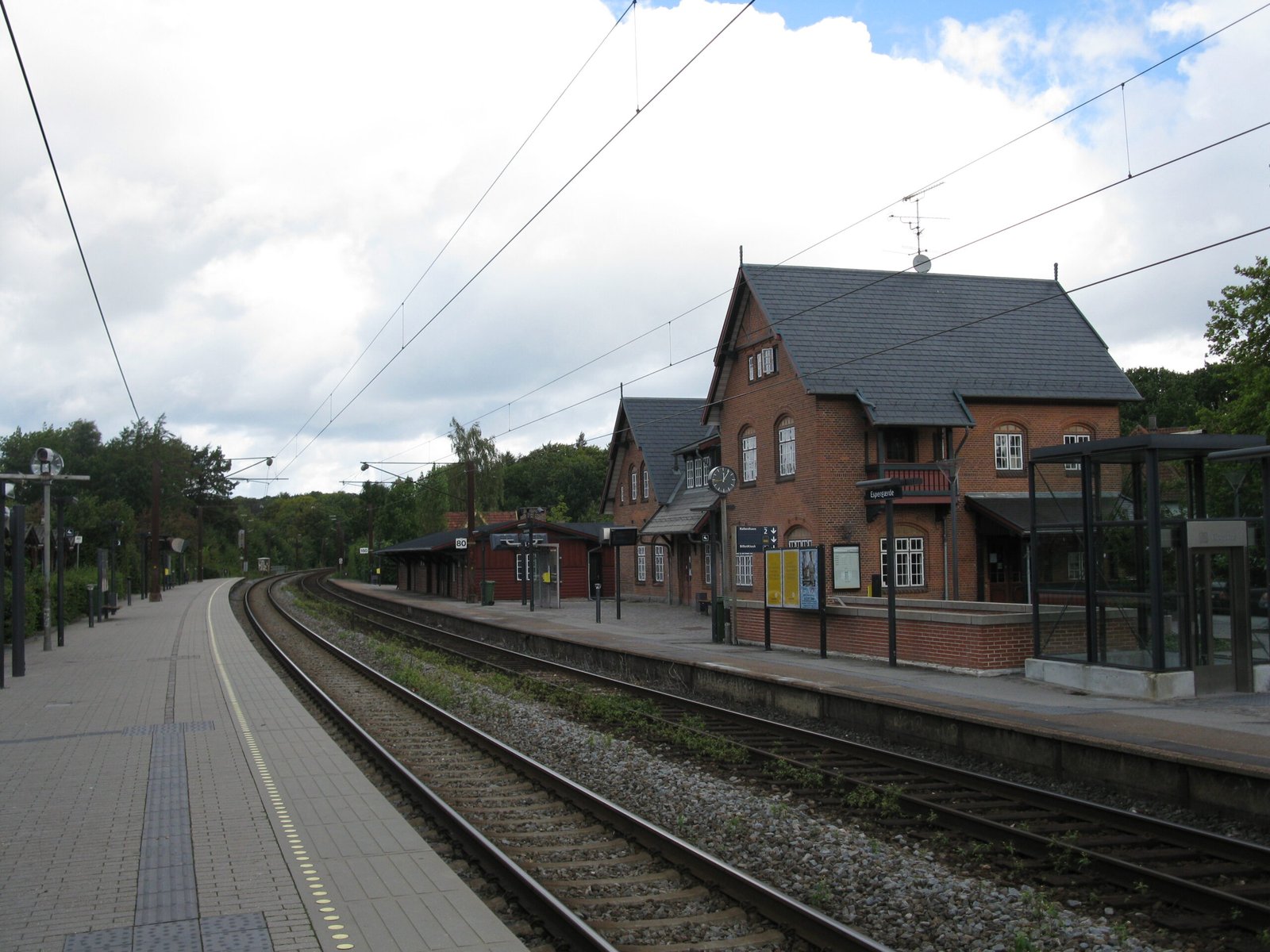
A modest railway station serving the quiet residential satellite town of Espergærde, approximately 40 kilometres north of Copenhagen along Denmark’s Coast Line.
At a glance
Espergærde station is a working railway interchange on the Coast Line connecting Helsingør and Copenhagen. The station handles primarily local commuter traffic in a calm residential neighbourhood.
History
The station serves Espergærde, a satellite town in North Zealand developed as a residential community. Its position on the Coast Line made it an essential stop for regional rail connectivity between the northern and southern ends of the line.
What you see
Espergærde station is a functional railway stop typical of Danish regional infrastructure—unpretentious in design and oriented toward practical commuter use rather than architectural distinction.
Cultural significance
The station represents the twentieth-century expansion of Denmark’s railway network into suburban communities, enabling residential growth in North Zealand while maintaining Copenhagen’s reach into surrounding regions.
Key facts
- Country: Denmark
- Municipality: Helsingør
- Coordinates: 55.99583333, 12.54972222
- Location: ~40 km north of central Copenhagen
- Line: Coast Line (Helsingør–Copenhagen)
- Operator: Danish State Railways
Practical information & getting there
The station is accessible by train on the Coast Line. For current schedules and fare information, consult Danish State Railways’ official timetables. The station serves as a local transit hub for residents of Espergærde and surrounding neighbourhoods.
Sources & resources
Find it on the map
See this place and what’s around it →📷 Become a Cultural Heritage Online photographer
Share your photos of places: they stay published under your name as the author. The more they're seen, the more you get noticed — and soon a contest will reward the most appreciated photos.
Log in or sign up free to add a photoIs this page about you?
This page is read by travellers and heritage enthusiasts who find it on Google. Tell us how you are connected to this place and we will take it from there.