
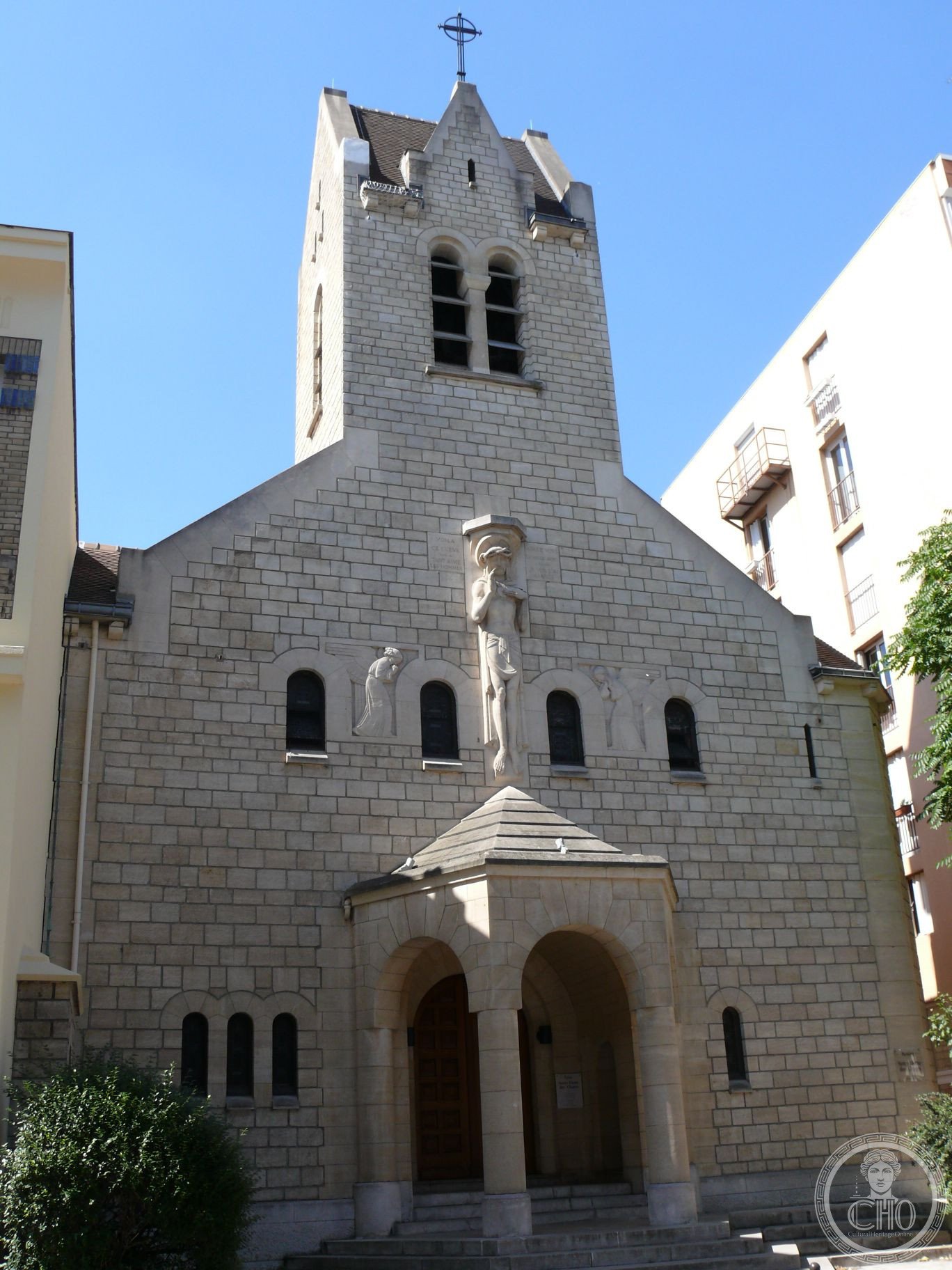
A Roman Catholic parish church built to honour forty-nine priests and policemen executed during the Paris Commune’s violence of 1871.
At a glance
Notre-Dame-des-Otages stands in the 20th arrondissement as a memorial church. Its name translates to ‘Our Lady of the Hostages’—a direct reference to those killed in the Massacre in the Rue Haxo during the Commune’s final weeks.
History
The church was constructed between 1936 and 1938, more than six decades after the events it commemorates. It was built to memorialise forty-nine priests and policemen who were taken hostage and executed by the Paris Commune in 1871. The massacre occurred during the violent upheaval of the Commune, a revolutionary government that briefly ruled Paris before its suppression.
What you see
The church is a Roman Catholic parish building constructed in the interwar period. Its architectural character reflects early twentieth-century ecclesiastical design in Paris.
Cultural significance
Notre-Dame-des-Otages functions as both a place of worship and a historical memorial. It preserves the memory of a tragic episode in Paris’s revolutionary history, commemorating those who lost their lives during one of the most turbulent periods of the nineteenth century.
Key facts
- Location: 20th arrondissement, Paris, France
- Coordinates: 48.87419, 2.40294
- Built: 1936–1938
- Commemorates: 49 priests and policemen executed in 1871
- Type: Roman Catholic parish church
Practical information & getting there
The church is located in the 20th arrondissement of Paris. Check with the parish for current visiting hours and any special services or commemorative events related to the victims it honours.
Sources & resources
Find it on the map
See this place and what’s around it →📷 Become a Cultural Heritage Online photographer
Share your photos of places: they stay published under your name as the author. The more they're seen, the more you get noticed — and soon a contest will reward the most appreciated photos.
Log in or sign up free to add a photoIs this page about you?
This page is read by travellers and heritage enthusiasts who find it on Google. Tell us how you are connected to this place and we will take it from there.