
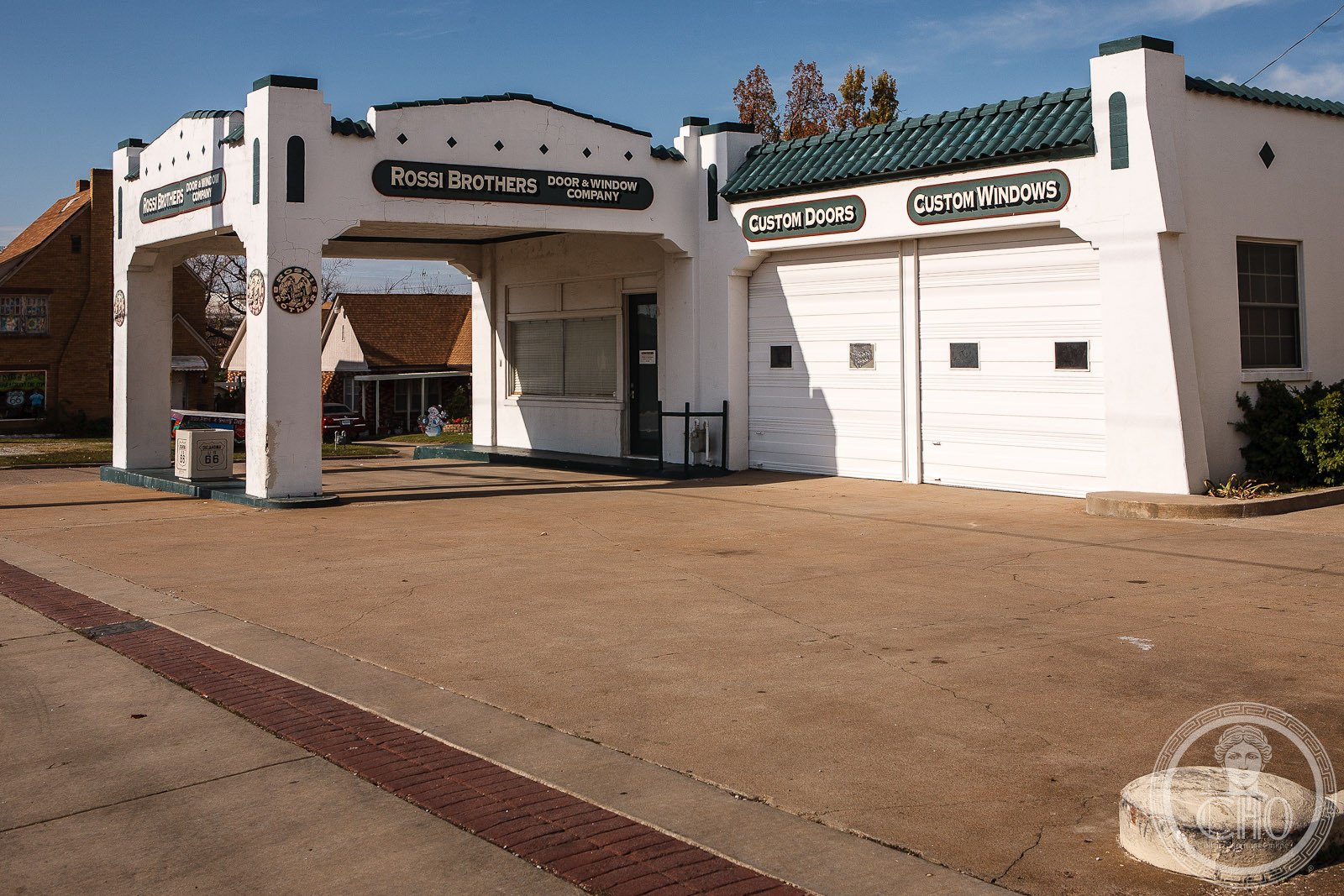
A Spanish Eclectic gas station and garage built on historic Route 66, exemplifying early twentieth-century automotive service design.
At a glance
The Sinclair Service Station stands as a well-preserved example of Spanish Eclectic architecture applied to commercial infrastructure. Built in 1929, it occupies a prominent location on the original route of U.S. Route 66 along Tulsa’s 11th Street, marking a pivotal moment when automobile culture transformed American roadside landscapes.
History
Construction of the station in 1929 positioned it at the beginning of Route 66’s iconic era. The building operated as a working service station on the nation’s most celebrated highway. Its architectural merit earned recognition when it was listed on the National Register of Historic Places in 1996, a designation reflecting broader scholarly interest in preserving Route 66’s historic resources throughout Oklahoma.
What you see
The three-part structure comprises an office, a covered pump area, and a double-bay service garage. Stucco walls and a distinctive triangular parapet establish the Spanish Eclectic vocabulary. The roof’s most striking feature is its Ludowici tile visor, a signature element of the style that provides both visual character and practical shelter to the pump island below.
Cultural significance
The station represents a vanishing class of roadside commercial buildings that emerged during America’s automotive boom. Spanish Eclectic offered an accessible, visually distinctive aesthetic for service stations—cheerful and approachable architecture for a new motoring public. Its NRHP designation acknowledges both its architectural integrity and its role in the material culture of Route 66 heritage.
Key facts
- Location: 3501 E. 11th Street, Tulsa, Oklahoma, United States (36.1481, −95.9375)
- Built: 1929
- Listed on the National Register of Historic Places: 1996
- Architectural style: Spanish Eclectic
Practical information & getting there
The station is located on 11th Street in Tulsa along the original Route 66 corridor. It remains a private structure; exterior photography from public streets is possible. For visitor access and current conditions, contact local Tulsa heritage organizations or the Oklahoma Historic Preservation Office.
Sources & resources
Find it on the map
See this place and what’s around it →
📷 Become a Cultural Heritage Online photographer
Share your photos of places: they stay published under your name as the author. The more they're seen, the more you get noticed — and soon a contest will reward the most appreciated photos.
Log in or sign up free to add a photoIs this page about you?
This page is read by travellers and heritage enthusiasts who find it on Google. Tell us how you are connected to this place and we will take it from there.