
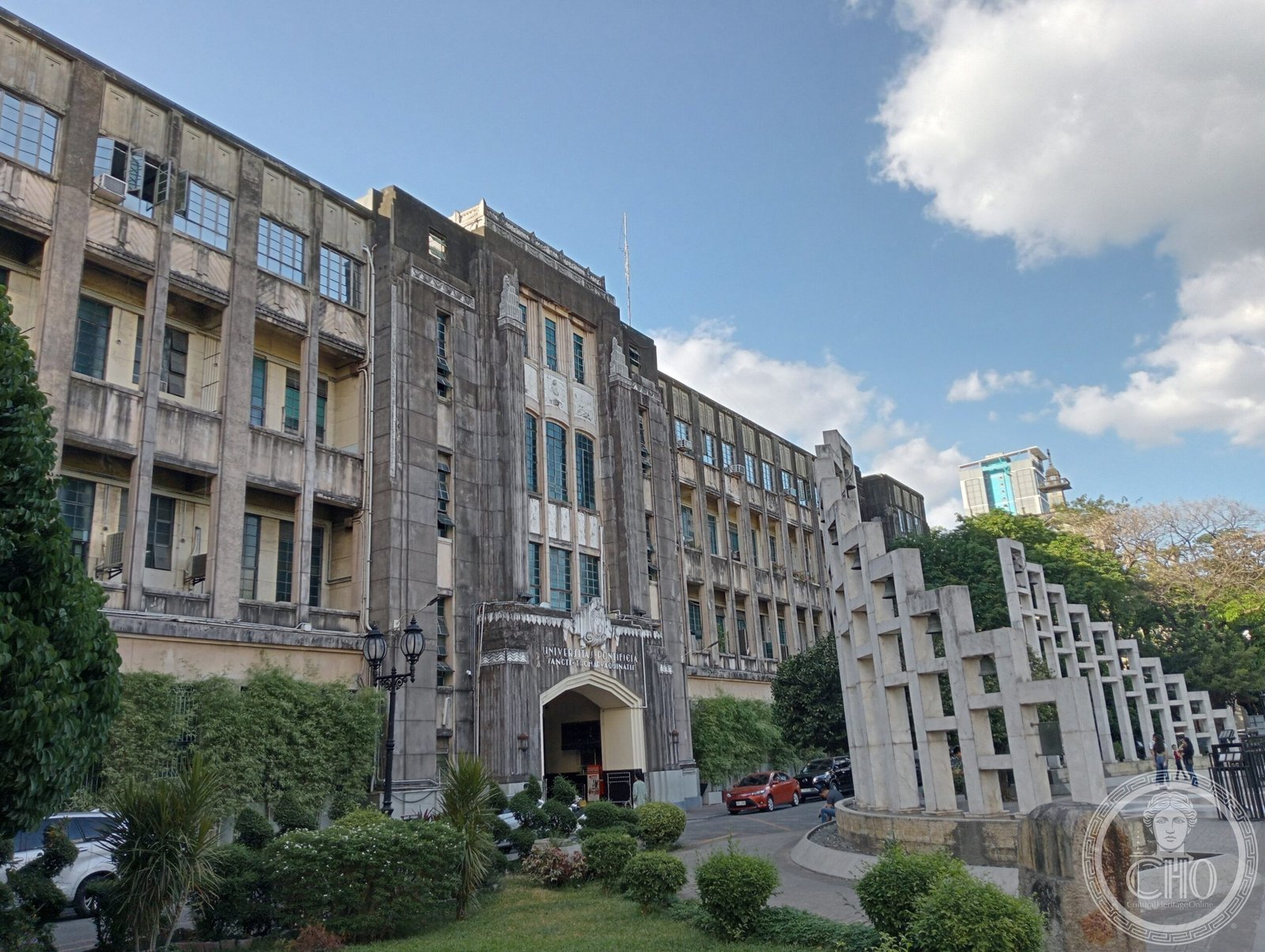
A formative institution for Catholic clergy, this Manila seminary combines pastoral ministry, theological education, and ecclesiastical heritage within a single landmark structure.
At a glance
The Central Seminary Building serves as home to the Santísimo Rosario Parish, the Central Seminary, and the Faculties of Ecclesiastical Studies at the Pontifical and Royal University of Santo Tomas. It remains an active centre for priestly formation and worship in the heart of Sampaloc.
History
The parish within the building was canonically inaugurated on April 26, 1942, by Michael J. O’Doherty, Archbishop of Manila. Recognition of the structure’s cultural importance came much later: on January 25, 2010, the National Museum of the Philippines formally designated the Central Seminary Building as a National Cultural Treasure, acknowledging its significance to Philippine ecclesiastical and architectural heritage.
What you see
The building integrates religious, educational, and residential functions within its design. It houses active seminary spaces, parish facilities, and academic departments dedicated to ecclesiastical studies, reflecting the practical needs of Catholic theological training and ministry.
Cultural significance
As a National Cultural Treasure, the building represents an important chapter in Philippine Catholic institutional history. It embodies the continuity of priestly formation through the University of Santo Tomas, one of Asia’s oldest universities, and demonstrates the enduring role of religious architecture in shaping Manila’s urban and spiritual landscape.
Key facts
- Location: Sampaloc, Manila, Philippines
- Coordinates: 14.609°N, 120.988°E
- Parish canonically inaugurated: April 26, 1942
- National Cultural Treasure designation: January 25, 2010
- Current use: Seminary, parish, and faculty offices
Practical information & getting there
The building is located in Sampaloc, a district in Manila accessible by public transportation. As an active religious and educational institution, visiting hours and access may be restricted; contact the University of Santo Tomas directly for information on tours or worship opportunities.
Sources & resources
Find it on the map
See this place and what’s around it →📷 Become a Cultural Heritage Online photographer
Share your photos of places: they stay published under your name as the author. The more they're seen, the more you get noticed — and soon a contest will reward the most appreciated photos.
Log in or sign up free to add a photoIs this page about you?
This page is read by travellers and heritage enthusiasts who find it on Google. Tell us how you are connected to this place and we will take it from there.