
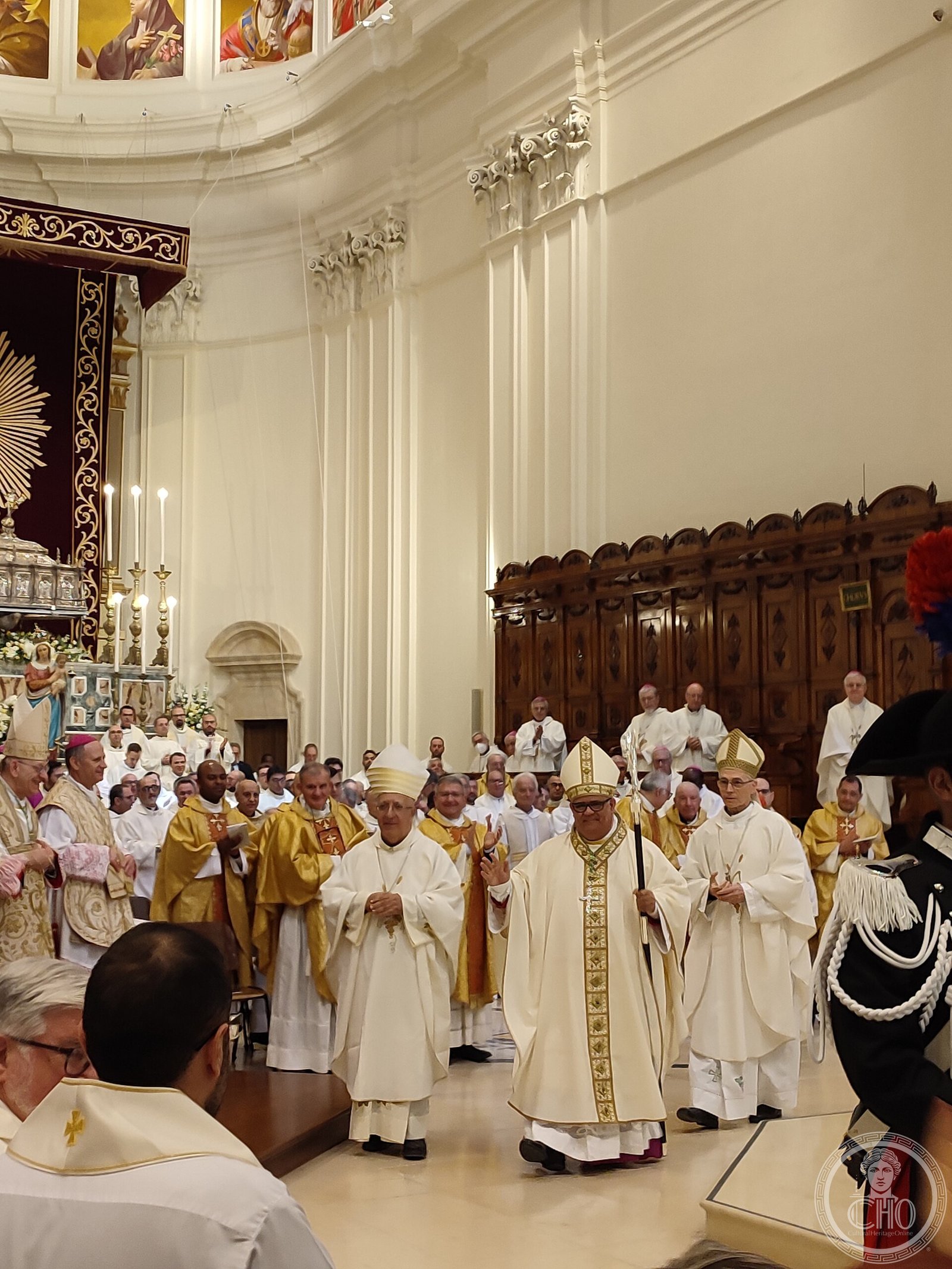
The Cathedral of San Nicolò is a Roman Catholic cathedral in Noto, Sicily, built in the Sicilian Baroque style between the early eighteenth century and 1776 on the terrace of Corso Vittorio Emanuele. Dedicated to Saint Nicholas of Myra, it serves as the seat of the Diocese of Noto and is one of the principal monuments of the Val di Noto, a UNESCO World Heritage Site since 2002.
At a glance
- Type
- Roman Catholic cathedral; seat of the Diocese of Noto (established 1844)
- Period
- Construction began early 18th century; completed 1776; facade begun 1767; reopened after restoration 2007
- Style
- Sicilian Baroque with Neo-Classical elements
- Architects
- Rosario Gagliardi (facade design, c. 1740); Bernardo Labisi (completion, 1776)
- Location
- Corso Vittorio Emanuele, Noto, Province of Syracuse, Sicily, Italy
- Coordinates
- 36.8917° N, 15.0709° E
Overview
Noto Cathedral crowns the broad theatrical staircase of Piazza Municipio and gives the city its most recognisable silhouette. Built after the catastrophic 1693 earthquake that destroyed the earlier town, it is one of several Baroque churches that made Noto the showpiece of eighteenth-century urban replanning in Sicily. The pale local limestone of the facade glows honey-gold in afternoon light, an effect central to the town’s extraordinary visual character.
History
The earthquake of 11 January 1693 destroyed most of eastern Sicily, including the original town of Noto Alta. The decision to rebuild on a new site on the valley floor produced one of the most coherent Baroque urban ensembles in Europe. Construction of the new cathedral began in the early eighteenth century, with the facade designed by Rosario Gagliardi around 1740 and the building completed under Bernardo Labisi in 1776. Structurally compromised repairs in the 1950s weakened the dome, which collapsed on 13 March 1996 along with part of the nave and roof. An eleven-year restoration returned the cathedral to use on 15 June 2007, with new furnishings and cupola windows consecrated in January 2011.
What you see
The facade rises in three tiers of columns and pilasters in warm pale limestone, with four statues of saints on the lower pillars and three principal doorways. A large central dome dominates the skyline, flanked by a bell tower carrying a church bell and a clock tower on the left and right respectively. The interior, restored after the 1996 collapse, features a lavish altar, lectern, and crucifix in silvered bronze and Sicilian jasper, and houses the relics of Saint Corrado Confalonieri, patron of the Diocese of Noto.
Cultural significance
Noto Cathedral is the centrepiece of the Val di Noto UNESCO World Heritage Site, inscribed in 2002 as an outstanding example of Sicilian Baroque town planning and architecture. The dramatic collapse and painstaking restoration of the dome became a cause célèbre in Italian cultural heritage circles, drawing international attention to the fragility of Baroque fabric and the complexity of post-seismic structural repair. The cathedral embodies both the creative energy of eighteenth-century Sicilian culture and the enduring challenge of maintaining it.
Practical information
- Address
- Piazza Municipio, 96017 Noto SR, Sicily, Italy
- Opening hours
- Generally open daily for visitors and worship; check the official diocesan website for current times
- Admission
- Free entry to the cathedral nave; check for any fees for special areas
Getting there
Noto is served by rail on the Siracusa–Ragusa line; the nearest major hub is Syracuse (Siracusa), approximately 30 km to the north (35–45 minutes by train or bus). From Catania Fontanarossa Airport the journey by car is approximately 90 minutes via the A18 and SS115. The cathedral is at the top of the main pedestrian corso in the historic centre, a short walk from the bus terminus.
Sources & resources
See the place
Find it on the map
See this place and what’s around it →📷 Become a Cultural Heritage Online photographer
Share your photos of places: they stay published under your name as the author. The more they're seen, the more you get noticed — and soon a contest will reward the most appreciated photos.
Log in or sign up free to add a photoIs this page about you?
This page is read by travellers and heritage enthusiasts who find it on Google. Tell us how you are connected to this place and we will take it from there.