
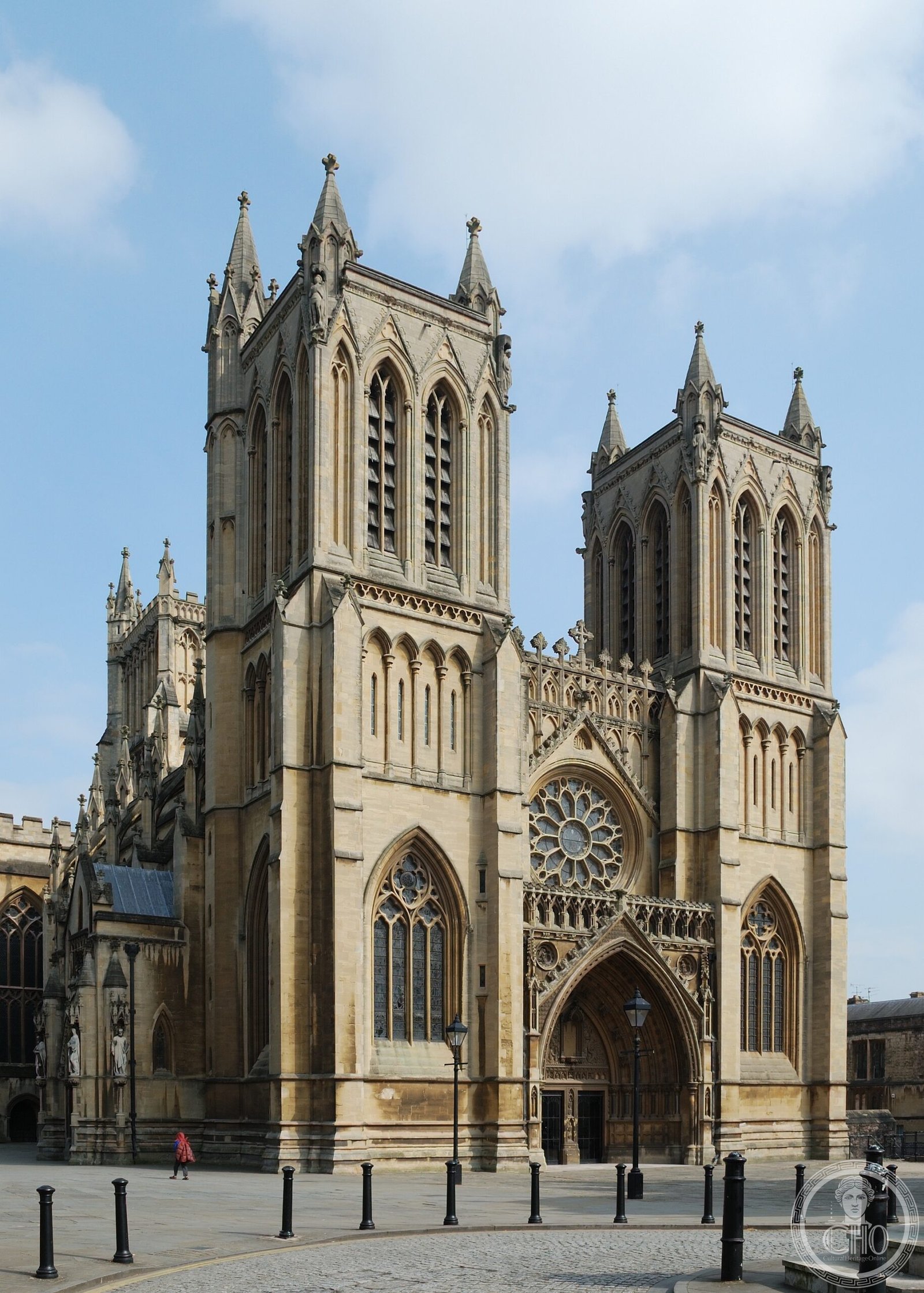
A cathedral of layered architectural ages, from a 12th-century chapter house through Victorian Gothic Revival, anchoring Bristol’s spiritual and civic identity since the 12th century.
At a glance
Bristol Cathedral is the seat of the Bishop of Bristol and home to exceptional medieval engineering. The chapter house contains some of the earliest pointed arches in England, while the hall-church choir demonstrates 14th-century innovation. Its 19th-century nave and 1888 western towers reflect the cathedral’s continuous evolution across eight centuries.
History
Founded as St Augustine’s Abbey in 1140 and consecrated in 1148, the building served monastic purposes until the Dissolution. After Henry VIII dissolved the monasteries, Bristol Cathedral became the seat of the new diocese in 1542, securing its institutional future. The nave, incomplete at dissolution in 1539, lay largely absent until the 19th century.
Architect George Edmund Street rebuilt the nave in Gothic Revival style, restoring the cathedral’s western arm toward original medieval intentions. John Loughborough Pearson’s twin western towers, completed in 1888, gave the building its iconic skyline presence and concluded a major chapter of restoration.
What you see
The late 12th-century chapter house stands as the earliest surviving structure, displaying pioneering pointed arches. The eastern end anchors medieval work: the early 13th-century Elder Lady Chapel leads to 14th-century Decorated Gothic choir rebuilt as a hall church, with aisles matching the central nave’s height—a daring spatial concept. Transepts were rebuilt in the 15th century alongside a central tower.
Street’s 19th-century nave extends the medieval axis in Gothic Revival vocabulary, while Pearson’s symmetrical western towers command the western facade. Stained glass remains fragmentary; Victorian replacements and losses from the Bristol Blitz have altered the fenestration’s original character.
Cultural significance
Bristol Cathedral represents pivotal moments in English architectural and ecclesiastical history. Its chapter house marks an early adoption of the pointed arch, a Gothic grammar that would dominate British building for centuries. The hall-church choir exemplifies 14th-century experimentation with space and light.
The cathedral’s 19th-century restoration embodies Victorian reverence for medieval principles and skill. Its Grade I listing acknowledges the building as a national monument to continuity, faith, and craft.
Key facts
- Founded 1140 as St Augustine’s Abbey; consecrated 1148
- Became cathedral of diocese of Bristol in 1542
- Chapter house: late 12th century, contains early pointed arches
- Elder Lady Chapel: early 13th century
- Choir rebuilt in Decorated Gothic style, 14th century (hall church)
- Nave rebuilt by George Edmund Street, 19th century
- Western towers by John Loughborough Pearson, completed 1888
- Grade I listed building
- Coordinates: 51.4517, -2.6007
Practical information & getting there
Bristol Cathedral is centrally located in Bristol city center. The building remains an active cathedral and place of worship; visiting hours and services are available through the cathedral office. Nearby Bristol Museum & Art Gallery, St Mary Redcliffe Church, and the historic harbor provide context for the city’s medieval and Georgian heritage.
Sources & resources
- Bristol Cathedral – Wikipedia
- Cultural Heritage Online
Find it on the map
See this place and what’s around it →📷 Become a Cultural Heritage Online photographer
Share your photos of places: they stay published under your name as the author. The more they're seen, the more you get noticed — and soon a contest will reward the most appreciated photos.
Log in or sign up free to add a photoIs this page about you?
This page is read by travellers and heritage enthusiasts who find it on Google. Tell us how you are connected to this place and we will take it from there.