
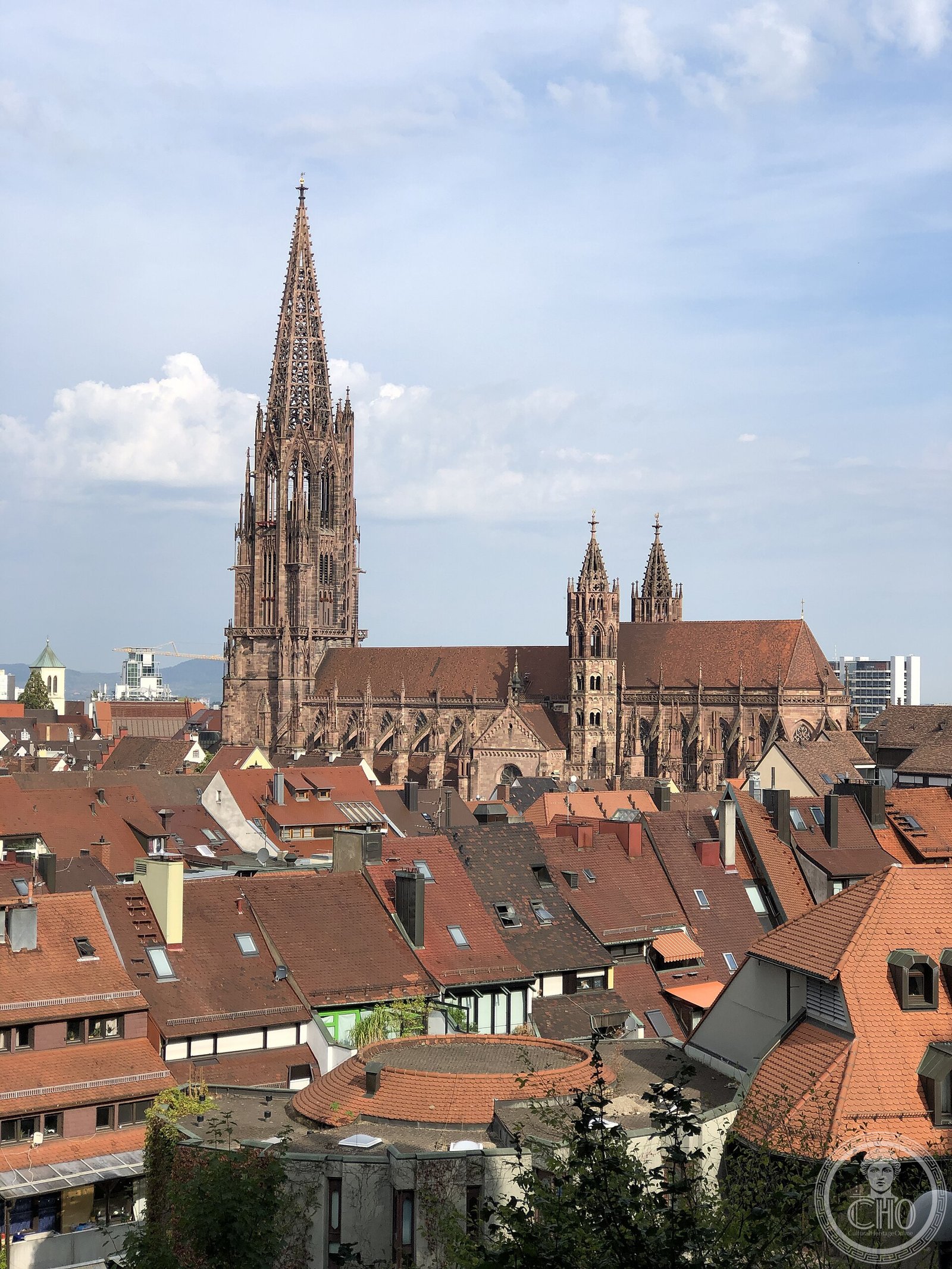
A cathedral born from Romanesque ambition and refined through Gothic vision, Freiburg Minster stands as a monument to two centuries of devotion in southwest Germany.
At a glance
Freiburg Minster serves as the cathedral of Freiburg im Breisgau and the seat of the Catholic Archdiocese of Freiburg. Its construction spans the transition from Romanesque to Gothic architecture, beginning around 1200 and continuing through the medieval period.
History
The last duke of Zähringen initiated construction around 1200 in Romanesque style. Building continued from 1230 onward in the emerging Gothic manner. The minster was partly erected upon the foundations of an earlier church dating to 1120, when Freiburg itself was founded.
During the Middle Ages, Freiburg lay within the Diocese of Konstanz. In 1827, the newly established Catholic Archdiocese of Freiburg elevated the minster to cathedral status, marking a transformation in its ecclesiastical role and significance.
What you see
The cathedral displays the architectural evolution of its long building campaign. Romanesque foundations and early sections give way to the soaring proportions and pointed arches characteristic of Gothic design, creating a visual record of medieval stylistic change.
Cultural significance
Freiburg Minster embodies the spiritual and civic aspirations of its founding patrons and medieval community. Its architectural transformation reflects the broader shift in European taste from Romanesque to Gothic, making it a key example of that transition in the German-speaking lands.
Key facts
- Country: Germany
- City: Freiburg im Breisgau
- Coordinates: 47.9956° N, 7.8531° E
- Construction began: circa 1200
- Architectural styles: Romanesque and Gothic
- Cathedral status established: 1827
Practical information & getting there
Freiburg im Breisgau is served by rail and road connections in southwest Germany, near the French border. The minster stands in the medieval city center. Hours, admission fees, and guided tour availability should be confirmed directly with local tourism or the cathedral authorities.
Sources & resources
- Freiburg Minster – Wikipedia
- Cultural Heritage Online
Find it on the map
See this place and what’s around it →📷 Become a Cultural Heritage Online photographer
Share your photos of places: they stay published under your name as the author. The more they're seen, the more you get noticed — and soon a contest will reward the most appreciated photos.
Log in or sign up free to add a photoIs this page about you?
This page is read by travellers and heritage enthusiasts who find it on Google. Tell us how you are connected to this place and we will take it from there.