
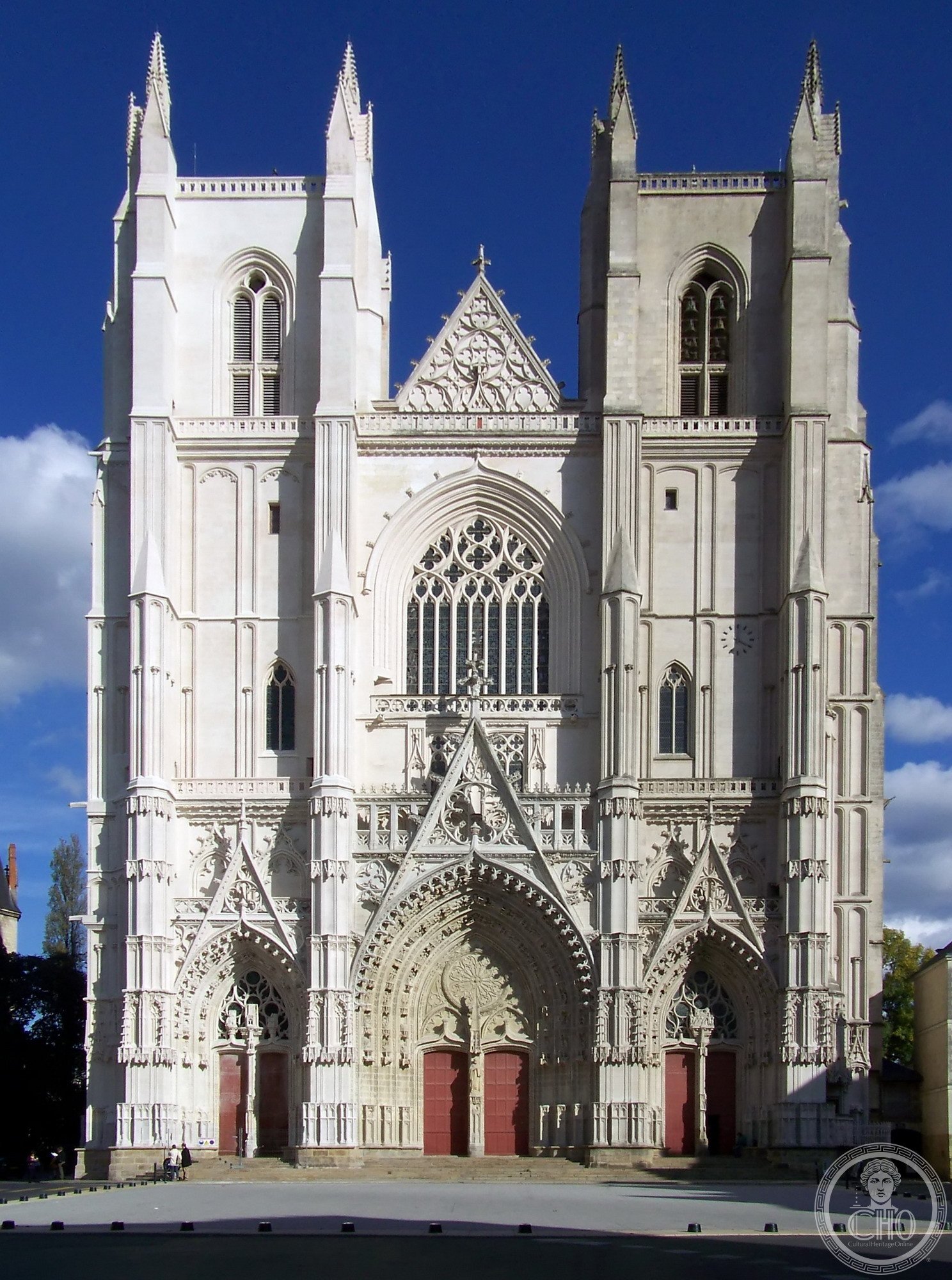
A Gothic masterwork spanning five centuries, this cathedral rose from the foundations of an earlier Romanesque church to become one of France’s most ambitious architectural undertakings.
At a glance
Nantes Cathedral stands as the Cathedral of St. Peter and St. Paul, a Roman Catholic Gothic structure in the Pays de la Loire region. Its construction represents an extraordinary commitment: work began in 1434 and continued for 457 years, concluding in 1891. The French Ministry of Culture designated it a monument historique in 1862.
History
The cathedral rose on hallowed ground. Builders chose the site of a pre-existing Romanesque cathedral, clearing space for an ambitious new vision. The sheer duration of construction—spanning nearly five centuries—reflects the scale of the undertaking and the cathedral’s centrality to the city’s religious and civic identity through successive generations.
What you see
The cathedral exemplifies Gothic architectural principles, the dominant style that defined religious building across medieval and early modern Europe. Its form and details unfold as the product of its long construction period, bearing witness to evolving tastes and techniques across the centuries.
Cultural significance
Nantes Cathedral embodies the ambitions of a major French city and the resilience of medieval Gothic tradition into the modern era. Its recognition as a monument historique reflects its architectural and historical importance to French cultural heritage.
Key facts
- Country: France
- City: Nantes
- Coordinates: 47.218°N, 1.5508°W
- Construction: 1434–1891 (457 years)
- Monument historique status: 1862
Practical information & getting there
Nantes Cathedral is located in central Nantes, in the Pays de la Loire region of western France. For opening hours, admission details, and current visiting information, check local tourism resources or the cathedral’s official channels.
Sources & resources
Find it on the map
See this place and what’s around it →📷 Become a Cultural Heritage Online photographer
Share your photos of places: they stay published under your name as the author. The more they're seen, the more you get noticed — and soon a contest will reward the most appreciated photos.
Log in or sign up free to add a photoIs this page about you?
This page is read by travellers and heritage enthusiasts who find it on Google. Tell us how you are connected to this place and we will take it from there.