
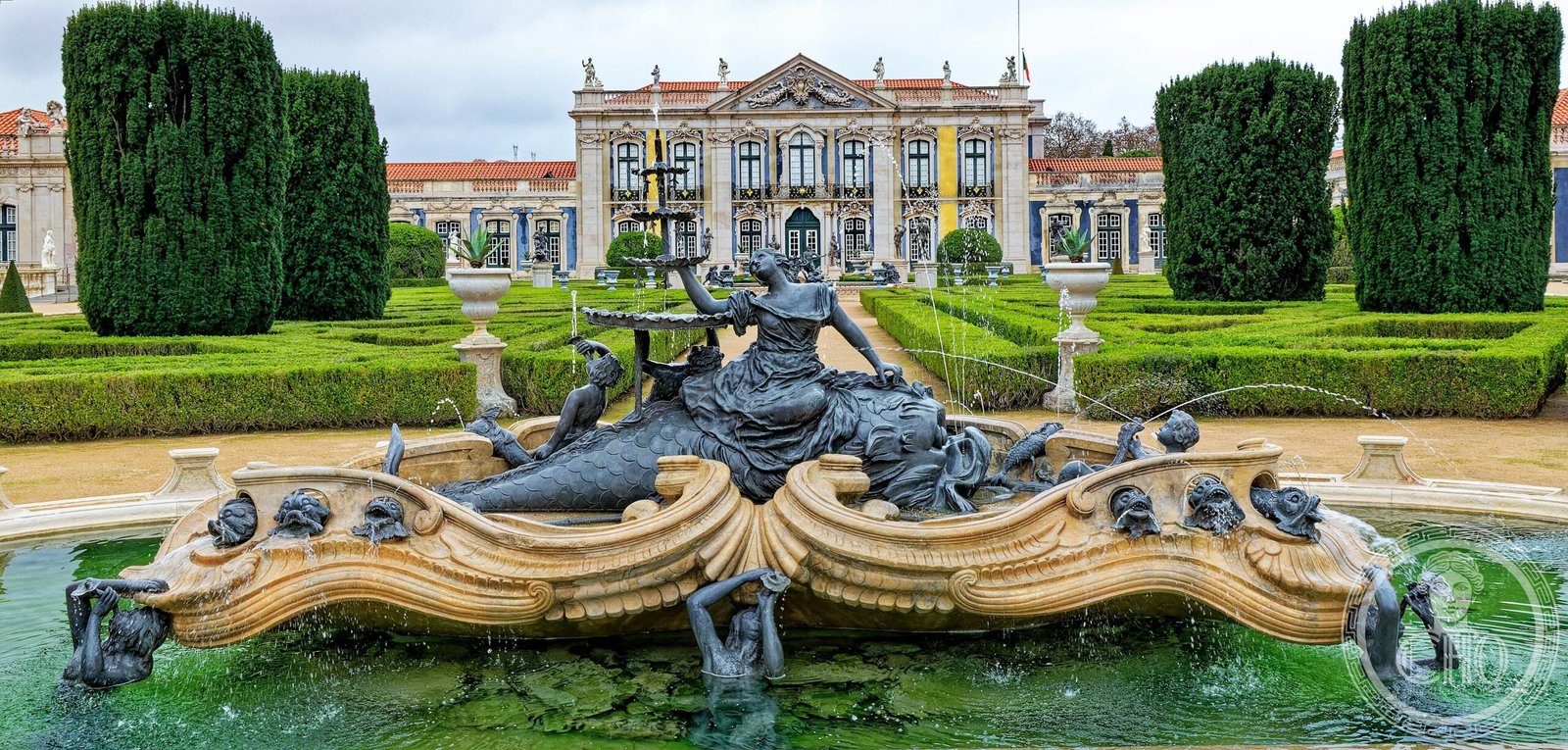
One of Europe’s last great Rococo palaces, built as a summer retreat for a Portuguese prince, this ornate residence on the Lisbon outskirts later sheltered a troubled queen and served as the royal family’s last home before exile.
At a glance
Queluz Palace stands on the Portuguese Riviera near Lisbon, a jewel of 18th-century design often called the “Portuguese Versailles”—though considerably more modest in scale. Though conceived as a private summer residence, it became the official seat of the royal family after fire destroyed the Palace of Ajuda in 1794, remaining so until the French invasion of 1807 forced the court to flee to Brazil.
History
Construction began in 1747 under Portuguese architect Mateus Vicente de Oliveira. The palace was designed as a retreat for Peter of Braganza, brother of King Joseph I, who later married his own niece, Queen Maria I, and became King Peter III.
After Peter III’s death in 1786, the afflicted Queen Maria I spent her final years in the palace under quiet confinement due to severe mental illness. Following the Ajuda fire of 1794, Queluz became the official residence of Prince Regent John and his family. They occupied it until the French invasion of 1807 forced the Portuguese royal family to seek refuge in Brazil.
From 1826, successive monarchs favored it less. The state acquired it in 1908. A devastating fire in 1934 destroyed one-third of the interior, but extensive restoration followed, and the palace reopened to visitors.
What you see
The palace embodies late Rococo style, featuring ornate decoration and the elegant proportions characteristic of that movement. One wing, the Queen Maria I Pavilion, was built by Manuel Caetano de Sousa and now functions as Portugal’s official state guest house for visiting foreign heads of state.
Cultural significance
Queluz represents the final flourish of Rococo architecture in Europe and stands as a defining monument of Portuguese royal taste in the Age of Enlightenment. Its history mirrors the tumultuous final decades of the Portuguese monarchy—from glittering court life to mental illness, from seat of power to refuge for a displaced dynasty. Today it anchors Portugal’s cultural heritage as a window into 18th-century aristocratic life.
Key facts
- Country: Portugal
- City: Queluz e Belas
- Coordinates: 38.7506, −9.2587
- Architect: Mateus Vicente de Oliveira (began 1747)
- Rococo palace; often called the “Portuguese Versailles”
- Became official royal residence in 1794
- Damaged by fire in 1934; extensively restored
- Open to the public as a major museum and tourist attraction
Practical information & getting there
The palace is located in Queluz, within Sintra Municipality in the Lisbon District, on the Portuguese Riviera. Today it operates as a major public museum. For current visiting hours, admission fees, and detailed travel directions, consult the palace’s official channels or local tourism resources.
Sources & resources
- Palace of Queluz – Wikipedia
- Cultural Heritage Online
Find it on the map
See this place and what’s around it →📷 Become a Cultural Heritage Online photographer
Share your photos of places: they stay published under your name as the author. The more they're seen, the more you get noticed — and soon a contest will reward the most appreciated photos.
Log in or sign up free to add a photoIs this page about you?
This page is read by travellers and heritage enthusiasts who find it on Google. Tell us how you are connected to this place and we will take it from there.