
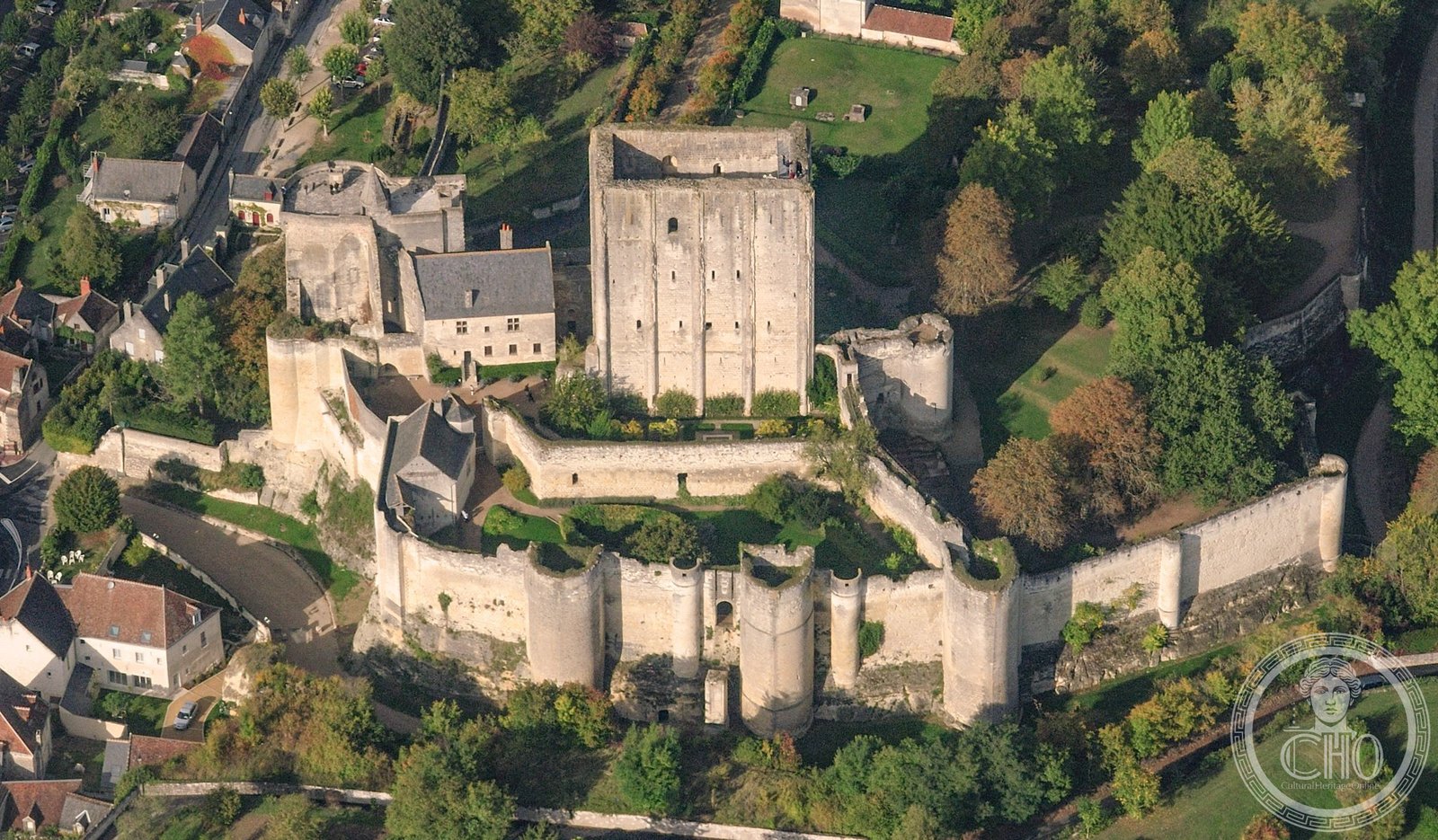
A commanding medieval fortress in the Loire Valley, dominated by a massive square keep that has guarded the town of Loches for over a thousand years.
At a glance
Château de Loches stands roughly 500 metres from the river Indre, its imposing silhouette defining the skyline of this Loire Valley town. The castle’s most distinctive feature is its massive square keep, which remains the structure’s architectural signature.
History
Built in the 9th century, the castle played a significant role in Franco-English medieval politics. In 1204, King Philip II of France captured the fortress from English forces, a pivotal moment that secured French control over this strategically important Loire Valley stronghold.
What you see
The castle’s defining element is its formidable square keep, which rises prominently above the surrounding fortifications. This central tower exemplifies medieval defensive architecture and remains one of the Loire Valley’s most recognizable military structures.
Cultural significance
Château de Loches represents a crucial crossroads in medieval French history, marking the transition of power in the Loire Valley during the reign of Philip II. Its architectural form illustrates the practical demands of 9th-century military engineering.
Key facts
- Location: Loches, Indre-et-Loire, Loire Valley, France
- Coordinates: 47.124759, 0.996858
- Period: 9th century onwards
- Distance from Indre River: Approximately 500 metres
- Historical milestone: Captured by King Philip II of France in 1204
Practical information & getting there
Loches is situated in Indre-et-Loire, within the Loire Valley region. For current visiting hours, admission fees, and accessibility details, consult the official château website or local tourism information.
Sources & resources
Find it on the map
See this place and what’s around it →📷 Become a Cultural Heritage Online photographer
Share your photos of places: they stay published under your name as the author. The more they're seen, the more you get noticed — and soon a contest will reward the most appreciated photos.
Log in or sign up free to add a photoDo you manage this place?
This page is read by travellers and heritage enthusiasts who find it on Google. Keep it accurate — and make it work for you. Free for non-profit heritage institutions.