
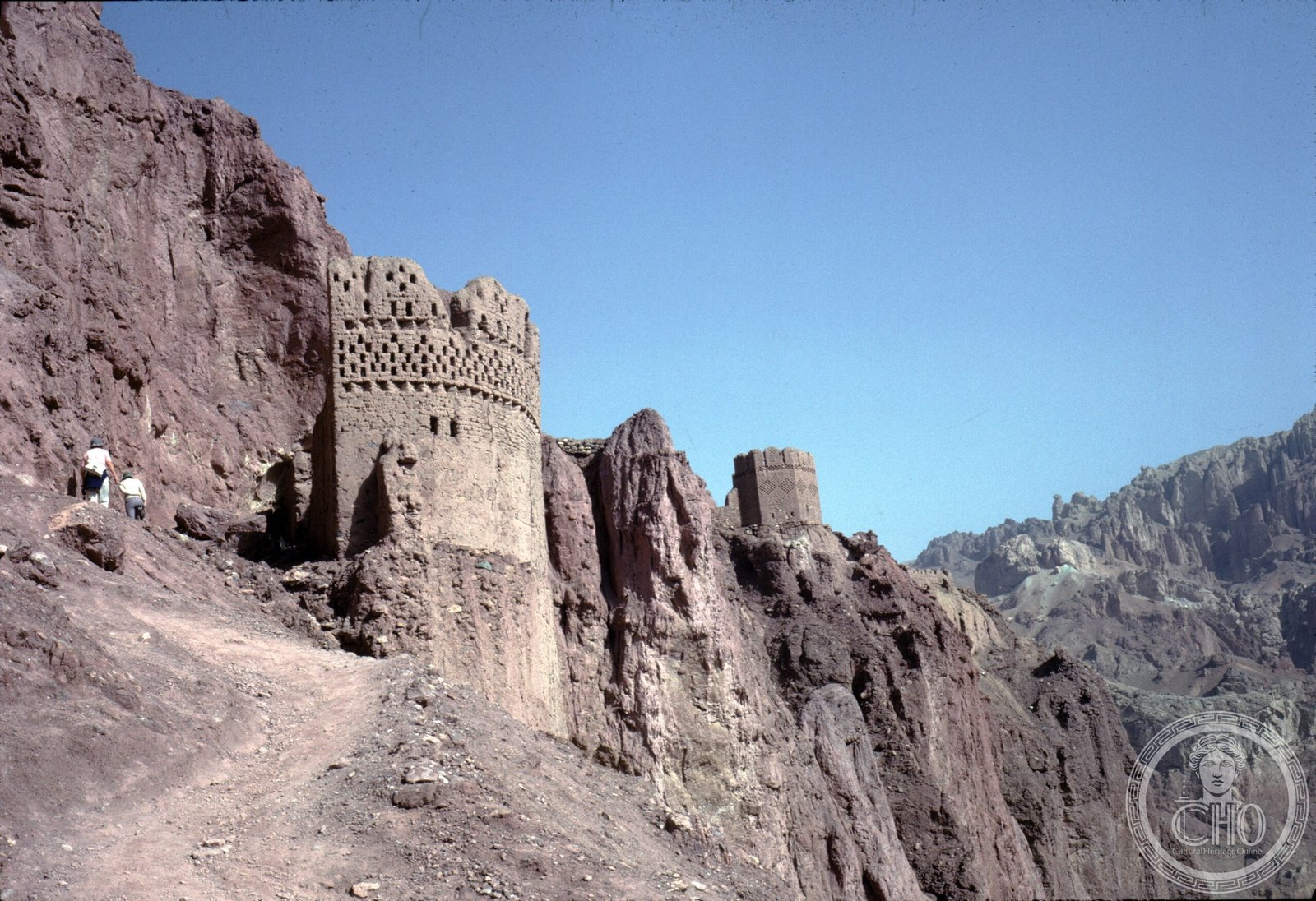
The Red City of Zuhak is a fortified ruin perched above the Bamyan valley, an ancient caravan crossroads now marked by silence and stone. Founded in the early medieval period, this fortress witnessed centuries of Central Asian power and the devastating passage of Mongol conquest.
At a glance
Shahr-e Zuhak (The Red City) stands at the easternmost edge of the Bamyan valley, overlooking the confluence of the Kunduz and Kalu Ganga rivers. Once home to 3,000 people, the fortress today survives as crumbling ramparts and watchtowers, their red earth still visible against the Afghan highlands. The site sits at a key node of the ancient Silk Road, connecting Europe to India and China.
History
Zuhak is believed to have been founded between 500 and 600 AD by the Hephthalites, contemporaneous with the carving of the great Buddhas at nearby Bamiyan. The fortress rose to strategic importance during the Islamic period (10th–13th centuries), fortified under the Ghaznavid and Ghorid dynasties as control of the valley shifted between regional powers.
In the 13th century, the fortress fell to Genghis Khan during the Siege of Bamyan, part of the Mongol invasion of the Khwarazmian Empire. The city was ransacked and never fully recovered.
What you see
The fortress was defended by massive ramparts built along steep cliff faces, reinforced by watchtowers—some still standing. Below these outer walls, three concentric orders of fortifications protected the citadel, which occupied the hilltop summit. Red earth and exposed stonework dominate the landscape.
Prolonged weathering, neglect, and decades of regional conflict have left many structures unstable or collapsed. Conservation remains minimal.
Cultural significance
Zuhak embodies the militarized Silk Road, a fortress not of commerce but of control. Its founding alongside the Buddhas of Bamiyan marks a moment when Buddhism and emerging Islamic dynasties coexisted in Central Asia. The city’s destruction by the Mongols mirrors the wider rupture of medieval Eurasian networks.
Key facts
- Country: Afghanistan
- Location: Bamyan province, at the easternmost point of Bamyan valley
- Coordinates: 34.826°N, 67.822°E
- Founded: circa 500–600 AD (Hephthalite period)
- Fortified: 10th–13th centuries (Ghaznavid and Ghorid dynasties)
- Destroyed: 13th century (Mongol invasion)
Practical information & getting there
Zuhak is located in Bamyan province, central Afghanistan, accessible from the provincial capital. Security conditions and infrastructure vary; travelers should verify current access and safety with local authorities and cultural organizations. The site remains largely unexcavated and minimally developed for visitors.
Sources & resources
Find it on the map
See this place and what’s around it →📷 Become a Cultural Heritage Online photographer
Share your photos of places: they stay published under your name as the author. The more they're seen, the more you get noticed — and soon a contest will reward the most appreciated photos.
Log in or sign up free to add a photoIs this page about you?
This page is read by travellers and heritage enthusiasts who find it on Google. Tell us how you are connected to this place and we will take it from there.